
11 Ultimate Fixes: The Easiest Way to Stop Slicing the Golf Ball
How Beginners Can Stop Slicing the Golf Ball
Introduction
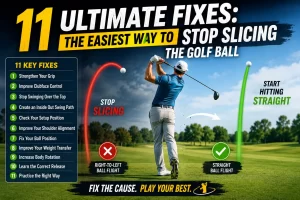
If you’ve ever watched a well-struck drive start down the fairway only to curve sharply into the trees, rough, or out-of-bounds, you’re not alone. A slice is one of the most common problems golfers face, affecting beginners and experienced players alike. In fact, many golfers spend years searching for the easiest way to stop slicing the golf ball without ever fully understanding what causes the problem in the first place.
The reason slicing is so common is that multiple swing flaws can create the same ball flight. An open clubface, an incorrect golf swing path, poor alignment, weak grip pressure, or an over the top swing can all contribute to a slice. Because there are so many possible causes, golfers often become overwhelmed by conflicting advice. One instructor tells them to strengthen their grip, another recommends changing their stance, while countless YouTube videos offer quick fixes that only address the symptoms instead of the root cause.
A slice does far more damage than simply sending the ball offline. It robs golfers of valuable distance because excessive sidespin reduces forward momentum. A sliced drive can easily cost 20 to 40 yards compared to a properly struck shot. Beyond distance loss, slices create serious accuracy problems. Instead of aiming confidently at the target, golfers begin compensating by aiming left, altering their swing, and developing bad habits that often make the problem even worse.
Perhaps the biggest consequence of a slice is the effect it has on confidence. After seeing shot after shot curve into trouble, many golfers become hesitant and tense over the ball. Rather than swinging freely, they start steering the club through impact, which often leads to even more inconsistent results. This frustrating cycle explains why so many players struggle to stop slicing the golf ball despite hours of practice.
The good news is that a slice can be fixed. Understanding ball flight laws and learning how clubface control influences shot shape can dramatically improve your game. Whether you’re looking for the easiest way to stop slicing the golf ball for beginners, trying to discover how to stop a golf slice, or searching for how to stop slicing the golf ball permanently, the solution starts with identifying the real cause behind your miss.
In this guide, you’ll learn 11 proven fixes that address every major factor contributing to a slice. We’ll cover golf grip fundamentals, setup adjustments, swing mechanics, weight transfer, body rotation, and how to develop a reliable inside out swing path. You’ll also learn the easiest way to stop slicing a driver, which is often the club most affected by this frustrating ball flight.
By implementing these fixes, golfers can expect straighter shots, increased distance, improved consistency, and greater confidence on the course. More importantly, you’ll finally understand why your ball slices and what specific changes will help you hit the ball straighter for years to come.
13 Ultimate Fixes: How to Stop Slicing Your Irons for Good
What Causes a Golf Slice?
Before you can discover the easiest way to stop slicing the golf ball, you need to understand what actually causes a slice. Many golfers assume a slice happens because they swing too hard or lift their head, but modern golf instruction and ball flight laws tell a different story. A slice is primarily created by the relationship between the clubface and the swing path at impact.
Understanding Ball Flight Laws
One of the biggest breakthroughs in golf instruction over the last several decades has been the understanding of modern ball flight laws. These laws explain exactly why the golf ball starts in a certain direction and why it curves during flight.
The clubface is responsible for most of the ball’s initial starting direction. If the clubface is pointing to the right of the target at impact, the ball will typically start right. If the clubface is square, the ball is more likely to start on your intended target line.
The second factor is the golf swing path. Swing path refers to the direction the clubhead is traveling through impact. When the club moves from outside the target line to inside the target line, golfers create what is commonly called an over the top swing. This path is one of the leading causes of slices.
A slice occurs when the clubface is open relative to the swing path. For example, if the clubface is slightly open and the club is moving left through impact, the ball will spin dramatically from left to right for a right-handed golfer. The larger the difference between the face and path, the more severe the curve becomes.
Understanding this relationship is often the first step in learning how to stop a golf slice. Once golfers realize that slices are caused by impact conditions rather than random swing flaws, they can focus on the real problem instead of chasing temporary fixes.
The Difference Between a Fade and a Slice
Many golfers use the terms fade and slice interchangeably, but they are not the same shot.
A fade is a controlled shot that gently curves from left to right. Many professional golfers intentionally play a fade because it offers predictable ball flight and greater control under pressure. A properly executed fade starts close to the target and curves only slightly.
A slice, on the other hand, is excessive and uncontrolled. The ball often starts left or at the target before curving dramatically to the right. This severe curve causes significant distance loss and frequently sends the ball into hazards, trees, or out-of-bounds areas.
In some situations, a fade can actually be beneficial. Golfers may use it to work around obstacles, shape shots into certain fairways, or attack specific pin locations. However, a slice is rarely useful because the amount of curvature is difficult to predict.
Most recreational golfers struggle with excessive curvature because they combine an open clubface with an outside-to-inside swing path. This combination creates the sidespin responsible for those frustrating banana-ball shots. If your goal is learning how to stop slicing the golf ball permanently, improving both clubface position and swing path must become a priority.
Fix #1 – Strengthen Your Golf Grip
When golfers search for the easiest way to stop slicing the golf ball, one of the first areas they should examine is their grip. In many cases, a weak grip is the root cause of an open clubface and chronic slicing. The good news is that grip changes are relatively simple to make and can produce immediate improvements.
Why Weak Grips Create Slices
Your grip directly influences how the clubface behaves throughout the swing. If your hands are positioned incorrectly on the club, it becomes much harder to square the face at impact.
A weak grip occurs when both hands are rotated too far toward the target. This position often leaves the clubface open during the downswing and through impact. Even golfers with a solid inside out swing path can still slice the ball if the clubface remains open.
An open clubface is one of the biggest reasons golfers struggle to stop slicing the golf ball. The face-to-path relationship becomes unfavorable, producing the sidespin that sends the ball curving right.
Weak grips also reduce clubface control. When the hands are positioned poorly, golfers must rely on precise timing to square the clubface. Under pressure, this timing becomes inconsistent, leading to unpredictable ball flights and frequent slices.
How to Build a Stronger Grip
One of the most effective golf grip fundamentals is learning how to position your hands correctly on the club.
For the lead hand (left hand for right-handed golfers), place the club diagonally across the fingers rather than deep in the palm. When you look down at address, you should typically see two to three knuckles. This stronger position helps the clubface rotate naturally through impact.
The trail hand should fit comfortably beneath the lead hand. The palm should face the target less and the ground slightly more. This allows both hands to work together to square the clubface during the release.
Grip pressure is equally important. Many golfers squeeze the club too tightly, restricting wrist movement and making it difficult to release the club properly. A good checkpoint is to hold the club firmly enough to maintain control while keeping your forearms relaxed.
For golfers searching for the easiest way to stop slicing the golf ball for beginners, strengthening the grip is often one of the fastest and most effective changes they can make. While grip alone may not completely eliminate every slice, it provides a solid foundation for better clubface control, straighter shots, and more consistent ball striking.
Fix #2 – Improve Clubface Control
If you’re searching for the easiest way to stop slicing the golf ball, improving clubface control should be near the top of your priority list. While many golfers focus exclusively on swing path, the reality is that the clubface has the greatest influence on the ball’s starting direction and plays a major role in determining curvature. Even a good swing path can produce a slice if the clubface is significantly open at impact.
Why an Open Clubface Causes a Slice
To understand how to stop a golf slice, it’s important to understand what happens during impact.
At impact, the clubface and swing path work together to determine the ball’s flight. According to modern ball flight laws, the clubface largely controls where the ball starts, while the relationship between the clubface and swing path determines how much the ball curves.
A slice occurs when the clubface is open relative to the swing path. For example, imagine your clubface is pointing slightly right of the target while your club is traveling left through impact. This creates a face-to-path difference that generates sidespin, causing the ball to curve dramatically from left to right.
The greater the difference between the face and path, the more severe the slice becomes. That’s why some golfers hit a gentle fade while others hit a massive banana ball that ends up two fairways over.
Poor clubface control can result from several factors, including a weak grip, improper wrist positions, lack of body rotation, or an incorrect release pattern. Regardless of the cause, learning to square the face more consistently is one of the fastest ways to stop slicing the golf ball and improve accuracy.
Simple Drills for Better Clubface Awareness
Developing awareness of the clubface doesn’t require complicated training aids. A few simple drills can dramatically improve your ability to control the face through impact.
The half swing drill is one of the best places to start. Make controlled swings that travel only waist-high on the backswing and follow-through. Focus on returning the clubface square to the ball. Because the swing is shorter, it’s easier to feel what the clubface is doing throughout the motion.
Another effective exercise is the gate drill. Place two tees slightly wider than your clubhead and hit shots through the gate. This encourages centered contact and improves awareness of how the clubface interacts with the ball.
The slow-motion impact drill is excellent for golfers who struggle with consistency. Make extremely slow practice swings and stop at impact. Check that the clubface appears square to the target and that your hands, wrists, and body are working together properly.
Golfers who master these drills often see immediate improvements in ball flight. Better clubface awareness leads to straighter shots, more consistent contact, and one of the most important steps toward learning how to stop slicing the golf ball permanently.
Best Golf Training Program For Beginners: Why Most Golfers Never Improve
Fix #3 – Stop Swinging Over the Top
One of the most common swing flaws associated with slicing is the dreaded over the top swing. Even golfers with solid grip fundamentals can struggle if their downswing path moves excessively from outside to inside. If you’re looking for the easiest way to stop slicing a driver, correcting this swing path issue can have a massive impact.
What Is the Over the Top Swing?
An over the top swing occurs when the club moves outside the ideal swing plane during the transition from backswing to downswing. Instead of dropping into a neutral or inside position, the club approaches the ball from outside the target line.
This move is extremely common among amateur golfers because it often feels powerful and aggressive. Unfortunately, it usually creates the exact swing path that promotes slicing.
Some common characteristics of an over-the-top swing include:
- The trail shoulder moves aggressively toward the ball during the downswing.
- The clubhead approaches from outside the target line.
- Divots point left of the target for right-handed golfers.
- Pulls, pull-slices, and weak fades become common ball flights.
The reason this swing creates a left-to-right ball flight is simple. An outside-to-inside golf swing path combined with an open clubface creates the face-to-path relationship responsible for slices. The more severe the path, the harder it becomes to square the face consistently.
This is one reason many golfers struggle to stop slicing the golf ball despite trying countless tips. Until the swing path improves, the slice often remains.
How to Create a Better Downswing Sequence
Fixing an over-the-top move starts with improving the sequence of the downswing.
One of the biggest mistakes golfers make is starting the downswing with their shoulders and arms. Instead, the downswing should begin from the ground up. The lower body starts moving toward the target while the upper body remains relatively patient.
This lower-body initiation helps the club fall into a better position and promotes a more efficient swing path.
Another important concept is shallowing the club. Shallowing simply means allowing the club to approach the ball from a less steep angle. When done correctly, the club naturally moves closer to an inside out swing path, which helps reduce slicing tendencies.
Proper transition is also critical. Rather than rushing from the top of the backswing, focus on creating a smooth change of direction. Many golfers find that slowing down their transition actually increases consistency and distance because the club approaches the ball on a much better path.
When combined with improved clubface control, a better downswing sequence can dramatically reduce slices. For many golfers, fixing the over-the-top move is one of the biggest breakthroughs in discovering the easiest way to stop slicing the golf ball for beginners and achieving more reliable ball flight.
The difference between golfers who continue slicing and golfers who finally play with confidence often comes down to having a clear plan. Instead of jumping from tip to tip, follow a structured system designed to help you build consistency, improve ball striking, and find the easiest way to stop slicing the golf ball for good.
Get Instant Access To The Golf Swing Lab Training System https://ultimategolfmasterypro.com/the-golf-swing-lab-2/
Fix #4 – Create an Inside Out Swing Path
One of the most effective ways to stop slicing the golf ball is to improve your swing path. While grip and clubface control are critical, many golfers continue to fight a slice because their club travels across the ball from outside to inside. Learning to develop an inside out swing path can dramatically reduce side spin and help produce straighter, more powerful shots.
Why Swing Path Matters
Your swing path plays a major role in determining how much the golf ball curves after impact. According to modern ball flight laws, the relationship between the clubface and the swing path creates the spin axis that influences shot shape.
When the club moves from outside to inside through impact, golfers often produce a pull, pull-fade, or slice. This path is commonly associated with an over the top swing, which is one of the biggest reasons amateur golfers struggle with consistency.
An inside out swing path, on the other hand, approaches the ball from slightly inside the target line and moves outward through impact. When paired with a square clubface, this path promotes straighter shots. If the face is slightly closed relative to the path, golfers can even produce a controlled draw.
Launch monitors often measure swing path using numerical values. Negative path numbers typically indicate an outside-to-inside swing path, while positive numbers suggest an inside-to-out path. You don’t need expensive technology to improve, but understanding that path influences curvature can help you identify why your ball keeps moving to the right.
For golfers searching for the easiest way to stop slicing a driver, developing a more neutral or slightly inside-out path is often one of the biggest improvements they can make.
Drills to Develop an Inside Out Swing Path
Improving swing path requires consistent practice and awareness. Fortunately, several simple drills can help train the correct movement.
The alignment stick drill is one of the most popular. Place an alignment stick in the ground behind the ball at an angle matching your shaft at address. The goal is to swing underneath the stick during the downswing. This encourages the club to approach from the inside rather than coming over the top.
The headcover drill is another excellent exercise. Place a headcover just outside the target line a few inches behind the golf ball. If your swing comes from outside to inside, you’ll hit the headcover before reaching the ball. Avoiding the obstacle teaches a better path naturally.
The split-hand drill helps golfers feel how the club should move through impact. Separate your hands several inches on the grip and make slow swings. This drill improves sequencing and helps the club approach from the inside while promoting better face awareness.
Mastering these drills can significantly improve your golf swing path, helping golfers discover how to stop slicing the golf ball permanently while also gaining distance and consistency.
Fix #5 – Check Your Setup Position
Many golfers spend countless hours trying to change their swing mechanics when the real problem starts before the swing even begins. If your setup is flawed, it becomes much harder to deliver the club correctly at impact. That’s why checking your setup is often one of the easiest ways to stop slicing the golf ball.
Setup Mistakes That Promote Slices
Several common setup mistakes can encourage the exact swing characteristics that produce slices.
One of the biggest issues is open shoulders at address. Many golfers unknowingly aim their shoulders left of the target. When this happens, the body naturally wants to swing along that line, often producing an outside-to-inside path.
Poor ball position is another major contributor. When the ball is positioned too far forward or too far back, golfers may alter their swing to compensate. These adjustments frequently lead to poor contact and inconsistent clubface delivery.
Improper alignment can also create problems. If your feet, hips, and shoulders are aimed left of the target, your brain often compensates by manipulating the clubface through impact. This compensation can lead to weak fades and severe slices.
Many golfers searching for how to stop a golf slice overlook these setup issues because they seem too simple. However, even small alignment mistakes can have a major impact on ball flight.
Build a Slice-Proof Setup
Creating a consistent setup provides a strong foundation for better golf shots.
Start with alignment checkpoints. Place a club or alignment stick on the ground parallel to your target line during practice sessions. This gives you visual feedback and helps ensure your feet, hips, and shoulders are properly aligned.
Next, pay close attention to shoulder positioning. Your shoulders should generally be square to the target line. Many golfers discover that what feels square is actually open, so using mirrors or video can be extremely helpful.
Ball placement also deserves careful attention. With a driver, the ball should typically be positioned just inside the lead heel. Mid-irons usually work best slightly forward of center, while shorter irons move progressively closer to the middle of the stance.
These setup fundamentals support better clubface control, improve your ability to create an inside out swing path, and reduce the likelihood of an over the top swing. For golfers looking for the easiest way to stop slicing the golf ball for beginners, correcting setup mistakes is often one of the quickest and simplest changes that leads to immediate improvement.
Fix #6 – Improve Your Shoulder Alignment
Many golfers focus on grip changes, swing drills, and equipment adjustments while completely overlooking one of the most important fundamentals in golf: shoulder alignment. Poor shoulder alignment can quietly sabotage your swing and make it nearly impossible to stop slicing the golf ball consistently. If you’re searching for the easiest way to stop slicing the golf ball, checking your shoulder alignment should be near the top of your list.
Why Open Shoulders Encourage Slices
Your shoulders play a major role in determining your golf swing path. When your shoulders are aimed left of the target (for a right-handed golfer), your body naturally wants to swing along that line.
This creates one of the most common causes of a slice: an outside-to-inside swing path. Even if you’re working on improving clubface control, open shoulders can still encourage the club to move across the ball during the downswing.
Many amateur golfers don’t realize their shoulders are open because they spend most of their setup attention looking at their feet and clubface. However, the shoulders often have a greater influence on swing direction than golfers realize.
This is a common mistake among recreational players. They align their feet correctly but unknowingly leave their shoulders aimed well left of the target. As a result, they develop an over the top swing, producing weak fades, pull slices, and inconsistent ball striking.
According to modern ball flight laws, an outside-to-inside path combined with an open clubface creates the side spin responsible for slices. That’s why shoulder alignment can directly influence whether your ball flies straight or curves dramatically to the right.
Golfers trying to learn how to stop slicing the golf ball permanently should make shoulder alignment a routine part of every practice session.
Shoulder Alignment Drills
One of the easiest ways to improve shoulder alignment is through alignment rod practice. Place an alignment stick across your shoulders at address and compare its direction to your target line. This provides immediate visual feedback and helps you recognize whether your shoulders are open, closed, or square.
Mirror work is another highly effective training tool. Stand in front of a full-length mirror and practice your setup position. Many golfers are surprised to discover that what feels square is actually significantly open.
You can also build shoulder checks into your pre-shot routine. Before every shot, take a quick glance to ensure your shoulders, hips, and feet are all parallel to the target line. This simple habit can prevent alignment errors from creeping back into your game.
When combined with proper grip and swing path improvements, better shoulder alignment can be one of the fastest ways to stop slicing the golf ball and hit straighter, more consistent shots.
Fix #7 – Fix Your Ball Position
Ball position is one of the most overlooked fundamentals in golf. Even if your grip, posture, and swing mechanics are solid, the wrong ball position can force you into poor impact conditions that lead to slices. For golfers looking for the easiest way to stop slicing a driver, correcting ball position can often produce immediate results.
How Ball Position Affects Clubface and Path
The location of the golf ball in your stance affects both the clubface and the swing path at impact.
When the ball is positioned too far forward, many golfers struggle to square the clubface in time. The clubface remains open relative to the path, creating the conditions necessary for a slice. This is especially common with the driver.
Conversely, when the ball is too far back, golfers may steepen their swing and alter their natural release pattern. This can create pulls, hooks, or inconsistent contact.
Driver ball position deserves special attention because it is often the club most affected by slicing. Since the driver is designed to strike the ball on an upward angle, placing it too far back can encourage an over the top swing and make it difficult to deliver the club correctly.
Iron shots require a slightly different approach. Because irons are designed to strike the ball with a downward angle of attack, the ball should generally be positioned closer to the center of the stance than a driver.
Golfers who understand these differences often make significant progress toward learning how to stop a golf slice without making major swing changes.
Ball Position Guidelines for Every Club
Using the correct ball position for each club helps create consistent impact conditions and improves overall ball striking.
Driver: Position the ball just inside your lead heel. This encourages an upward strike and allows the clubface time to square through impact.
Fairway Woods: Place the ball slightly back from your driver position, generally a few inches inside the lead heel. This promotes solid contact while maintaining a sweeping motion.
Hybrids: Position the ball slightly forward of center. Hybrids are versatile clubs that benefit from a neutral setup and balanced strike.
Irons: Short irons are typically played near the center of the stance, while mid-irons and long irons gradually move slightly forward. This progression helps maintain proper contact and trajectory throughout the set.
Correct ball position supports better clubface control, improves your ability to develop an inside out swing path, and reduces many of the conditions that create slices. For golfers seeking the easiest way to stop slicing the golf ball for beginners, checking ball position is one of the simplest and most effective adjustments you can make before changing anything else in your swing.
Most golfers spend years trying random swing tips, yet the slice never truly disappears. The problem usually isn’t a lack of effort—it’s that they’re fixing symptoms instead of the real cause. If you’ve tried everything and still can’t find the easiest way to stop slicing the golf ball, you may be overlooking one of the hidden swing flaws that causes most slices.
👉 Discover The Golf Swing Lab’s Slice-Fixing System https://ultimategolfmasterypro.com/the-golf-swing-lab-2/
Fix #8 – Improve Your Weight Transfer
Many golfers focus on grip, alignment, and swing path while overlooking another major contributor to slicing: poor weight transfer. If your weight remains stuck on your back foot during the downswing, it becomes much harder to deliver the club correctly at impact. Improving weight shift can be one of the easiest ways to stop slicing the golf ball because it helps create better sequencing, more power, and a more efficient swing path.
Why Poor Weight Shift Creates Slices
One of the most common mistakes among amateur golfers is hanging back during the downswing. Instead of moving pressure toward the lead foot, they keep too much weight on their trail side and attempt to hit the ball using only their arms and hands.
When this happens, the body often stops rotating properly, forcing the upper body to take over. This frequently leads to an over the top swing, causing the club to move across the ball from outside to inside.
Poor weight transfer also contributes to a loss of rotation. Without pressure moving toward the target, the hips struggle to clear through impact. The result is often an open clubface, poor clubface control, and the left-to-right curve associated with a slice.
According to modern ball flight laws, a golfer who hangs back often creates the exact impact conditions that produce slices. The clubface remains open relative to the swing path, generating unwanted sidespin.
For golfers looking for how to stop slicing the golf ball permanently, improving weight transfer is a critical step because it supports nearly every other aspect of the swing.
Weight Transfer Drills
One of the best drills for improving weight shift is the step-through drill. Start with your feet together and begin your backswing. As you transition into the downswing, step toward the target with your lead foot. This teaches proper pressure movement and helps develop athletic sequencing.
The pump drill is another effective exercise. Swing to the top, move halfway down while shifting pressure toward the lead side, then return to the top. Repeat this motion several times before completing the swing. This builds awareness of proper weight transfer during transition.
A simple but powerful concept is the baseball throw analogy. Imagine throwing a baseball as far as possible. You would naturally shift your weight forward and rotate through the throw. The golf swing should follow a similar athletic pattern.
Golfers who improve weight transfer often notice immediate gains in distance, consistency, and accuracy. More importantly, they create conditions that make it much easier to stop slicing the golf ball and strike the ball with greater confidence.
Fix #9 – Increase Body Rotation Through Impact
Many golfers mistakenly believe the hands alone square the clubface. In reality, proper body rotation plays a huge role in delivering the club correctly at impact. If you’re searching for the easiest way to stop slicing the golf ball, improving body rotation may be one of the most overlooked solutions.
The Relationship Between Rotation and Clubface Control
Good rotation helps synchronize the body, arms, and club throughout the swing. When the body rotates efficiently through impact, the clubface naturally has a better chance of returning square to the target.
One reason rotation is so important is that it helps improve clubface control. Rather than relying entirely on hand action, the body helps deliver the club in a more consistent manner. This creates more predictable ball flights and reduces timing-based errors.
A common problem among amateur golfers is stalled hips. During the downswing, the hips stop rotating while the arms continue moving. This disconnect often leaves the clubface open and forces the golfer to manipulate the club through impact.
When the hips stall, the upper body frequently takes over, creating an over the top swing and an outside-to-inside golf swing path. Combined with an open face, this is a recipe for slicing.
Golfers who learn how to rotate effectively through impact often discover a much simpler path toward how to stop a golf slice than they expected.
Rotational Drills for Better Ball Striking
One of the best ways to improve rotation is through medicine ball concepts. Even without a medicine ball, you can rehearse the feeling of rotating your body toward the target as if you were throwing an object. This promotes athletic movement and proper sequencing.
Pivot drills are another excellent training method. Make slow swings while focusing on turning your chest toward the target through impact. The goal is to feel the body leading the motion rather than the hands and arms.
You should also monitor your finish position checkpoints. A balanced finish with your chest facing the target and most of your weight on the lead foot is often a sign of good rotation. If you’re falling backward or finishing with limited body turn, additional rotational work may be needed.
Improved rotation helps golfers develop a more efficient inside out swing path, better clubface control, and stronger impact conditions. For many players, learning to rotate properly is one of the biggest breakthroughs in finding the easiest way to stop slicing the golf ball for beginners and producing straighter, more powerful shots.
Fix #10 – Learn the Correct Release Pattern
One of the most misunderstood aspects of the golf swing is the release. Many golfers spend years trying to stop slicing the golf ball without realizing that their release pattern is preventing the clubface from ever squaring properly. If you’re looking for the easiest way to stop slicing the golf ball, learning how the club should naturally release through impact can be a game changer.
Why Many Golfers Hold the Face Open
A common reason golfers struggle with slicing is their fear of hitting hooks. After hitting a few shots left, many players become overly cautious and begin trying to hold the clubface open through impact.
Unfortunately, this creates the exact opposite problem.
Instead of allowing the clubface to rotate naturally, golfers restrict wrist movement and keep the face pointed to the right of the target. Combined with an outside-to-inside golf swing path, this produces the left-to-right curve that defines a slice.
Another issue is a misunderstanding of release mechanics. Many recreational golfers believe releasing the club means aggressively flipping the hands through impact. Others think they should keep the clubface square throughout the entire swing.
Neither approach is correct.
A proper release occurs naturally when the body rotates correctly, the grip is sound, and the club moves through impact with good sequencing. The goal is not to manipulate the clubface but to allow it to return square at the right moment.
This is one reason golfers who improve clubface control often experience dramatic improvements in ball flight. They stop fighting the release and start allowing the club to function as designed.
For golfers searching for how to stop slicing the golf ball permanently, developing a proper release pattern is an essential piece of the puzzle.
Drills to Improve Release
One of the best drills for improving release awareness is the toe-up drill. Swing the club back until it reaches waist height and check that the toe points upward. Repeat this position through the follow-through. This helps golfers understand how the clubface rotates during the swing.
The roll-over drill is another effective exercise. Hit short shots while allowing the forearms to rotate naturally through impact. The goal is not to hook the ball but to learn what a properly releasing clubface feels like.
The impact bag drill can also provide valuable feedback. Strike an impact bag or padded object while focusing on achieving a square clubface position at impact. This drill reinforces proper hand and wrist alignments while improving awareness of impact conditions.
When combined with better grip fundamentals and a more efficient swing path, these drills can help golfers discover the easiest way to stop slicing a driver and produce straighter, more powerful shots.
Fix #11 – Practice the Right Way
Many golfers spend countless hours on the driving range but see little improvement. The problem usually isn’t a lack of effort—it’s a lack of effective practice. If you’re serious about finding the easiest way to stop slicing the golf ball, learning how to practice correctly is just as important as learning the right swing mechanics.
Why Most Golfers Stay Stuck
One of the biggest reasons golfers fail to improve is that they practice symptoms instead of causes.
For example, a golfer may notice the ball curving to the right and spend hours trying to swing harder or change their aim. However, if the real issue is an open clubface or poor golf swing path, those adjustments won’t solve the underlying problem.
This is where understanding ball flight laws becomes so important. Golfers who understand the relationship between the clubface and swing path can identify the root cause of their slice instead of guessing.
Another major obstacle is a lack of feedback. Without video analysis, alignment sticks, mirrors, or coaching, many golfers repeat the same mistakes over and over. What feels correct is often very different from what is actually happening.
This explains why so many players struggle to stop slicing the golf ball despite years of practice. They are working hard but focusing on the wrong areas.
Build a Slice-Fixing Practice Plan
The fastest way to improve is to follow a structured plan rather than randomly hitting balls.
A simple weekly structure might include:
- Two sessions focused on clubface control and grip fundamentals.
- Two sessions focused on developing an inside out swing path.
- One session dedicated to setup, alignment, and ball position checks.
- One on-course practice session applying what you’ve learned.
During each practice session, focus on one or two priorities rather than trying to fix everything at once. This allows your brain to learn new movement patterns more effectively.
Some of the highest-priority drills include:
- Alignment stick drill
- Headcover drill
- Toe-up release drill
- Step-through weight transfer drill
- Shoulder alignment checks
Finally, track your progress. Measure how many fairways you hit, monitor the severity of your slice, and record practice swings on video. Improvement becomes much easier when you can clearly see what’s working.
Golfers who practice with purpose typically improve much faster than those who simply hit balls. By focusing on root causes, using effective drills, and tracking progress, you’ll dramatically increase your chances of learning how to stop a golf slice, developing reliable clubface control, and finding the easiest way to stop slicing the golf ball for beginners and experienced players alike.
The Easiest Way to Stop Slicing the Golf Ball Permanently
By now, you’ve seen that there is rarely a single magic tip that eliminates a slice overnight. While many golfers search for the easiest way to stop slicing the golf ball, the truth is that lasting improvement comes from addressing the key fundamentals that influence impact. The good news is that once you understand how these pieces work together, fixing a slice becomes much simpler and far more predictable.
The golfers who successfully stop slicing the golf ball long-term don’t rely on temporary fixes. Instead, they build a swing that consistently produces favorable impact conditions. That means improving grip, clubface position, swing path, body rotation, and practice habits so they all work together as a complete system.
Combining the 11 Fixes Into One System
Think of the 11 fixes in this guide as parts of a chain. If one link is weak, the entire chain becomes less effective.
The first piece of the system is your grip. Strong golf grip fundamentals make it much easier to square the clubface at impact. Without a functional grip, even a good swing path can still produce slices.
Next comes the clubface. According to modern ball flight laws, the clubface has the greatest influence on where the ball starts. Improving clubface control helps reduce the open-face conditions that create slices and weak fades.
The third piece is the golf swing path. Many golfers fight an over the top swing that causes the club to travel outside-to-inside through impact. Learning to create an inside out swing path helps reduce excessive sidespin and promotes straighter shots.
The fourth component is rotation. Proper body rotation helps square the clubface naturally and improves consistency. Golfers who stall their hips or hang back often struggle with both path and face control.
Finally, there is practice. Even the best swing advice won’t help if you practice incorrectly. Consistent, structured practice allows these changes to become permanent habits rather than temporary fixes.
When all five elements work together, golfers often discover the true easiest way to stop slicing the golf ball permanently. Instead of constantly compensating for one flaw, they develop a swing that naturally produces straighter, more powerful shots.
Which Fix Should You Start With?
Not every golfer needs the same solution. The best starting point depends on your current skill level and the root cause of your slice.
Beginner Recommendations
If you’re looking for the easiest way to stop slicing the golf ball for beginners, start with the fundamentals:
- Strengthen your grip.
- Check your setup and alignment.
- Improve ball position.
- Learn basic clubface awareness.
Most beginners see immediate improvements simply by fixing these foundational issues. Small setup changes can often produce noticeable results without major swing overhauls.
Intermediate Recommendations
Intermediate golfers usually benefit most from focusing on:
- Clubface control
- Developing an inside out swing path
- Improving weight transfer
- Eliminating the over the top swing
At this stage, golfers often have enough consistency to identify specific swing flaws and address them directly.
Advanced Golfer Recommendations
Advanced players should focus on refining impact conditions and maximizing efficiency:
- Fine-tune face-to-path relationships.
- Improve body rotation through impact.
- Optimize release patterns.
- Use video analysis and launch monitor feedback.
Advanced golfers are often searching for small improvements that lead to greater consistency and tighter dispersion patterns.
Regardless of your skill level, the key is to focus on one or two priorities at a time. Trying to fix everything simultaneously usually leads to frustration. Instead, work through the system step by step, build solid habits, and trust the process.
If you consistently apply the concepts in this guide, you’ll not only learn how to stop a golf slice, but you’ll also develop a more reliable swing that produces better distance, greater accuracy, and far more confidence every time you step onto the tee box.
How to Stop Slicing The Golf Ball https://www.golfshake.com/news/view/22080/How_to_Stop_Slicing_The_Golf_Ball.html
What is the easiest way to stop slicing the golf ball?
The easiest way to stop slicing the golf ball is to improve your grip and clubface control. For many golfers, a slice occurs because the clubface is open at impact. Strengthening your grip, checking your setup, and learning how to square the clubface can produce immediate improvements. While swing path also plays an important role, many golfers see noticeable results simply by improving their golf grip fundamentals and becoming more aware of the clubface position throughout the swing.
How do I stop slicing the golf ball permanently?
If you want to learn how to stop slicing the golf ball permanently, you need to address the root causes rather than just the symptoms. A permanent solution typically involves improving five key areas:
- Grip
- Clubface control
- Swing path
- Body rotation
- Practice habits
According to modern ball flight laws, slices occur when the clubface is open relative to the swing path at impact. By developing better clubface control, creating an inside out swing path, and practicing with purpose, golfers can eliminate the conditions that create slices and achieve long-term improvement.
Why do I slice my driver but not my irons?
Many golfers struggle with the driver while hitting their irons relatively straight because the driver magnifies swing flaws. The longer shaft and lower loft make it easier for an open clubface and poor golf swing path to influence ball flight.
Driver ball position can also contribute to the problem. If the ball is too far forward in your stance, the clubface may remain open at impact. This is one reason golfers searching for the easiest way to stop slicing a driver should carefully check their setup and alignment.
In addition, many players swing harder with the driver, which can encourage an over the top swing and increase slicing tendencies.
Can grip alone fix a golf slice?
In some cases, yes. A weak grip is one of the most common causes of an open clubface, and strengthening the grip can dramatically reduce a slice.
However, grip is only one part of the equation. If your swing path is severely outside-to-inside or your body rotation is poor, grip changes alone may not completely eliminate the problem.
For many golfers, grip improvements are the fastest starting point because they directly influence clubface control. Combined with better swing mechanics, a stronger grip can be a powerful solution for golfers trying to stop slicing the golf ball.
How long does it take to stop slicing the golf ball?
The timeline varies depending on the golfer and the severity of the slice. Some players see improvements within a single practice session after making simple grip or setup adjustments.
For golfers making larger changes to their golf swing path, weight transfer, or release pattern, meaningful improvement may take several weeks of consistent practice.
The key is to focus on one or two changes at a time rather than attempting a complete swing rebuild overnight. Golfers who practice with feedback and follow a structured plan often progress much faster than those who randomly hit balls on the range.
What causes an over the top swing?
An over the top swing typically occurs when the upper body starts the downswing before the lower body. Instead of allowing the club to drop into position, the shoulders move aggressively toward the ball, causing the club to travel outside the target line.
Common causes include:
- Poor weight transfer
- Open shoulder alignment
- Lack of lower-body initiation
- Swinging too hard from the top
- Trying to hit the ball with the arms instead of rotating the body
An over-the-top move usually creates an outside-to-inside golf swing path, which is one of the leading causes of slices. Learning proper sequencing, improving rotation, and developing an inside out swing path can help eliminate this swing fault and produce straighter, more consistent shots.