
9 Simple Golf Slice Fix Drills To Finally Hit Straight Shots
9 Simple Golf Slice Fix Drills That Actually Work
Introduction: Why Most Golfers Struggle To Find A Permanent Golf Slice Fix
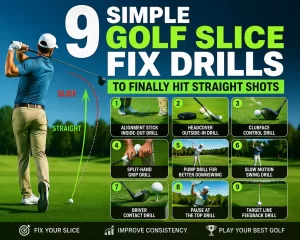
For many golfers, the slice is the most frustrating problem they face. You can spend hours at the driving range, watch countless swing videos, and try different tips from friends, yet the ball still curves dramatically to the right. The reason is simple: most golfers are trying to treat the symptom instead of fixing the actual cause. Finding a true golf slice fix requires understanding what is happening during your swing and making the right adjustments that create lasting improvement.
The slice is one of the most common mistakes in golf because it is usually caused by a combination of factors working together. A poor golf swing path, an open clubface, and an incorrect impact position can all create the side spin that sends the ball away from your target. Many golfers believe they just need to swing harder or aim farther left, but these temporary solutions rarely solve the underlying issue.
Aiming left is one of the most common reactions when golfers slice the ball, but it does not actually fix the problem. While it may help the ball finish closer to the target occasionally, the same swing flaw is still there. The golfer is simply adjusting their alignment to compensate for a mistake instead of correcting their swing mechanics. Eventually, the slice usually returns, often becoming even more frustrating because confidence starts to disappear.
To create a permanent improvement, golfers need to understand the relationship between swing path and clubface angle. The direction your club travels through impact and the position of the clubface at that moment determine where the ball starts and how much it curves. For example, an outside in swing combined with an open clubface is one of the biggest causes of a slice. Learning how to create a better inside out swing path while controlling the clubface is the foundation of an effective golf slice fix.
The good news is that you do not need to completely rebuild your golf swing overnight. The best approach is to use targeted practice and proven golf slice fix drills that train your body to make better movements naturally. Simple repetition can help retrain your swing path, improve your clubface control, and build better golf swing mechanics.
Learning how to fix a golf slice with simple drills gives golfers a structured way to improve instead of randomly changing different parts of their swing. Whether you are a beginner struggling with your first slice or an experienced golfer who cannot seem to eliminate it, the right drills can help you develop a more consistent swing and finally start hitting straighter shots. These simple drills are designed to help you understand the cause of your slice and build the confidence needed to fix it for good.
Understanding Why You Slice The Golf Ball
Before you can find the right golf slice fix, you first need to understand what is actually causing the ball to curve away from your target. Many golfers spend years trying random tips, changing their grip, adjusting their stance, or buying new equipment without ever addressing the real problem. The truth is that most slices come down to two major factors: your golf swing path and your clubface angle at impact.
A golf slice happens when the golf ball receives sidespin that causes it to curve dramatically from left to right for a right-handed golfer. This usually occurs when the clubface is pointing too far open compared to the direction the club is traveling. When the face is open at impact, it creates the unwanted spin that sends the ball offline. Understanding this relationship is the first step toward learning how to truly fix a golf slice instead of temporarily hiding it.
One of the biggest causes of slicing is an open clubface. The clubface is responsible for controlling the initial direction of the golf shot, and even a small difference in face angle can create a major curve. Many golfers assume their swing path is the only problem, but if the clubface remains open through impact, the ball will continue to slice regardless of how good the swing path becomes.
Another common issue is an outside in swing, where the club moves across the golf ball from outside the target line toward the inside during the downswing. This motion creates side spin and makes it extremely difficult to hit consistent straight shots. Many golfers develop this swing pattern because they are trying to hit the ball harder, starting the downswing with their upper body, or attempting to guide the ball toward the target.
The problem becomes worse because golfers naturally try to compensate for their slice. They may aim farther left, rotate differently, or change their setup in an attempt to control the ball flight. While these adjustments may occasionally produce a better shot, they do not correct the underlying golf swing mechanics causing the slice. Instead, they create additional inconsistencies that make the swing harder to repeat.
It is important to understand the difference between a swing path problem and a face angle problem. A golfer can have a decent swing path but still slice because the clubface is open. Another golfer may have a square clubface but an extreme outside in swing path that creates a pull or slice. Identifying which issue is affecting your swing allows you to choose the right practice drills.
The good news is that these problems can be corrected with focused practice. The right golf slice fix drills can help train a better swing path, improve clubface control, and teach your body new movement patterns. Once you understand what causes your slice, you can stop guessing and start making changes that lead to more consistent, straighter golf shots.
15 Hidden Golf Slice Correction Mistakes You Must Avoid
The 3 Biggest Mistakes Preventing You From Fixing Your Golf Slice
Many golfers spend months, or even years, trying to fix a golf slice but never see consistent results because they are focusing on the wrong things. The problem is not a lack of effort. Most golfers practice regularly and genuinely want to improve. The issue is that they often make changes without understanding why the slice is happening in the first place.
A successful golf slice fix starts with identifying the root cause. When golfers make random adjustments without understanding their swing, they often create new problems that make the original issue even harder to correct. By avoiding these three common mistakes, you can make your practice sessions more productive and build a more reliable golf swing.
Mistake #1: Trying To Fix The Slice By Aiming Left
One of the most common reactions to a slice is simply aiming farther left. While this might make the ball finish closer to the target occasionally, it does not solve the actual swing problem. Your golf swing mechanics remain the same, which means the slice will continue to appear.
Aiming left is only a temporary adjustment because it does nothing to correct the factors causing the slice, such as an open clubface, poor alignment, or an incorrect swing path. In many cases, golfers who rely on this strategy actually make the problem worse because they begin creating an even more dramatic outside in swing to compensate.
Instead of changing your target line, focus on improving your setup, alignment, and club delivery. A proper golf slice fix drill should help you train better movement patterns rather than forcing you to aim around your mistake.
Mistake #2: Practicing Without Understanding The Cause
Another major mistake golfers make is spending hours hitting balls without knowing what they are trying to improve. Repeating the same flawed motion hundreds of times does not create improvement. It simply reinforces the same habits.
For example, a golfer may hit 100 balls trying to “stop slicing” but never checks whether the issue is their grip, clubface angle, or swing path. Without understanding the cause, practice becomes random instead of purposeful.
Effective practice requires feedback and awareness. You need to know whether you are working on controlling the clubface, improving your swing path, or creating better impact conditions. The right golf slice fix drills focus on one specific problem at a time so your body can learn the correct movement.
Mistake #3: Changing Too Many Swing Mechanics At Once
When golfers become frustrated with their slice, they often try to change everything at the same time. They adjust their grip, stance, takeaway, backswing, downswing, and follow-through all at once. This creates confusion and makes it nearly impossible to know what is actually helping.
Golf improvement happens through small, consistent adjustments. Instead of rebuilding your entire swing, focus on the biggest factors first: proper setup, balanced grip pressure, and a better understanding of your swing path.
Poor setup and alignment can put your body in a position where a slice becomes almost unavoidable. An overly tight grip can restrict natural release and leave the clubface open. A lack of swing path awareness can cause golfers to repeatedly create an outside in motion without realizing it.
By focusing on one improvement at a time and using structured drills, you can develop better golf swing mechanics and finally make lasting progress toward eliminating your slice. The key is not practicing harder — it is practicing smarter with drills designed to correct the actual cause of your ball flight.
Golf Slice Fix Drill #1: The Alignment Stick Inside-Out Swing Drill
One of the biggest reasons golfers struggle with a slice is an incorrect golf swing path. Many players develop an outside-to-inside motion where the club cuts across the ball at impact, creating unwanted sidespin. The Alignment Stick Inside-Out Swing Drill is one of the most effective golf slice fix drills because it helps train your body to approach the ball from the correct direction and develop a more consistent inside out swing path.
The purpose of this drill is to create awareness of where your club is traveling during the downswing. Instead of swinging over the top and cutting across the ball, you will learn to deliver the club more from the inside. This encourages a better swing path and helps reduce the side spin responsible for your slice.
How To Perform The Alignment Stick Inside-Out Swing Drill
Start by placing an alignment stick or golf club on the ground just outside the golf ball. Position it so it creates a visual barrier that encourages your club to travel from the inside toward the target line.
Follow these steps:
- Set up normally with the golf ball positioned correctly in your stance.
- Place the alignment stick slightly outside the ball and angled toward your target.
- Begin your backswing while maintaining good posture and balance.
- During your downswing, focus on bringing the club underneath the alignment stick instead of moving over it.
- Feel the club moving from inside the target line through impact.
- Finish your swing naturally while maintaining balance.
The goal is not to force the club dramatically inside. The objective is to create a natural path where the club approaches the ball from a better angle.
A common mistake golfers make with this drill is exaggerating the movement. They may swing too far from the inside and create a push or hook. Remember, the goal is a neutral inside out swing path, not an extreme motion in the opposite direction.
For best results, practice this drill slowly first. Start with 10–15 controlled repetitions without worrying about distance. Once the movement feels more natural, gradually increase speed and hit actual golf shots. These types of simple drills to stop slicing the golf ball work best when you focus on quality repetitions rather than simply hitting hundreds of balls.
Golf Slice Fix Drill #2: The Headcover Outside-In Swing Path Drill
Another major cause of slicing is the dreaded outside in swing. This happens when golfers bring the club too far outside during the downswing and then cut across the ball at impact. This common mistake is often called “coming over the top,” and it is one of the biggest challenges golfers face when trying to improve their ball flight.
The Headcover Outside-In Swing Path Drill is designed to help golfers recognize this unwanted movement and develop better awareness of their golf swing path. If you are searching for how to fix a golf slice with simple drills, this is one of the easiest drills to add to your practice routine.
Why Golfers Come Over The Top
Many golfers create an outside in swing because they start the downswing with their shoulders instead of allowing the lower body and hands to work together. Others simply have a habit of trying to hit the ball harder, causing the club to move outside the proper path.
To perform this drill, place a golf headcover about 6–8 inches outside and behind the golf ball. The goal is to avoid hitting the headcover during your downswing.
Follow these steps:
- Place the headcover outside the target line near the ball.
- Take your normal setup position.
- Begin your backswing slowly.
- Start your downswing while focusing on avoiding the headcover.
- Feel the club dropping more inside instead of moving over the top.
- Swing through the ball with a smoother motion.
The headcover acts as immediate feedback. If you hit it, your club is likely moving too far outside during the downswing.
Practice this drill with slow swings first, focusing on learning the correct movement pattern. Perform 15–20 repetitions before hitting full shots.
The goal is not just to avoid the headcover — it is to retrain your body to understand where the club should travel. When combined with proper clubface control, this drill can help eliminate the outside in swing and create a more powerful, consistent golf swing. By improving your path and awareness, you give yourself a much better chance of finally fixing your slice for good.
Best Golf Training Program For Beginners: Why Most Golfers Never Improve
Golf Slice Fix Drill #3: The Clubface Control Drill
While improving your swing path is important, many golfers overlook another major piece of the puzzle: clubface angle. You can have a great swing path, but if the clubface is not in the correct position at impact, the ball will still curve away from your target. Learning how to control the clubface is one of the most important steps in creating a complete golf slice fix.
The clubface is responsible for controlling the initial direction of your golf shot and plays a major role in determining how much the ball curves. If the face is pointing too far open at impact, the ball will often start right and continue curving farther right because of the sidespin created. This is why an open clubface is one of the most common causes of a slice.
Many golfers spend all their time trying to change their swing path but never learn how to properly control the face. They may successfully move toward a better swing path, but if the clubface remains open, the slice can continue. Developing awareness of your clubface position throughout the swing is essential for building better golf swing mechanics.
How To Perform The Clubface Control Drill
Start by taking your normal golf grip and making slow practice swings while paying attention to the position of the clubface.
Follow these steps:
- Take your regular setup with a golf club.
- Make a slow backswing and pause halfway back.
- Check the position of the clubface and notice whether it is too open or square.
- Move into the downswing slowly while feeling the clubface returning to a square position.
- Practice small swings first before progressing to full swings.
The goal is not to manipulate the club aggressively. Instead, you are training awareness and learning how different hand positions affect the clubface.
Your grip plays a major role in controlling the face. A grip that is too weak can make it difficult to square the clubface, causing the face to remain open through impact. On the other hand, a grip that is too strong can create timing issues and excessive rotation.
A good drill progression starts with short half swings, then moves to three-quarter swings, and finally full swings. Begin with controlled shots where you focus on contact and clubface control rather than distance.
This drill is especially useful because it teaches golfers that a true golf slice fix requires more than simply changing the direction of the swing. You must learn how to control both your swing path and the clubface working together.
You may be closer to fixing your slice than you think. Many golfers spend hours practicing but never address the small swing mistakes that keep creating the same frustrating ball flight. The biggest improvements often come from understanding what your swing is doing wrong and applying the right corrections. Discover the training approach that helps golfers build a more consistent swing with The Golf Swing Lab. Discover The Golf Swing Lab
Golf Slice Fix Drill #4: The Split-Hand Grip Drill
The Split-Hand Grip Drill is one of the best golf slice fix drills for beginners because it helps golfers improve their release mechanics and develop better awareness of how the hands work through impact. Many players who struggle with a slice have difficulty releasing the club properly, which often leaves the face open and sends the ball curving to the right.
A proper release allows the clubface to rotate naturally through impact. When golfers hold the club too tightly or fail to allow the hands to work together, the clubface can remain open. This creates the weak, fading shots that many golfers are trying to eliminate.
This drill focuses on improving hand coordination, encouraging better rotation, and helping golfers understand how the hands influence the clubface.
How To Perform The Split-Hand Grip Drill
Follow these steps:
- Take your normal golf club and separate your hands on the grip.
- Place your lead hand in its normal position.
- Slide your trail hand several inches lower down the grip.
- Make slow practice swings while focusing on how your hands move through impact.
- Feel the trail hand helping the club release naturally.
The split-hand position makes it easier to feel whether your hands are working together or fighting against each other. It can also help reduce an open clubface by encouraging better rotation through the hitting area.
A common mistake is trying to force the clubface closed with your hands. The goal is not to flip the club at impact but to develop a natural release pattern. Good golf swing mechanics come from proper sequencing, not from forcing movements.
Start with small swings using this drill for 10–15 repetitions. Once you begin feeling a better release, gradually return to your normal grip while keeping the same sensation.
For beginners especially, this drill can provide immediate feedback and help build confidence. Combined with other golf slice fix drills, it teaches your body the correct movements needed to square the clubface and create more consistent golf shots. By improving your release and reducing an open clubface, you can take a major step toward eliminating your slice permanently.
Golf Slice Fix Drill #5: The Pump Drill For Better Downswing Position
One of the biggest challenges golfers face when trying to fix a golf slice is creating the correct downswing sequence. Many players start their downswing with their upper body, causing the shoulders to spin too quickly and forcing the club to move outside the proper path. This creates the common “over the top” move that leads to an inconsistent golf swing path and a frustrating slice.
The Pump Drill is designed to help golfers feel a better transition from the top of the backswing into the downswing. Instead of rushing toward the ball, this drill teaches you how to position the club correctly before moving into impact. Developing this better sequence can help create a more natural inside out swing path and improve overall consistency.
Why Golfers Get Stuck Over The Top
Coming over the top happens when the club moves outside the ideal path during the downswing. This often occurs because golfers are anxious to hit the ball and begin the downswing by throwing the arms and shoulders forward.
When the upper body dominates the transition, the club usually travels across the ball from outside to inside. This creates sidespin and makes it difficult to hit straight shots consistently.
The Pump Drill helps eliminate this problem by teaching golfers to pause and feel the correct position before moving into the downswing.
How To Perform The Pump Drill
Follow these steps:
- Take your normal setup position with a golf club.
- Complete your backswing and reach the top of your swing.
- Begin moving into your downswing position by slightly lowering your arms.
- Stop and “pump” the club halfway down two or three times.
- Focus on keeping your hands in front of your body while allowing the club to move into a better delivery position.
- After the final pump, swing through the ball.
The goal is to feel the club dropping into a better position instead of rushing from the top.
A common mistake is trying to force an extreme inside movement. The goal is not to swing dramatically from the inside, but to create a balanced inside out swing path that allows the club to approach the ball more efficiently.
Practice this drill slowly at first. Perform 10–15 repetitions without worrying about hitting the ball hard. Once the movement starts feeling natural, begin hitting controlled shots while maintaining the same transition feeling.
The Pump Drill improves consistency because it teaches your body the proper order of movements. Instead of relying on timing and adjustments, you develop a repeatable motion that makes it easier to control your swing path and strike the ball more consistently.
Golf Slice Fix Drill #6: The Slow Motion Swing Drill
Many golfers believe they need to swing harder or hit more golf balls to improve, but sometimes slowing down is the fastest way to make progress. The Slow Motion Swing Drill is one of the most effective simple drills to stop slicing the golf ball because it allows you to understand what your body and club are doing throughout the swing.
When you swing at full speed, it can be difficult to recognize mistakes. The club moves too quickly, and you often do not feel where the swing begins to break down. By slowing everything down, you create more awareness and give your brain the opportunity to learn better golf swing mechanics.
Why Slowing Down Helps Golfers Learn
Your golf swing is a series of connected movements. If one part of the sequence is out of position, it can affect everything that follows. A rushed backswing, poor transition, or incorrect clubface position can create problems that lead to a slice.
Slow motion practice allows you to focus on each part of the movement:
- Your setup and posture
- Your takeaway
- Your backswing position
- Your downswing path
- Your impact position
- Your follow-through
How To Practice The Slow Motion Swing Drill
Start by making swings at around 25–50% of your normal speed.
Follow these steps:
- Take your normal golf setup.
- Slowly move the club into your backswing.
- Pause briefly at the top and check your position.
- Begin the downswing slowly while focusing on a better swing path.
- Move through impact while maintaining balance.
- Finish your swing smoothly.
The purpose is not to hit the ball far. The purpose is to train your body to repeat the correct movement.
A common mistake is practicing slowly but still making the same incorrect motion. Speed does not fix mechanics — awareness does. Use a mirror, video recording, or feedback from your ball flight to identify areas that need improvement.
The Slow Motion Swing Drill works because it creates better movement patterns through repetition. Instead of reinforcing a slice with hundreds of rushed swings, you are teaching your body a more efficient motion.
When combined with other golf slice fix drills, this practice method can help you develop better control, improve your swing path, and build confidence that transfers to your normal golf swing.
A frustrating slice does not have to define your golf game. The difference between struggling and improving comes down to having the right guidance, practice plan, and understanding of what creates better shots. If you are ready to stop fighting the same mistakes and build a more confident, repeatable swing, take the next step with The Golf Swing Lab and start your improvement journey today. Build Your Better Golf Swing Now
Golf Slice Fix Drill #7: The Driver Contact Drill
For many golfers, the driver is where the slice becomes the most frustrating. You may be able to hit your irons reasonably well, but once the driver comes out of the bag, the ball starts curving dramatically to the right. The reason driver slices are often worse is because small mistakes in setup, swing path, and contact become amplified with a longer club.
The Driver Contact Drill is one of the most effective golf slice fix drills because it helps golfers improve their impact position, ball contact, and launch conditions. Learning how to strike the driver correctly is an important part of learning how to fix a golf slice and hit longer, straighter shots.
Why Driver Slices Are Worse
The driver is the longest club in your bag, which means it requires more control and precision. Because the club is longer, golfers often have a harder time controlling the clubface angle and maintaining the correct swing path.
Many players also make the mistake of trying to hit the driver harder. This extra effort can cause the upper body to dominate the downswing, creating an outside movement that leads to inconsistent contact and slicing.
Another common issue is trying to help the ball get into the air. Golfers often lean forward or strike down on the driver, creating poor launch conditions and increasing the chance of a weak slice.
Ball Position Mistakes
One of the biggest setup mistakes with the driver is placing the ball too far back in the stance. Unlike an iron shot, the driver is designed to be hit on the upswing.
For most golfers, the ball should be positioned near the inside of the lead heel. This encourages a more upward angle of attack and gives the club more time to square before impact.
A ball position that is too far back can encourage a steep downswing and make it easier to create a poor swing path.
Tee Height And Setup
Tee height also plays a major role in driver contact. If the ball is teed too low, golfers often hit down on the ball and create inconsistent strikes. If it is too high, they may struggle with contact on the upper portion of the face.
A good starting point is to have approximately half of the golf ball sitting above the top edge of the driver when the club is resting on the ground.
How To Perform The Driver Contact Drill
- Set up with your driver and place the ball in the correct forward position.
- Tee the ball at your normal height.
- Make controlled swings at 50–70% effort.
- Focus on making solid center-face contact.
- Pay attention to the ball flight instead of trying to hit for maximum distance.
The goal is consistency, not power. Once you improve contact and your impact position, you can gradually increase speed.
This drill helps golfers develop better awareness of how setup, contact, and swing path work together. A reliable golf slice fix is not just about changing the downswing — it starts with creating the right conditions before you even begin your swing.
Golf Slice Fix Drill #8: The Pause At The Top Drill
One of the biggest reasons golfers struggle with a slice is a rushed transition from the backswing into the downswing. When the transition happens too quickly, golfers often lose control of the club, throw their hands forward, and create poor golf swing mechanics.
The Pause At The Top Drill is designed to improve tempo, timing, and sequencing. It is one of the simplest ways to develop a smoother transition and create a more consistent swing. For golfers looking for a reliable golf slice fix, learning how to control the transition is a major step toward hitting straighter shots.
Why Tempo Matters
Many golfers think they need to swing faster to hit the ball farther, but speed without control often creates problems. A rushed downswing can cause the upper body to move too aggressively, leading to an incorrect swing path and an open clubface at impact.
Good players create speed through proper sequencing. The lower body begins the transition, the arms follow, and the club naturally delivers into the ball.
How To Perform The Pause At The Top Drill
Follow these steps:
- Take your normal golf setup.
- Begin your backswing slowly and smoothly.
- Pause for one to two seconds when you reach the top.
- Feel your weight transition naturally before starting down.
- Swing through the ball while maintaining balance.
The pause gives your brain time to recognize the correct position and prevents the rushed movements that often create a slice.
A common mistake is making the pause feel artificial. The goal is not to stop your swing completely or create tension. Instead, it is about developing awareness and better timing.
Practice this drill with short swings first, then gradually increase to full swings. Focus on rhythm rather than distance.
Improving your tempo helps create better golf swing mechanics because your body learns to work in the correct order. When combined with other golf slice fix drills, the Pause At The Top Drill can help you build a smoother, more repeatable swing and reduce the inconsistent movements that cause slicing.
Golf Slice Fix Drill #9: The Target Line Feedback Drill
One of the biggest challenges golfers face when trying to improve their swing is knowing whether they are actually making progress. Without proper feedback, it is easy to repeat the same mistakes over and over again. The Target Line Feedback Drill is a powerful golf slice fix exercise because it helps you understand how your ball flight connects to your golf swing path and club delivery.
Many golfers simply hit ball after ball without paying attention to the information the shot provides. However, every golf shot gives you feedback. The direction the ball starts, the amount it curves, and the quality of contact can tell you a lot about what is happening during your swing.
Using Visual Feedback To Improve Your Swing
The purpose of this drill is to create a clear visual reference for your swing direction. By setting up a target line, you can better understand whether your club is traveling on the correct path or creating the outside movement that causes a slice.
To perform this drill:
- Place an alignment stick or club on the ground pointing toward your target.
- Set up normally with the golf ball positioned near the target line.
- Make controlled swings while focusing on where the ball starts.
- Observe whether the ball begins left, right, or directly toward your target.
- Adjust your swing path based on the feedback.
The goal is not to force the ball to fly perfectly every time. The goal is to understand why the ball reacts the way it does.
Tracking Ball Flight
Ball flight is one of the best sources of feedback available to golfers. A ball that starts left and curves right may indicate a different issue than a ball that starts right and continues farther right.
Learning to read these patterns helps you determine whether you need to work on your swing path, clubface control, or impact position.
Many golfers trying to fix a slice only focus on where the ball ends up. Instead, pay attention to the entire flight pattern. The starting direction and curve reveal valuable information about your swing.
Adjusting Your Swing Path And Building Confidence
The Target Line Feedback Drill helps golfers develop awareness and confidence because they can see improvement happening over time. Instead of guessing whether a change is working, you receive immediate feedback from each shot.
Practice this drill with controlled swings first. Focus on making repeatable movements rather than hitting the ball as hard as possible.
When combined with other golf slice fix drills, this exercise helps you develop a better understanding of your swing and creates a more consistent path toward straighter shots.
How To Practice These Golf Slice Fix Drills For Faster Results
Learning how to fix a golf slice with simple drills is not just about knowing the right exercises. The biggest difference between golfers who improve and those who stay stuck is how they practice. Many players spend hours at the range hitting hundreds of balls but see little progress because their practice lacks structure.
A successful golf improvement plan requires focused repetition, proper feedback, and patience. The best golf slice fix drills for beginners work when they are practiced consistently and with a clear purpose.
Why Random Practice Does Not Work
Randomly hitting golf balls without a specific goal often creates confusion. You may hit one good shot and then immediately change something because the next shot was poor.
This approach makes it difficult for your body to learn new movement patterns.
Instead, each practice session should focus on one specific area:
- Improving swing path
- Controlling the clubface
- Creating better impact position
- Improving tempo and sequencing
By focusing on one skill at a time, you allow your body to understand and repeat the correct movement.
Creating A Weekly Practice Routine
A simple practice schedule can create faster improvement.
Example:
Day 1: Swing Path Practice
- Alignment Stick Inside-Out Drill
- Headcover Outside-In Drill
- 30–40 repetitions
Day 2: Clubface Control
- Clubface Control Drill
- Split-Hand Grip Drill
- 30 minutes of focused practice
Day 3: Transfer Practice
- Hit normal shots while applying the new movements
- Track ball flight and results
The goal is not endless practice. The goal is intentional practice.
Recommended Repetitions
Quality is more important than quantity. Performing 15–30 focused repetitions of a drill is often more effective than hitting 100 unfocused shots.
Start slowly and increase speed only when you can perform the movement correctly.
Combining Drills Correctly And Tracking Improvement
Avoid trying to fix everything at once. Start with the biggest issue affecting your slice, then gradually combine different drills together.
For example, first improve your swing path, then work on clubface control, then focus on consistency.
Keep track of your progress by recording your ball flight, taking swing videos, or writing down what improves during each practice session.
With consistent practice, the right drills can help you build better mechanics, gain confidence, and finally make lasting progress toward eliminating your slice. A structured approach is what turns practice into real improvement.
Final Thoughts: Stop Fighting Your Slice And Build A Better Golf Swing
A golf slice can be one of the most frustrating problems in the game, but it does not have to be something you simply accept. Many golfers spend years trying quick fixes, changing their setup, aiming farther left, or making random swing adjustments without ever addressing the true cause. The key to a lasting golf slice fix is understanding why the slice happens and making targeted improvements that create better swing habits.
Throughout these drills, the biggest lesson is that a slice is usually the result of a combination of factors. Your golf swing path, clubface angle, grip, setup, and transition all work together to determine where the ball goes. If you have an open clubface at impact or create an excessive outside in swing, the ball will continue to curve no matter how much you practice.
Instead of fighting the slice, you need to learn what your swing is doing and why. Understanding cause and effect allows you to make smarter adjustments. When you know that your clubface controls the starting direction and your swing path influences the curve, you can stop guessing and start practicing with purpose.
The best golfers are not necessarily the ones who never make mistakes. They are the ones who understand how to identify problems and make the right corrections. The same approach applies when you are trying to fix a golf slice. Rather than changing five different parts of your swing at once, focus on one improvement, build confidence, and gradually develop a more consistent motion.
Consistency comes from quality repetition. The golf slice fix drills covered in this guide are designed to help you train better movement patterns, improve awareness, and build a swing that produces more reliable results. Whether you are a beginner searching for the best golf slice fix drills for beginners or an experienced golfer who has struggled with a slice for years, the process is the same: understand the problem, practice the correct movement, and give your body time to adapt.
If you are wondering how to fix a golf slice with simple drills, remember that improvement does not happen from hitting more balls without a plan. It happens when every repetition has a purpose. Focus on your swing path, improve your clubface control, and practice drills that directly address the reason your ball is curving.
A better golf swing is built one correction at a time. Stop chasing temporary fixes and start developing the fundamentals that create straighter, more consistent shots.
If you want a structured training system that helps you improve your swing, build consistency, and eliminate frustrating mistakes faster, consider getting professional golf instruction or a guided golf improvement program. The right guidance can help you identify your specific swing faults and create a personalized path toward playing better golf with more confidence.
Honest Swing Tips: How to Cure Your Slice https://practical-golf.com/golf-slice
Common Questions About A Golf Slice Fix
A golf slice is one of the most common challenges golfers face, and many players have the same questions when trying to correct it. Understanding the answers can help you avoid common mistakes and create a better plan for improvement. Whether you are a beginner learning the fundamentals or an experienced golfer trying to eliminate an ongoing problem, the right information can make your golf slice fix journey much easier.
How long does it take to fix a golf slice?
The time it takes to fix a golf slice depends on what is causing the problem and how consistently you practice. Some golfers notice improvement after just a few practice sessions when they correct a major issue like an open clubface or poor setup position.
However, creating a permanent change requires building new movement patterns. If your slice has been part of your swing for years, your body has developed habits that may take time to replace.
The fastest improvements usually come from identifying the biggest problem first. For example, if your main issue is an outside in swing, focusing on drills that improve your golf swing path can create noticeable changes quickly. Consistent practice with the right golf slice fix drills will help your improvements become more natural over time.
What causes a golf slice?
A golf slice is usually caused by a combination of swing path and clubface issues. The two biggest factors are an incorrect golf swing path and a clubface that is too open at impact.
An outside in swing causes the club to move across the ball, creating sidespin that makes the ball curve. When this is combined with an open clubface, the slice becomes even more severe.
Other factors can contribute, including:
- Poor grip fundamentals
- Incorrect setup and alignment
- Poor weight transfer
- Rushed transition
- Lack of awareness of impact position
The key to an effective golf slice fix is identifying the specific reason your ball is curving instead of simply trying random corrections.
Is my grip causing my slice?
Your grip can absolutely contribute to a slice, but it is not always the only cause. A weak grip position can make it harder to square the clubface during the downswing, leaving the face open at impact.
Many golfers who struggle with slicing hold the club too tightly or position their hands incorrectly, which affects their ability to release the club naturally.
However, changing your grip without understanding the rest of your swing can create new problems. Your grip, clubface control, and swing path all work together. A proper golf slice fix requires looking at the complete picture rather than changing one thing without understanding why.
Should I try to swing harder to fix my slice?
No. Swinging harder is one of the biggest mistakes golfers make when trying to correct a slice.
When golfers try to add more power, they often speed up their transition and lose control of the club. This can create a more aggressive outside in swing, increase tension, and make it even harder to square the clubface.
Distance comes from efficient golf swing mechanics, not simply swinging harder. Improving your sequence, tempo, and contact will help you create more consistent power while reducing your slice.
A smoother swing with better mechanics will usually produce better results than a harder swing with poor timing.
What is the easiest golf slice fix drill for beginners?
One of the easiest drills for beginners is the Alignment Stick Inside-Out Swing Drill. It is one of the best golf slice fix drills for beginners because it helps create awareness of the club’s path and encourages a better inside out swing path.
Beginners often struggle because they do not realize their club is traveling across the ball. This drill provides immediate feedback and helps train a more efficient movement pattern.
Another beginner-friendly option is the Split-Hand Grip Drill because it improves release mechanics and helps golfers understand how the hands influence the clubface.
The most effective approach is to start with simple drills, practice them consistently, and focus on quality repetitions. Learning how to fix a golf slice with simple drills is about building better habits step by step instead of searching for a quick temporary solution.