
How to Improve Golf Ball Striking in 7 Simple Steps
How to Improve Golf Ball Striking With Irons
Introduction: How To Improve Golf Ball Striking
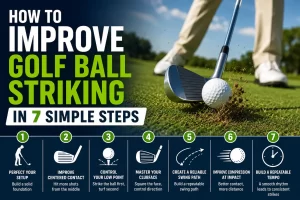
Few things in golf are more frustrating than hitting one iron shot perfectly and then stepping up to the next ball and catching it fat, thin, or off the toe. One swing produces that crisp sound and powerful flight every golfer wants, while the next barely feels like the same golf swing. When this happens repeatedly, it is easy to assume that you need to completely rebuild your technique. In reality, improving your ball striking usually starts with making a few important fundamentals more predictable.
Learning how to improve golf ball striking is not about developing a picture-perfect swing. Golfers have different body types, levels of flexibility, swing speeds, and natural movements. Even the best players in the world do not all swing the club the same way. What successful ball strikers have in common is their ability to produce reliable contact and control what happens when the club reaches the ball.
Several factors determine whether that contact is solid. Your setup establishes the foundation for the entire motion, while centered contact determines how efficiently energy transfers from the club to the golf ball. Low point control influences whether you strike the ball before the turf with your irons, and clubface control plays an important role in starting direction and accuracy. Your swing path, ball compression, balance, and golf swing tempo also work together to determine the quality and consistency of your shots.
That is why some of the most effective golf ball striking tips are surprisingly simple. Instead of changing three or four swing mechanics every time you hit a poor shot, concentrate on building fundamentals you can repeat. This approach is particularly important when learning how to improve golf ball striking for beginners, because constantly introducing new swing thoughts can make an already difficult game unnecessarily complicated.
In this guide, you will discover seven simple steps designed to improve golf ball striking from the ground up. We will cover building a consistent setup, improving centered contact, mastering your low point, controlling the clubface, developing a reliable swing path, creating better compression, and establishing a repeatable tempo.
Whether you are a beginner struggling to make solid contact or an experienced golfer searching for how to improve golf ball striking consistently, the goal remains the same: make your impact conditions more predictable. Once you understand how to strike a golf ball consistently, you can spend less time guessing what went wrong and more time building a golf swing you can trust on the course.
How to Master Golf Ball Striking in 9 Powerful Steps
Step 1: Build a Consistent Golf Setup
One of the most important steps when learning how to improve golf ball striking is creating a setup you can repeat from shot to shot. Consistent contact begins before the club ever moves. Small changes in posture, ball position, alignment, or balance can alter your swing enough to produce fat, thin, heel, or toe strikes.
A dependable setup gives your body a better starting position and reduces the number of compensations you need to make during the swing. Before worrying about complicated mechanics, make sure your foundation is solid.
Start With Proper Posture and Athletic Balance
Good golf posture should feel athletic rather than stiff. Begin with your feet planted comfortably, add a slight amount of knee flex, and hinge forward from your hips while maintaining a natural spine angle. Your arms should hang comfortably rather than reaching excessively toward the ball.
Pressure should feel balanced through your feet. If too much pressure moves toward your heels or toes at address, your body may compensate during the swing to prevent you from losing balance. Those unnecessary movements can make centered contact much harder to repeat.
Maintaining good posture also gives your arms and club enough room to move. When golfers stand too upright, crouch excessively, or lose their original posture, they often have to make adjustments during the downswing just to return the club to the ball.
Check Your Ball Position and Distance From the Ball
Ball position plays an important role in low point control because it affects where the club meets the ball relative to the bottom of the swing arc.
With shorter irons, the ball is generally positioned near the center of the stance. As clubs become longer, ball position gradually moves forward. Long irons and fairway woods are normally played farther forward than wedges, while the driver is typically positioned near the inside of the lead heel.
Your distance from the ball matters too. Standing too close can restrict your arms and encourage heel contact, while standing too far away can create excessive reaching and make toe strikes more likely.
If you’re working on how to strike a golf ball consistently, check your ball position and distance from the ball before assuming the problem is somewhere deeper in your swing.
Create a Repeatable Alignment Routine
Good alignment involves more than pointing your feet toward the target. Your feet, knees, hips, and shoulders should work together while the clubface is aimed appropriately for the shot you intend to play.
Develop a simple pre-shot routine. Aim the clubface first, establish your stance, check your posture and ball position, settle into balanced pressure, and then make your swing.
Use this same process during practice instead of casually dropping balls onto the range and hitting them. A repeatable routine helps turn proper setup into a habit.
When golfers ask how to improve golf ball striking consistently, the answer does not always require a major swing change. Sometimes the fastest improvement comes from creating the same starting conditions before every shot. Once your setup becomes predictable, improving clubface control, swing path, ball compression, and golf swing tempo becomes much easier.
Step 2: Improve Centered Contact
If you want to learn how to improve golf ball striking, one of the best places to focus your attention is where the golf ball actually meets the clubface. A golfer can have an attractive-looking swing, but if contact repeatedly moves between the heel, toe, and center of the face, distance and accuracy will be difficult to predict.
Developing more consistent centered contact gives you a foundation for improving nearly every other part of your ball striking.
Why Centered Contact Matters
The center of the clubface is designed to transfer energy efficiently into the golf ball. When you consistently strike the ball close to this area, you are more likely to produce predictable ball speed, distance, trajectory, and feel.
Heel and toe strikes can produce very different results. An off-center strike may lose distance, alter the direction of the shot, and create a noticeably different sensation at impact. When strike location constantly changes, even otherwise solid swings can produce inconsistent results.
This is also why golfers trying to improve golf ball striking should not automatically chase additional swing speed. Swinging harder while missing the center of the face can simply create faster versions of the same poor shots. Develop reliable contact first, then gradually increase speed while maintaining it.
Learn Where You Are Striking the Clubface
You cannot efficiently correct a contact problem if you do not know where impact is occurring. One of the simplest golf ball striking tips is to create visible feedback on the clubface.
Impact spray or face tape can show exactly where each shot contacts the club. Hit several balls and look for a pattern. Are most marks near the heel? Are they consistently toward the toe? Do they move around the entire face?
Patterns provide valuable information that ball flight alone may not reveal. Instead of guessing what happened, you have immediate evidence showing the quality of your contact.
Practice for Quality Instead of Quantity
Hitting 100 golf balls is not necessarily better than hitting 30 with a clear purpose. Repeatedly making poor swings without feedback can reinforce the exact contact pattern you are trying to eliminate.
Slow your practice down. Make deliberate swings and inspect your strike location after each shot or small group of shots. Half-swings and three-quarter swings are especially useful because they allow you to prioritize contact rather than speed.
This approach is valuable when learning how to improve golf ball striking for beginners. Start slowly, find the center of the clubface, and gradually build toward a full swing.
If your ultimate goal is discovering how to improve golf ball striking consistently, treat centered contact as a skill you can measure. The more frequently you can find the middle of the face, the easier it becomes to produce predictable shots and build confidence in your swing.
Step 3: Master Low Point Control
After improving where the ball contacts the clubface, the next step in learning how to improve golf ball striking is controlling where the club reaches the bottom of its swing arc. This is known as low point control, and it is one of the biggest differences between crisp iron contact and frustrating fat or thin shots.
A golfer who can consistently control the bottom of the swing has a much better chance of producing reliable contact from the fairway, rough, and practice range.
Understand Where the Club Should Bottom Out
Low point control simply refers to your ability to control where the clubhead reaches its lowest point relative to the golf ball.
With most standard iron shots, you want the club to contact the ball before reaching the lowest point of the swing. The club continues downward after impact, contacts the turf, and then begins moving upward as the swing continues. This creates the familiar ball-first, turf-second strike associated with solid iron play.
If the club reaches its low point too early, it can hit the ground before reaching the ball, producing a fat shot. If the club rises too soon or never gets low enough, you may catch the ball thin.
Developing predictable low point control is therefore essential when working on how to strike a golf ball consistently.
Fix Fat and Thin Golf Shots
Several swing problems can cause the low point to move around. Excessive swaying can change your position relative to the golf ball. Hanging back on your trail side through impact can move the bottom of the swing behind the ball, increasing the likelihood of heavy contact.
An early release can also create problems. When the wrists release too soon, the club may reach the ground before it should. Losing posture during the downswing can create the opposite problem, causing the golfer to stand up and struggle to reach the ball consistently.
Rather than immediately changing your swing path or clubface control, determine whether inconsistent low point is the real source of your poor contact.
Use a Simple Low Point Practice Drill
One effective drill requires nothing more than a towel. Place the towel flat on the ground several inches behind the golf ball. Make controlled iron swings while trying to strike the ball without touching the towel.
You can also draw a straight line in a practice bunker or use an existing line on a grass practice area when permitted. Practice making swings where the club contacts the ground on the target side of the line. This provides immediate feedback about where your swing is bottoming out.
Start with shorter swings and a comfortable golf swing tempo rather than trying to generate maximum speed.
These simple exercises can help you improve golf ball striking because they train an essential impact skill instead of relying on complicated swing thoughts. As your low point becomes more predictable, ball-first contact and ball compression become easier to produce—and you move another step closer to learning how to improve golf ball striking consistently.
Step 4: Develop Better Clubface Control
If you are learning how to improve golf ball striking, controlling the clubface is one of the most important skills you can develop. You might make solid contact and generate plenty of speed, but if the clubface arrives at impact in a different position from one swing to the next, controlling the direction and shape of your shots becomes extremely difficult.
Better clubface control is not about consciously forcing the face into the perfect position at impact. Instead, the goal is to develop a grip and swing that allow the clubface to return predictably without requiring last-second adjustments.
Understand the Clubface at Impact
The direction the clubface points at impact has a major influence on where the golf ball starts. The relationship between the clubface and swing path also influences the curvature of the shot.
Problems develop when golfers attempt to manipulate the clubface with their hands immediately before impact. One swing may arrive with the face open, while the next may involve an aggressive hand action that closes it too quickly. This makes it difficult to develop a predictable shot pattern.
One of the most useful golf ball striking tips is to focus on creating a repeatable delivery rather than trying to steer the golf ball. Your swing should allow the clubface to return consistently while your body continues rotating through the shot.
Improve Your Grip for Better Face Control
Your grip establishes your connection to the golf club, so it can significantly influence your ability to improve golf ball striking.
Start with comfortable, neutral hand placement. Avoid squeezing the club excessively. Too much grip pressure can create unnecessary tension in your hands, wrists, forearms, and even your shoulders, making it more difficult for the club to move naturally.
Extremely strong or weak grips can also make face control more challenging for some golfers. A very strong grip may encourage the face to close too quickly, while an excessively weak grip can make it difficult to square the face consistently.
There is no single grip that works perfectly for every golfer, but the goal should be the same: create a comfortable connection that helps you return the clubface predictably.
Avoid Flipping the Hands Through Impact
A common mistake among golfers searching for how to strike a golf ball consistently is attempting to help the ball into the air by flipping the hands through impact.
An early release occurs when the wrists release too soon and the clubhead passes the hands prematurely. This can add unwanted loft, interfere with low point control, reduce ball compression, and contribute to both fat and thin shots.
Instead of trying to scoop the ball upward, allow the club’s loft to do the work. Maintain a stable delivery while continuing to rotate your body through impact and into the finish.
This concept is particularly useful when learning how to improve golf ball striking for beginners. Rather than adding complicated hand movements, work toward a simple, repeatable motion with balanced rotation and a controlled golf swing tempo.
When your grip, body rotation, and clubface begin working together, you remove much of the last-second manipulation that causes inconsistent shots. Developing reliable clubface control is a major step toward learning how to improve golf ball striking consistently and producing shots you can trust when it matters most.
If you’ve been trying to figure out how to improve golf ball striking but your good shots still seem to disappear from one round to the next, the problem may not be how much you practice—it may be what you’re practicing. A few overlooked swing mistakes can keep producing the same frustrating results even when you’re putting in the work discover how you can master golf ball striking here
Step 5: Create a More Reliable Swing Path
A repeatable swing path is another important piece of the puzzle when learning how to improve golf ball striking. You do not need to create a perfectly neutral path on every swing, but you do want to avoid major changes in the direction the club is traveling through impact.
When swing path becomes unpredictable, golfers often compensate with their hands, shoulders, or body rotation. That can make centered contact, direction, and distance much harder to control. Developing a more reliable path gives you a better chance of delivering the club to the ball the same way from shot to shot.
Understand Swing Path Without Overcomplicating It
Swing path describes the direction the clubhead is traveling as it moves through impact. For a right-handed golfer, an inside-out path means the club is traveling slightly to the right of the target through impact. An outside-in path means it is moving to the left. A neutral path travels relatively close to the target line. For a left-handed golfer, these directions are reversed.
The important thing to understand is that swing path works together with clubface control. The relationship between the direction of the clubface and the direction of the swing path helps determine the golf ball’s starting direction and curvature.
You do not need to become obsessed with producing perfectly neutral numbers. If you’re trying to improve golf ball striking, the bigger objective is developing a path you can repeat.
Stop Making Major Swing Path Compensations
One common problem is coming over the top, where the club moves excessively outside the desired path during the downswing. This can contribute to pulls, slices, weak contact, and inconsistent strike location.
The opposite problem can occur when a golfer drops the club excessively to the inside. The club can become trapped behind the body, forcing the golfer to make aggressive compensations with the hands to return the clubface to the ball.
Either extreme can make learning how to strike a golf ball consistently much more difficult.
Instead of trying to manufacture a dramatic inside-out swing, focus on reducing extreme movements. A repeatable delivery is generally more useful than chasing a technically perfect swing path.
Practice a Simple Swing Path Drill
A basic headcover drill can provide immediate feedback. Place a headcover slightly outside and behind the golf ball. Make controlled swings while avoiding the headcover on the downswing. If you continually strike it, your club may be traveling excessively from outside to inside.
You can also place two alignment sticks or other safe objects on the ground to create a visual gate toward your target. Make half and three-quarter swings while trying to send the club naturally through the gate.
Start slowly. Maintaining a controlled golf swing tempo makes it easier to feel the club’s movement and recognize unwanted compensations.
These drills are particularly helpful for golfers researching how to improve golf ball striking for beginners because they provide simple visual feedback without introducing numerous technical swing thoughts.
As your path becomes more predictable, combine it with the low point control, centered contact, and clubface awareness developed in the previous steps. When these fundamentals begin working together, you can improve golf ball striking while creating a swing that is easier to repeat under pressure. That repeatability is ultimately one of the biggest keys to how to improve golf ball striking consistently.
Best Golf Training Program For Beginners: Why Most Golfers Never Improve
Step 6: Improve Ball Compression Through Better Impact
If you have ever hit an iron shot that felt almost effortless yet flew farther and more accurately than expected, you have experienced the benefits of quality impact. Learning to produce better ball compression is an important part of understanding how to improve golf ball striking, particularly with your irons.
Good compression does not come from swinging as hard as possible or aggressively chopping down on the golf ball. It comes from creating efficient impact conditions that allow the club to transfer energy into the ball while maintaining solid contact.
What Ball Compression Really Means
Ball compression is often discussed as though golfers need to squeeze the ball against the ground. That can create the wrong idea. You are not literally trapping the golf ball between the clubface and turf.
Instead, think about compression as the result of delivering the club efficiently into the ball. Solid centered contact, an appropriate shaft position, stable clubface control, and a continuing motion through impact all contribute to the powerful strike golfers associate with compression.
For many iron shots, the hands may be slightly ahead of the clubhead at impact, helping deliver the club with an effective amount of loft. However, trying to exaggerate forward shaft lean or hit sharply downward can create new problems.
One of the better golf ball striking tips is to focus on solid impact rather than trying to manufacture compression. When your setup, low point, and movement through the ball improve, better compression can become a natural result.
Get Your Pressure Moving Toward the Target
Proper pressure movement can make a major difference when learning how to strike a golf ball consistently.
During the downswing, pressure should begin moving toward the lead side. If you remain excessively on your trail side through impact, the bottom of your swing can occur too far behind the golf ball. That increases the possibility of hitting the ground first or making last-second compensations to avoid a fat shot.
Moving pressure toward the lead side helps bring your swing’s low point forward. This supports better low point control and makes ball-first iron contact easier to reproduce.
The key is not to violently slide your entire body toward the target. Your pressure can move forward while your body remains balanced and continues rotating through the shot.
Let the Club Strike the Ball Before the Turf
With a standard iron shot from the fairway, the goal is generally simple: ball first, turf second.
When impact conditions are correct, the club contacts the golf ball and continues downward before reaching the lowest part of its arc. If a divot is produced, it should generally begin on the target side of where the ball was positioned.
If the divot begins several inches behind the ball, your low point is occurring too early. If you rarely contact the turf and repeatedly hit thin shots, your swing may be bottoming out incorrectly in another direction.
This concept is especially valuable for golfers researching how to improve golf ball striking for beginners because it provides a clear impact goal without requiring complicated swing mechanics.
As your pressure movement, low point, swing path, and clubface become more predictable, your impact conditions should improve as well. Combine those fundamentals with a controlled golf swing tempo, and you can produce cleaner contact without feeling as though you need to overpower the golf ball.
Ultimately, learning how to improve golf ball striking consistently means making impact repeatable. Better compression is not something you force—it is the result of delivering the club efficiently and allowing solid contact to do the work.
Step 7: Build a Repeatable Golf Swing Tempo
The final step in learning how to improve golf ball striking is developing a tempo you can repeat whether you are practicing on the range or facing an important shot on the golf course. You can have a solid setup, good low point control, a reliable swing path, and excellent clubface control, but inconsistent timing can make all of those fundamentals harder to reproduce.
A dependable golf swing tempo helps organize the different parts of your swing into one coordinated motion. Instead of trying to generate maximum speed, the goal is to develop a rhythm that allows you to remain balanced and consistently deliver the center of the clubface to the ball.
Why Golf Swing Tempo Affects Ball Striking
Golf swing tempo refers to the overall rhythm and timing of your swing, particularly the transition from the backswing into the downswing. When your tempo becomes rushed, your arms and body can fall out of sequence. That can change your swing path, affect the position of the clubface, and make centered contact more difficult.
This is one reason swinging harder does not automatically produce better shots. Additional clubhead speed can create more distance when you maintain good contact, but speed becomes less valuable if you begin striking the heel, toe, or turf behind the ball.
One of the simplest golf ball striking tips is to find the fastest speed you can comfortably control instead of trying to hit every shot at maximum effort.
Find a Rhythm You Can Repeat
Every golfer has a slightly different natural rhythm. Some players make slower, flowing backswings, while others use a quicker motion. You do not need to copy the exact swing speed or tempo of another golfer.
Instead, find a backswing-to-downswing rhythm that feels comfortable and allows you to remain balanced throughout the motion.
Your goal is repeatability. If your tempo dramatically changes from shot to shot, your impact conditions are likely to change as well. A consistent rhythm makes it easier to coordinate pressure movement, body rotation, ball compression, and clubface delivery.
Practice at 70–80 Percent Speed
If you’re trying to improve golf ball striking, spend part of each practice session making controlled swings at approximately 70–80 percent of your normal speed.
Slowing down can make mechanical problems easier to identify. You may notice that you lose your posture, rush the transition, hang back, or struggle with balance when you are not focused entirely on generating speed.
Start with shorter, controlled swings and concentrate on contact. Once you can repeatedly find the center of the clubface, gradually increase your speed without sacrificing strike quality.
This approach is particularly useful when learning how to improve golf ball striking for beginners because it allows golfers to develop movement and contact before introducing maximum speed.
Take Your Range Tempo Onto the Golf Course
A smooth range swing does little good if your tempo disappears when you reach the first tee. Pressure, difficult shots, hazards, and the desire for extra distance can cause golfers to speed up without realizing it.
Develop a simple pre-shot routine that you use during both practice and play. Choose your target, make a comfortable practice swing, address the ball, and commit to the same rhythm you developed on the range.
Avoid adding extra effort simply because the shot feels important. Trust your normal motion.
Understanding how to improve golf ball striking consistently requires more than producing great shots during practice. You need a swing you can repeat when there is only one ball in front of you and the shot counts.
Combine a dependable golf swing tempo with centered contact, low point control, predictable swing path, clubface control, and balanced movement. When those fundamentals work together, learning how to strike a golf ball consistently becomes much less about searching for a perfect swing and much more about repeating a reliable one.
You hit a bad shot, change something. Hit another bad shot, change something else. Before long, you’re standing over the ball with five different swing thoughts and even less confidence. That cycle can keep golfers frustrated for years. The Golf Swing Lab provides a structured approach so you can stop chasing random fixes and start working toward lasting improvement.
Common Golf Ball Striking Mistakes to Avoid
Understanding how to improve golf ball striking also means recognizing the habits that make consistent contact more difficult. Many golfers spend hours working on technique when a few simple mistakes are preventing them from developing a repeatable strike.
Trying to Hit the Ball Too Hard
More effort does not automatically produce more distance. Swinging excessively hard can disrupt your balance, sequencing, golf swing tempo, and centered contact. When the body and arms begin racing against each other, controlling the clubface becomes much more difficult.
Instead, prioritize solid contact and gradually add speed without sacrificing balance. A centered strike with a controlled swing can often produce better results than an aggressive swing that misses the middle of the face.
Trying to Help the Golf Ball Into the Air
Another common mistake is attempting to scoop the ball upward. Golf clubs already have loft designed to launch the ball.
Trying to lift an iron shot can cause an early release and move the swing’s low point behind the ball. This can lead to fat or thin contact and poor ball compression. With standard iron shots, concentrate on striking the ball before the turf and allow the club’s loft to create the trajectory.
Moving Too Much During the Swing
Some movement is necessary for an athletic golf swing, but excessive swaying, lifting, or changing posture can make contact unpredictable.
If your body moves dramatically away from the ball and struggles to return to its original position, both low point control and strike location can suffer. Maintaining athletic balance and a reasonably stable posture gives your arms and club a more predictable environment in which to move.
Changing Swing Thoughts After Every Bad Shot
One poor shot does not necessarily mean your entire swing needs fixing. Constantly changing your grip, stance, swing path, takeaway, or downswing after every mistake can make it almost impossible to develop a repeatable motion.
If you want to learn how to improve golf ball striking consistently, look for patterns rather than reacting to individual shots.
Practicing Without Feedback
Do not judge every practice shot solely by where the ball finishes. Track where the ball contacts the clubface, where the club contacts the turf, the ball’s starting direction, and the overall pattern of several shots.
Feedback helps identify whether the problem involves centered contact, low point, clubface control, swing path, or another fundamental. This makes practice far more productive.
You hit a bad shot, change something. Hit another bad shot, change something else. Before long, you’re standing over the ball with five different swing thoughts and even less confidence. That cycle can keep golfers frustrated for years. The Golf Swing Lab provides a structured approach so you can stop chasing random fixes and start working toward lasting improvement.
Simple Practice Routine to Improve Golf Ball Striking
One of the best golf ball striking tips is to give every practice shot a purpose. Instead of rapidly hitting an entire bucket of balls, use a structured 30–40 ball session.
Begin with 5–10 balls focused on setup and balance. Check posture, ball position, alignment, and pressure through your feet before every swing.
Hit the next 5 balls focusing exclusively on centered contact. Use impact spray or face tape if available and check your strike pattern.
Use another 5 balls for low point control, paying attention to whether the club contacts the ball before the turf.
Hit 5 balls focused on clubface control and starting direction, followed by 5 balls concentrating on a repeatable swing path.
Next, hit 5 controlled iron shots focused on compression. Maintain good pressure movement toward the lead side and concentrate on clean ball-first contact rather than maximum distance.
Finish with 5–10 normal golf shots using a smooth, repeatable tempo. Go through your complete pre-shot routine and imagine that each ball represents an actual shot on the golf course.
This type of structured practice is especially useful when learning how to improve golf ball striking for beginners because it separates a complicated swing into manageable skills.
Learning how to strike a golf ball consistently requires more than hitting hundreds of balls. When every practice shot has a specific objective and provides useful feedback, you can identify weaknesses, measure improvement, and gradually build the reliable contact needed to truly improve golf ball striking.
Why Patience Matters When Developing Better Contact
Golfers often expect changes to produce immediate results. They make an adjustment on the practice range, hit two or three good shots, and assume the problem has been solved. When the next few shots do not turn out as expected, they quickly abandon the adjustment and search for something else.
This cycle can make improvement much more difficult than it needs to be.
Developing a dependable motion requires enough repetition for your body to become comfortable with a change. Something that initially feels unusual is not necessarily incorrect. If you have performed the same movement for years, even a small adjustment to your posture, grip, or movement pattern can feel dramatically different.
Give yourself enough time to evaluate an adjustment before deciding whether it works.
Instead of judging progress based on individual shots, look at groups of shots. For example, hit ten balls while concentrating on one specific change. Pay attention to the overall results rather than becoming overly concerned about one poor attempt.
You might discover that seven out of ten shots produce the result you want. That provides much more useful information than focusing entirely on the three mistakes.
Develop a Practice Plan You Can Repeat
Another helpful approach is creating a simple practice plan rather than arriving at the range without an objective.
Choose one specific skill before beginning your session. Spend several minutes making slow practice swings before introducing a ball. Once you begin hitting shots, take enough time between repetitions to evaluate what happened.
Ask yourself simple questions.
Did the movement feel balanced? Did the shot begin close to the intended target? Was the flight predictable? Did you maintain control throughout the motion?
These observations help turn practice into a learning process rather than an exercise in hitting as many balls as possible.
It can also be useful to alternate between technical practice and target-based practice. During technical practice, concentrate on the movement you are trying to develop. During target practice, select a specific target and go through your normal pre-shot routine as though you were playing on the course.
This helps bridge the gap between practice and actual play.
Measure Progress Over Several Practice Sessions
Improvement rarely follows a perfectly straight line. Some practice sessions will feel excellent, while others may feel like you have taken a step backward.
Keep track of your progress over several sessions rather than evaluating yourself after a single day. You could record how many shots out of ten finished within your intended target area or simply write down what felt comfortable and what still needs attention.
Over time, patterns become easier to recognize.
The objective is not to eliminate every poor shot. Even highly skilled players make mistakes. A more realistic goal is to gradually reduce the severity and frequency of those mistakes.
Stay patient, practice with a clear purpose, and allow improvements enough time to become natural. Small changes repeated successfully over weeks can produce much greater results than constantly searching for a completely new technique.
How to Take Your Practice From the Range to the Course
One of the biggest challenges golfers face is taking what they have learned on the practice range and using it successfully during an actual round. It is common to feel comfortable during a practice session only to struggle when standing over an important shot on the course.
The environment is completely different.
On the range, you might hit several balls in a row with the same club. If one attempt does not go as planned, another ball is sitting there waiting. On the course, you get one opportunity. There may also be water, bunkers, trees, out-of-bounds areas, uneven lies, and other obstacles that influence your decision.
That is why part of your training should prepare you for actual playing conditions.
Stop Hitting the Same Club Over and Over
Repetition can be useful when working on a specific movement, but eventually you should begin changing clubs and targets.
For example, hit one shot with a pitching wedge, switch to a 7-iron, and then hit a fairway wood. Choose a different target for each attempt.
This creates an experience that more closely resembles playing a round because you must reset before every shot.
You can even imagine playing a familiar hole. Hit a driver toward one target, select an iron for your imaginary approach, and then choose a shorter club for the next attempt.
Develop a Consistent Pre-Shot Routine
Your pre-shot routine can become an important connection between the range and the course.
Before each attempt, select a specific target and decide what type of shot you want to play. Take a practice swing if that is part of your normal routine, address the ball, and then make your swing.
Try to use approximately the same routine each time.
A familiar process can be particularly valuable when you become nervous or face a difficult situation. Instead of thinking about several mechanical movements, you can concentrate on your target and follow a routine you have already practiced hundreds of times.
Learn to Accept Imperfect Shots
Another important part of becoming a better player is accepting that not every shot will be perfect.
Golfers sometimes make the mistake of believing improvement means eliminating mistakes completely. That is unrealistic. Even highly skilled players occasionally miss their intended target.
The objective should be making your mistakes more manageable.
Instead of allowing one poor attempt to influence the next several swings, evaluate what happened, make a reasonable adjustment if necessary, and move forward.
Practice With Consequences
You can also create small challenges during practice.
Choose a target and give yourself one attempt to hit it. If you succeed, move to another club and target. If you miss, start the challenge again.
This adds a small amount of pressure and forces you to concentrate on each individual attempt.
Over time, this style of training can make the transition from practice to actual play much easier. Rather than becoming dependent on hitting ball after ball until something feels right, you develop the ability to prepare, commit, execute, evaluate the result, and move on to the next shot.
Golf Ball Striking Drills: 11 Proven Drills for Consistent and Clean Contact https://hackmotion.com/best-ball-striking-drills/
Conclusion: Build Better Ball Striking One Step at a Time
Learning how to improve golf ball striking does not require completely rebuilding your golf swing. In many cases, better contact comes from improving a handful of fundamentals and making them more repeatable.
The seven steps covered in this guide give you a practical system for doing exactly that. Start by creating a consistent setup with good posture, ball position, alignment, and balance. From there, work on centered contact so you can transfer energy into the golf ball more efficiently.
Next, develop better low point control so your iron shots produce more reliable ball-first contact. Improve your clubface control to create a more predictable starting direction, and develop a repeatable swing path that does not require major last-second compensations.
Better ball compression can then develop from improved impact conditions, pressure movement, and solid contact. Finally, use a controlled golf swing tempo to bring everything together and create a motion you can reproduce on both the practice range and golf course.
The important thing is not to try to fix everything at once.
Identify the weakest part of your ball striking and make that your primary practice goal. If you consistently hit behind the ball, spend more time working on low point. If your strike pattern moves between the heel and toe, prioritize centered contact. If shots repeatedly start in different directions, examine your clubface control and alignment.
This approach is especially valuable when learning how to improve golf ball striking for beginners. Adding several new swing thoughts at the same time can make golf unnecessarily complicated. Working on one fundamental until it becomes more reliable gives you a much clearer path toward improvement.
Your practice should also provide measurable feedback. Track where the ball contacts the clubface, where your divots begin, the direction your shots start, and the overall pattern of several shots. These observations can tell you far more than simply deciding whether an individual shot was good or bad.
If your goal is how to improve golf ball striking consistently, focus on progress rather than perfection. You do not need every shot to come directly from the center of the clubface. You want your misses to become smaller and your successful strikes to happen more frequently.
Ultimately, understanding how to strike a golf ball consistently comes down to making impact more predictable. Build your setup, contact, low point, clubface, swing path, compression, and tempo one step at a time. Combine those fundamentals with deliberate practice, and you can steadily improve golf ball striking while building a golf swing you can trust when you step onto the course.
Frequently Asked Questions About How to Improve Golf Ball Striking
How can I improve my golf ball striking?
If you want to learn how to improve golf ball striking, begin with the fundamentals that directly influence impact. Build a repeatable setup with proper posture, ball position, alignment, and balance. Then work on centered contact, low point control, clubface control, and a predictable swing path.
For iron shots, focus on producing ball-first contact rather than trying to lift the ball into the air. Proper pressure movement toward the lead side can help improve low point and create better ball compression. Finally, develop a comfortable golf swing tempo that allows you to maintain balance and repeat your motion consistently.
How do I improve golf ball striking consistently?
Learning how to improve golf ball striking consistently is primarily about repeatability. Instead of changing your mechanics after every poor shot, develop a setup and impact pattern you can reproduce.
Monitor your strike location, low point, starting direction, balance, and tempo during practice. If a problem appears repeatedly, work on that specific fundamental rather than making several swing changes at once. The goal is not to create a perfect swing but to make your impact conditions increasingly predictable.
How do I strike a golf ball consistently?
To understand how to strike a golf ball consistently, start by creating the same conditions before every swing. Use a predictable setup, maintain athletic balance, and position the ball appropriately for the club you are using.
From there, concentrate on finding the center of the clubface and controlling where the club reaches the bottom of its swing. Combine those fundamentals with a repeatable tempo. The more consistently you control setup, centered contact, low point, and rhythm, the more predictable your overall ball striking can become.
How can beginners improve golf ball striking?
When learning how to improve golf ball striking for beginners, simplicity is important. Start with posture, alignment, ball position, and balance before worrying about complicated swing mechanics.
Practice with half-swings and three-quarter swings at a controlled speed. Focus on finding the center of the clubface and making clean contact before trying to generate maximum distance.
Use feedback whenever possible. Impact spray can reveal strike location, while turf interaction can help you understand low point. Building these skills gradually gives beginners a much stronger foundation for long-term improvement.
Why is my golf ball striking so inconsistent?
Inconsistent ball striking can come from several areas. Your setup may change between shots, your balance may be unstable, or your low point may move forward and backward. Off-center contact can also produce significant differences in distance and direction.
Swinging too aggressively can make these problems worse by disrupting sequencing and golf swing tempo. Variations in swing path and clubface position can further change your shot pattern.
Instead of guessing, use feedback to determine which problem appears most frequently and address that area first.
How can I stop hitting my irons fat?
Fat iron shots occur when the club contacts the ground too far behind the golf ball. Improving low point control should therefore be a major priority.
Check your ball position and make sure you are not playing the ball unnecessarily far forward. During the downswing, allow pressure to move toward your lead side instead of hanging back on your trail foot.
A simple towel drill can also help. Place a towel several inches behind the ball and practice striking the ball without touching the towel. This encourages cleaner ball-first contact.
How can I stop hitting thin golf shots?
Thin shots happen when the club contacts the golf ball too high on the face or fails to reach the ground at the appropriate location.
Check whether you are losing posture, lifting your body, or moving excessively during the swing. Early extension can also change your distance from the golf ball and make centered contact more difficult.
Practice maintaining stable posture and balance while making shorter swings. Concentrate on allowing the club to reach the turf naturally rather than forcing your body downward or trying to scoop the ball upward.
Does golf swing tempo improve ball striking?
Yes, a repeatable golf swing tempo can contribute to better ball striking because it helps coordinate the movement of your body, arms, hands, and club.
When your transition becomes excessively fast, sequencing can break down. That may affect balance, swing path, clubface delivery, low point, and centered contact.
Try practicing at approximately 70–80 percent of your normal speed while prioritizing strike quality. Gradually add speed while maintaining the same rhythm. A tempo you can repeat under pressure is one of the simplest golf ball striking tips for developing more reliable contact on the course.