
How to Fix Fat Golf Shots Balance: 7 Proven Tips
How Balance Affects the Low Point of Your Golf Swing
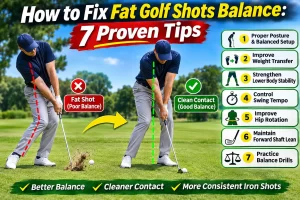
Introduction: How to Fix Fat Golf Shots Balance for Cleaner Contact
Are you tired of hitting the ground before the golf ball and watching your iron shots fall short of their intended target? If so, poor golf swing balance could be one of the biggest reasons behind your inconsistent ball striking. Learning how to fix fat golf shots balance can help you achieve cleaner contact, improve distance control, and develop a more reliable golf swing.
A fat golf shot occurs when your club strikes the turf before making contact with the ball. This causes the clubhead to lose speed and energy, often resulting in weak, inaccurate shots that travel significantly shorter distances than expected. Although several swing faults can cause fat shots, improper weight distribution and poor lower body stability are common contributing factors.
When your body sways excessively, your weight remains on your back foot, or you lose your posture during the downswing, the lowest point of your swing arc can shift behind the golf ball. Instead of producing a clean, descending iron strike, your club digs into the ground too early.
Fortunately, improving your balance doesn’t require completely rebuilding your golf swing. By focusing on proper golf posture fundamentals, controlled weight transfer, consistent golf swing tempo, and effective golf hip rotation, you can develop greater stability throughout your swing.
In this guide, you’ll discover seven proven golf swing balance tips designed to eliminate common mistakes, improve forward shaft lean, and promote consistent ball-first contact.
Whether you’re a beginner struggling with chunked iron shots or an experienced golfer looking for reliable fat golf shot fixes, these practical techniques will help you build a more balanced, controlled, and repeatable golf swing.
Why Poor Golf Swing Balance Causes Fat Golf Shots
Poor golf swing balance is one of the most overlooked causes of inconsistent iron contact. When your body loses stability during the swing, controlling where the clubhead reaches the bottom of its arc becomes more difficult. Understanding how to fix fat golf shots balance begins with recognizing how weight distribution, lower body stability, and posture influence your ability to strike the golf ball cleanly.
Even small balance mistakes can affect your swing’s low point, causing the club to strike the ground before reaching the ball.
How Improper Weight Distribution Affects Ball Striking
One of the most common reasons golfers hit fat shots is keeping too much pressure on their trail foot during the downswing.
During a properly sequenced golf swing, pressure shifts toward the trail foot in the backswing before moving toward the lead foot as the downswing begins. This movement helps position the swing’s low point ahead of the golf ball.
However, when golfers hang back on their trail foot, the club may reach the bottom of its arc too early. Instead of producing a descending iron strike, the clubhead contacts the turf behind the ball.
Improving weight transfer is one of the most effective fat golf shot fixes because it helps establish consistent ball-first contact without forcing the hands forward.
The Connection Between Lower Body Stability and Fat Shots
Lower body stability provides the foundation for a controlled and repeatable golf swing. Excessive lateral swaying, unstable foot pressure, and poor posture can disrupt your swing mechanics.
When your hips slide excessively instead of rotating, your upper body may move away from its intended position. This movement makes it harder to maintain a consistent swing radius and control the club’s low point.
Proper golf hip rotation, combined with stable foot pressure and good golf posture fundamentals, allows your body to rotate more efficiently while maintaining balance.
Common Balance Mistakes Amateur Golfers Make
Several balance mistakes frequently contribute to fat golf shots:
-
Swaying instead of rotating: Excessive sideways movement makes consistent contact more difficult.
-
Falling backward during the downswing: Keeping your weight behind the ball can cause the club to bottom out too early.
-
Standing too far forward on your toes: This creates instability and can disrupt your posture.
-
Leaning excessively onto your heels: Poor pressure distribution makes controlled rotation more difficult.
Recognizing these mistakes is the first step toward learning how to fix balance when hitting fat golf shots and developing a more consistent iron swing.
Tip #1: Establish Proper Golf Posture and Balanced Setup
Developing a balanced golf swing begins before you ever take the club back. Your address position establishes the foundation for proper weight transfer, lower body stability, and consistent ball striking. If your posture or weight distribution is incorrect at setup, maintaining balance throughout the swing becomes significantly more difficult.
One of the best balance tips to prevent fat golf shots is to establish a comfortable, athletic stance that allows your body to rotate freely without excessive swaying or unnecessary tension.
Find the Correct Weight Distribution at Address
Proper weight distribution begins with positioning your body evenly between your feet.
For a standard iron shot, start with approximately 50% of your pressure on each foot. A slight preference toward your lead foot may also work, depending on the shot and your swing mechanics.
Your pressure should feel centered through the middle of your feet rather than concentrated excessively on your toes or heels.
To establish a balanced setup:
-
Position your feet approximately shoulder-width apart for a mid-iron.
-
Distribute your pressure comfortably between both feet.
-
Keep your knees relaxed rather than locked.
-
Allow your arms to hang naturally beneath your shoulders.
-
Maintain enough stability to rotate without feeling restricted.
This balanced foundation helps you control your swing’s low point and produce cleaner iron contact.
Use Golf Posture Fundamentals to Improve Stability
Proper golf posture fundamentals play an essential role in preventing fat shots.
Begin by bending forward from your hips while maintaining a relatively neutral spine. Add a slight amount of knee flex, allowing your weight to remain centered over your feet.
Avoid excessive knee bending, rounding your upper back, or standing too upright. These positions can interfere with your rotation and make it harder to maintain consistent posture.
Your shoulders and arms should remain relaxed, allowing the club to swing naturally.
Good posture also supports proper golf hip rotation and helps prevent unnecessary changes in your body’s height during the downswing.
Practice the Balanced Address Position Drill
This simple drill helps identify balance problems before they affect your golf swing.
Step 1: Take your normal address position with a mid-iron.
Step 2: Gently shift your pressure toward your toes, then toward your heels.
Step 3: Find the comfortable midpoint where your weight feels evenly supported.
Step 4: Make several slow practice swings while maintaining your athletic posture.
Step 5: Hit five short iron shots, focusing on stability rather than swing speed.
If you consistently lose balance, return to your setup and adjust your posture before trying again.
By practicing this drill regularly, you’ll develop better body awareness and a more reliable foundation for how to stop hitting fat golf shots with irons.
Could One Hidden Swing Mistake Be Causing Your Fat Golf Shots?
You might be practicing your weight transfer correctly, but what if another overlooked swing mistake is still causing you to hit behind the ball? Many golfers focus on fixing one problem without realizing how other swing fundamentals affect their contact. Discover additional ways to identify common swing faults and build a more reliable iron swing. Discover What’s Really Causing Your Fat Golf Shots →
Tip #2: Improve Weight Transfer for Consistent Iron Contact
One of the most effective ways to eliminate fat golf shots is to improve how your weight transfers throughout the golf swing. Proper weight transfer helps control your swing’s low point, promotes cleaner ball-first contact, and prevents the clubhead from striking the ground too early.
If you’re learning how to fix fat golf shots balance, understanding the difference between shifting pressure and excessively moving your body sideways is essential. The goal is to transfer pressure efficiently while maintaining lower body stability and controlled golf hip rotation.
Understand Proper Weight Transfer During the Golf Swing
During the backswing, pressure naturally increases beneath your trail foot as your upper body rotates away from the target. However, this doesn’t mean your entire body should slide sideways.
As you approach the top of your backswing, pressure should begin shifting toward your lead foot. By the time your club reaches impact, most of your pressure should be supported by your lead side.
This movement allows your hips and torso to rotate through the ball while helping position the lowest point of your swing arc ahead of the golf ball.
Proper weight transfer also supports forward shaft lean and a descending iron strike, two important components of consistent iron contact.
Prevent Hanging Back and Hitting Behind the Ball
Hanging back occurs when golfers fail to transfer enough pressure toward their lead foot during the downswing.
Common warning signs include:
-
Finishing with excessive weight on your trail foot.
-
Leaning your upper body backward through impact.
-
Frequently striking the ground behind the golf ball.
-
Struggling to maintain balance after completing your swing.
-
Hitting weak iron shots that travel shorter distances than expected.
One of the best fat golf shot fixes is learning to shift pressure forward without lunging toward the target.
When your pressure moves toward your lead foot at the correct time, your body can rotate more effectively, helping the club contact the ball before the turf.
Practice the Step-Through Weight Transfer Drill
The step-through drill is an excellent exercise for developing proper weight transfer and improving golf swing balance.
Step 1: Take your normal stance with a short iron and begin with slow practice swings.
Step 2: Make a controlled backswing while allowing pressure to move naturally toward your trail foot.
Step 3: As you begin the downswing, shift pressure toward your lead foot while rotating toward the target.
Step 4: After the club passes through the impact area, allow your trail foot to step forward toward the target.
Step 5: Finish in a balanced position, facing your target.
Repeat the exercise 8–10 times before attempting short, controlled iron shots.
Start slowly and make sure your stepping motion doesn’t interfere with safe club clearance.
Practicing this drill helps develop smoother pressure transfer, better golf swing tempo, and improved balance through impact.
Remember: Consistent iron contact doesn’t come from forcing your body forward. It comes from coordinating pressure transfer, rotation, and balance so your club can produce a reliable descending strike.
Tip #3: Strengthen Lower Body Stability Throughout Your Swing
Developing strong lower body stability is essential for producing consistent, accurate iron shots. When your lower body remains controlled throughout the golf swing, maintaining proper posture, transferring pressure efficiently, and achieving clean ball-first contact become much easier.
For golfers learning how to fix fat golf shots balance, improving lower body stability can help eliminate excessive movement that causes the clubhead to strike the ground before reaching the ball.
Why Lower Body Stability Matters for Clean Ball Striking
Your feet, legs, hips, and core work together to create a stable foundation for your golf swing. Each plays an important role in maintaining balance while allowing your body to rotate efficiently.
Your feet provide ground contact and pressure awareness, while your legs support controlled movement during the backswing and downswing. Meanwhile, your hips and core help coordinate rotation and maintain posture.
However, stability doesn’t mean keeping your lower body completely still. A successful golf swing requires dynamic movement, including proper golf hip rotation and pressure transfer.
The objective is to maintain enough control to prevent unnecessary swaying while allowing your body to rotate naturally.
Reduce Excessive Swaying During the Backswing
One common mistake amateur golfers make is sliding their hips excessively away from the target instead of rotating around a relatively stable center.
When your body sways too far toward your trail foot, returning to a balanced impact position becomes more difficult. This can shift your swing’s low point behind the ball, resulting in fat golf shots.
To correct excessive swaying, focus on rotating your shoulders and hips during the backswing while maintaining pressure through your trail foot.
Allow your trail hip to turn behind you rather than pushing it sideways.
This controlled movement helps preserve your golf posture fundamentals and creates a more reliable foundation for the downswing.
Try the Feet-Together Balance Drill
The feet-together drill is one of the best balance tips to prevent fat golf shots because it encourages controlled rotation and reduces unnecessary body movement.
Step 1: Stand with your feet close together while holding a short iron.
Step 2: Position a golf ball in the center of your narrow stance.
Step 3: Make a slow, waist-high backswing while maintaining your balance.
Step 4: Swing smoothly through the ball without allowing your body to sway excessively.
Step 5: Hold your finish for two seconds before repeating.
Begin with practice swings, then hit 5–10 short shots using approximately 40–50% of your normal swing speed.
If you lose balance, reduce your swing length and speed.
Practicing this drill regularly improves body awareness, encourages centered contact, and develops the lower body stability needed for more consistent iron shots.
Tip #4: Control Golf Swing Tempo to Maintain Better Balance
Golf swing tempo plays a major role in maintaining balance and producing consistent ball striking. Many golfers mistakenly believe that swinging harder automatically generates greater distance. However, when increased swing speed disrupts your timing and body control, the result can be inconsistent contact, including frustrating fat golf shots.
Learning how to fix balance when hitting fat golf shots involves developing a smooth, repeatable swing rhythm that allows your body and club to work together efficiently.
How Rushing Your Downswing Leads to Fat Golf Shots
One of the most common golf swing mistakes occurs when golfers rush their transition from the backswing into the downswing.
Instead of allowing their lower body to initiate an efficient sequence of movements, they aggressively pull the club downward with their arms and shoulders.
This rushed transition can disrupt weight transfer, cause excessive upper-body movement, and make it difficult to maintain proper lower body stability.
When your body loses its coordination, controlling the club’s low point becomes more challenging. The clubhead may strike the ground behind the ball rather than producing a clean, descending iron strike.
Swinging harder can exaggerate these problems, especially when your balance and timing are already inconsistent.
Develop a Smooth and Controlled Golf Swing Tempo
A consistent golf swing tempo allows your backswing, transition, and downswing to flow together naturally.
Many golfers benefit from practicing a rhythm in which the backswing takes approximately three times as long as the downswing. This 3:1 tempo is a useful starting point, although individual swing rhythms can vary.
Focus on completing your backswing without rushing and allowing your pressure to shift toward your lead foot as the downswing begins.
Maintain relaxed arms and shoulders while allowing your hips and torso to rotate through impact.
The goal isn’t to swing slowly forever. Instead, it’s to develop a repeatable rhythm that remains consistent as your swing speed increases.
Practice the Three-Count Golf Swing Tempo Drill
This simple exercise helps improve swing coordination and balance without requiring special equipment.
Step 1: Take your normal address position with a short iron.
Step 2: Begin your backswing while counting “one” as the club moves away from the ball.
Step 3: Continue counting “two” during the backswing and “three” as you complete your turn.
Step 4: Transition smoothly into the downswing, allowing the club to move through impact on the next beat.
Step 5: Finish in a balanced position and hold your posture for two seconds.
Repeat 10 practice swings before hitting several golf balls at approximately 50–60% of your normal speed.
As your contact improves, gradually increase swing speed while maintaining the same overall rhythm.
By developing consistent golf swing tempo, you’ll improve coordination, reduce unnecessary body movement, and create a more reliable foundation for cleaner iron contact.
Key takeaway: A balanced, well-timed golf swing often produces better results than an aggressive swing that sacrifices stability and control.
Ready to Stop Hitting Fat Golf Shots and Start Striking Your Irons With Confidence?
Imagine stepping up to your next iron shot feeling confident in your balance, weight transfer, and swing mechanics instead of worrying about hitting the ground first. Consistent ball striking begins with understanding what needs improvement and practicing the right fundamentals. The Golf Swing Lab offers additional guidance to help you build a more controlled, repeatable golf swing. Start Improving Your Golf Swing With The Golf Swing Lab
Tip #5: Improve Golf Hip Rotation Without Losing Stability
Proper golf hip rotation is essential for maintaining balance, generating clubhead speed, and producing consistent iron contact. When your hips rotate efficiently, your body can transfer pressure naturally while keeping your swing organized and controlled. However, excessive lateral movement or poor hip sequencing can disrupt your balance and cause frustrating fat golf shots.
Understanding how to fix fat golf shots balance requires learning how to rotate your hips without unnecessarily sliding your body away from or toward the target.
Understand Proper Golf Hip Rotation During the Swing
During the backswing, your hips should rotate away from the target as your shoulders complete their turn. For right-handed golfers, this means allowing the right hip to move backward while maintaining a stable, athletic posture.
Your trail leg can straighten slightly as your hips rotate, but avoid locking your knee or allowing your body to sway excessively.
As the downswing begins, pressure shifts toward your lead foot while your hips start rotating toward the target. This coordinated movement helps create space for your arms and club to approach the golf ball.
Proper hip rotation supports lower body stability, encourages effective weight transfer, and helps position your body for a descending iron strike.
Avoid Excessive Hip Sliding and Reverse Weight Shift
One common mistake golfers make is sliding their hips sideways instead of rotating them.
Excessive lateral movement during the backswing can shift your body’s center too far away from the target, making it difficult to return to a consistent impact position.
Another problem is a reverse weight shift, where pressure moves excessively toward the lead foot during the backswing and then toward the trail foot during the downswing.
Both mistakes can disrupt your swing’s low point and contribute to fat contact.
To maintain better balance, focus on rotating your hips while allowing a controlled pressure shift between your feet. Your hips should move naturally rather than remaining completely stationary or sliding excessively.
Use the Chair Drill to Improve Hip Rotation
The chair drill is an excellent exercise for improving golf hip rotation while reducing unnecessary swaying.
Step 1: Position a sturdy chair behind you, with the backrest near your hips. Make sure it cannot tip or interfere with your club.
Step 2: Take your normal golf stance without a club, allowing your hips to lightly touch the chair.
Step 3: Slowly rotate into your backswing, feeling your trail hip move backward along the chair rather than sliding sideways.
Step 4: Begin your downswing by shifting pressure toward your lead foot while allowing your lead hip to rotate backward.
Step 5: Repeat 10–15 slow rotations, maintaining your posture and balance throughout the movement.
Once comfortable, move away from the chair and practice several slow golf swings.
This drill develops better body awareness, improves rotational control, and reinforces the proper movement patterns needed for consistent iron contact.
Key takeaway: Effective golf hip rotation combines controlled turning, proper pressure transfer, and lower body stability. Improving these movements can help eliminate excessive swaying and reduce fat golf shots.
Tip #6: Maintain Forward Shaft Lean and a Proper Impact Position
Achieving consistent ball-first contact requires more than maintaining good balance throughout your golf swing. Your impact position also plays a critical role in determining whether the clubhead strikes the golf ball cleanly or digs into the turf too early.
For golfers learning how to stop hitting fat golf shots with irons, developing appropriate forward shaft lean and controlling the swing’s low point can make a significant difference in ball-striking consistency.
Why Forward Shaft Lean Helps Prevent Fat Golf Shots
Forward shaft lean occurs when the club’s grip is positioned slightly ahead of the clubhead at impact.
With most standard iron shots, skilled golfers typically deliver the club with some forward shaft lean, helping create efficient contact and appropriate dynamic loft.
However, forward shaft lean should develop naturally through proper weight transfer, body rotation, and coordinated arm movement.
When golfers hang back on their trail foot or release the club too early, the clubhead may pass their hands before impact. This early release, commonly called casting or flipping, can contribute to inconsistent low-point control and fat golf shots.
The goal is not to force your hands excessively forward. Instead, focus on maintaining balance and allowing your body and club to move together through impact.
Learn How to Create a Descending Iron Strike
A descending iron strike occurs when the clubhead is still traveling slightly downward as it contacts the golf ball.
For a typical iron shot from the fairway, the ideal sequence is to strike the ball first and then contact the turf.
This happens when the lowest point of your swing arc is positioned slightly ahead of the golf ball.
Several swing fundamentals contribute to achieving this impact pattern:
-
Proper weight transfer: Pressure moves toward your lead foot before impact.
-
Lower body stability: Your posture remains controlled throughout the downswing.
-
Golf hip rotation: Your body rotates efficiently without excessive sliding.
-
Forward shaft lean: Your hands remain appropriately positioned relative to the clubhead.
-
Consistent golf swing tempo: Your movements remain coordinated rather than rushed.
Combining these fundamentals helps create a repeatable descending iron strike without forcing the club downward.
Practice the Impact Bag or Towel Drill
The towel drill is one of the simplest fat golf shot fixes for improving low-point awareness.
Step 1: Place a small, folded towel approximately four to six inches behind a golf ball on a practice mat.
Step 2: Take your normal address position with a short iron.
Step 3: Make several slow practice swings, focusing on allowing the clubhead to pass over the towel.
Step 4: Hit short shots while attempting to contact the golf ball without striking the towel first.
Step 5: Gradually move the towel closer as your contact improves, maintaining a smooth swing and balanced finish.
Begin with approximately 50% of your normal swing speed and avoid deliberately chopping down on the ball.
Alternatively, use a purpose-built impact bag for slow, controlled impact-position rehearsals, following its instructions. Avoid full-speed swings into the bag.
This exercise helps golfers recognize when their club reaches the bottom of its swing too early.
Key takeaway: Consistent iron contact comes from controlling your swing’s low point through proper balance, pressure transfer, and impact mechanics—not from forcing excessive forward shaft lean or swinging aggressively downward.
Tip #7: Practice Balance Drills to Eliminate Fat Golf Shots
Improving golf swing balance requires consistent practice, but you don’t need complicated equipment or hours at the driving range to see progress. Simple balance exercises can strengthen your lower body stability, improve weight transfer, and help you develop more reliable ball-striking mechanics.
If you’re learning how to fix fat golf shots balance, incorporating targeted balance drills into your practice routine can help you identify unnecessary movements and develop greater control throughout your swing.
The following exercises are among the best balance tips to prevent fat golf shots and improve consistent iron contact.
The Single-Leg Balance Drill for Golfers
The single-leg balance drill helps develop stability, coordination, and awareness of how your body distributes pressure during the golf swing.
Although you normally swing with both feet on the ground, improving your ability to control your body on one leg can strengthen the foundation for better balance.
Step 1: Stand upright on a flat, stable surface with your feet approximately shoulder-width apart.
Step 2: Position yourself near a sturdy chair or wall for support if needed.
Step 3: Slowly lift one foot a few inches off the ground while maintaining an upright posture.
Step 4: Hold your balance for 15–20 seconds without excessive upper-body movement.
Step 5: Switch legs and repeat the exercise three times per side.
As your stability improves, gradually increase the duration while maintaining proper control.
This exercise develops body awareness and lower body stability, helping you recognize unnecessary movements that may contribute to inconsistent ball striking.
The Hold-Your-Finish Drill for Better Swing Control
One of the easiest ways to evaluate golf swing balance is to examine your finishing position.
If you consistently stumble backward, step unexpectedly, or struggle to maintain your finish, excessive swing speed, poor weight transfer, or improper sequencing may be contributing factors.
To practice this drill:
-
Take your normal stance with a short iron.
-
Make a smooth swing at approximately 60–70% of your normal speed.
-
Allow your body to rotate naturally toward the target.
-
Finish with most of your pressure supported by your lead foot.
-
Hold your finishing position for three seconds without losing balance.
Repeat 10 times, focusing on controlled movement rather than maximum distance.
A stable finish doesn’t guarantee perfect impact, but it provides useful feedback about your overall swing coordination.
Create a Simple 10-Minute Golf Balance Practice Routine
Consistency is essential when developing better golf swing mechanics. This short practice routine combines several effective fat golf shot fixes into one manageable session.
| Time | Exercise | Primary Focus |
|---|---|---|
| 2 minutes | Balanced address position drill | Proper posture and foot pressure |
| 2 minutes | Single-leg balance drill | Lower body stability |
| 2 minutes | Three-count tempo drill | Smooth swing rhythm |
| 2 minutes | Step-through weight transfer drill | Pressure shift and rotation |
| 2 minutes | Hold-your-finish drill | Balanced follow-through |
To measure improvement, track how frequently you strike the ball cleanly during practice. For example, hit 10 short iron shots and record how many produce ball-first contact without excessive turf contact behind the ball.
Repeat the test during future practice sessions to monitor your progress.
Remember: Learning how to fix balance when hitting fat golf shots takes repetition and patience. By practicing these simple drills consistently, you can develop greater stability, improve swing coordination, and build the foundation for cleaner, more reliable iron contact.
How Golf Students Are Mastering Their Golf Swing In Just 7 Days https://ultimategolfmasterypro.com/the-golf-swing-lab-2/
Conclusion: Build Better Balance and Stop Hitting Fat Golf Shots
Learning how to fix fat golf shots balance is an important step toward developing cleaner iron contact, greater consistency, and improved distance control. While fat golf shots can result from several swing faults, poor balance, improper weight transfer, and excessive body movement are common contributing factors.
By applying these seven proven golf swing balance tips, you can develop a more stable and repeatable swing:
- Establish proper golf posture and a balanced setup.
- Improve weight transfer for consistent iron contact.
- Strengthen lower body stability throughout your swing.
- Control golf swing tempo to maintain better balance.
- Improve golf hip rotation without excessive swaying.
- Maintain proper forward shaft lean and impact position.
- Practice balance drills to develop consistent ball striking.
Remember, improving your golf swing doesn’t happen overnight. Focus on mastering one technique at a time, practice consistently, and gradually incorporate additional improvements as your confidence grows.
Ready to Stop Hitting Fat Golf Shots and Start Striking Your Irons More Consistently?
Discover a practical golf improvement resource designed to help golfers identify common swing mistakes, strengthen their fundamentals, and develop more consistent ball striking.
Start building a more balanced, controlled, and reliable golf swing today!
Frequently Asked Questions About Fat Golf Shots and Balance
Can poor balance cause fat golf shots?
Yes, poor golf swing balance is a common contributing factor to fat golf shots. When your body sways excessively, your weight remains on your trail foot, or you lose stability during the downswing, the club’s lowest point can shift behind the golf ball. This causes the clubhead to strike the ground before making contact with the ball. Improving lower body stability, proper weight transfer, and controlled rotation can help promote cleaner, more consistent iron strikes.
How do I fix my balance when hitting fat golf shots?
Learning how to fix fat golf shots balance begins with establishing proper posture and maintaining controlled weight distribution throughout your swing. Start with your pressure centered between your feet, maintain a comfortable hip hinge, and avoid excessive lateral swaying. During the downswing, allow pressure to shift toward your lead foot while rotating naturally through impact. Practicing slow, controlled swings and holding a balanced finish can help reinforce these movements.
Why do I keep hitting fat shots with my irons?
Repeatedly hitting fat shots with irons often results from poor low-point control. Common causes include hanging back on your trail foot, excessive hip sliding, early club release, inconsistent posture, and improper golf swing tempo. Incorrect ball position can also contribute. To learn how to stop hitting fat golf shots with irons, focus on improving weight transfer and producing a descending iron strike that contacts the ball before the turf.
Should my weight be on my front foot when hitting irons?
For most standard iron shots, begin with approximately equal pressure between both feet. During the backswing, pressure naturally moves toward your trail foot before shifting toward your lead foot as the downswing begins. At impact, most of your pressure should generally be supported by your lead foot. This movement helps position your swing’s low point ahead of the golf ball and promotes consistent ball-first contact without forcing your upper body forward.
What are the best balance drills to stop hitting behind the golf ball?
Some of the best balance tips to prevent fat golf shots include the feet-together drill, step-through weight transfer drill, single-leg balance exercise, and hold-your-finish drill. These exercises develop body awareness, lower body stability, and controlled movement. The towel drill is particularly useful for practicing low-point control because it provides immediate feedback when your club strikes the ground too early.
How long does it take to improve golf swing balance?
Improvement depends on your current swing mechanics, practice frequency, and physical coordination. Some golfers notice better balance and cleaner contact after a few focused practice sessions, while developing consistent habits may take several weeks or longer. Practicing balance drills for 10–15 minutes several times per week can help reinforce proper movement patterns. Focus on gradual improvement, consistent ball striking, and maintaining stability rather than expecting immediate perfection.