
How To Fix Fat Golf Shots In Golf: 5 Easy Swing Adjustments
If you can’t fix fat golf shots without lessons you need to see this
Introduction
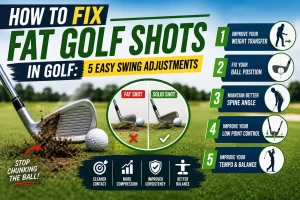
Few things in golf are more frustrating than hitting a fat golf shot right before what should have been a perfect approach shot. One second you feel confident standing over the ball… then suddenly the club slams into the ground first, dirt flies everywhere, and the golf ball barely travels forward. If you constantly struggle with chunked golf shots or heavy iron shots, you are definitely not alone.
A fat golf shot happens when the clubhead strikes the turf before making contact with the golf ball. Instead of creating clean compression and solid contact golf players want, the club digs into the ground too early, causing weak shots, loss of distance, poor trajectory, and inconsistent ball striking. This problem affects golfers of every skill level — from complete beginners to experienced players trying to improve their golf swing mechanics.
The reason chunked golf shots are so damaging is because they completely destroy consistency and confidence. One fat shot can quickly ruin an otherwise good round. Many golfers start overthinking their swing after repeated heavy iron shots, which often creates even more tension and poor timing. The harder golfers try to “help” the ball into the air, the worse the problem usually becomes.
In most cases, poor golf swing mechanics are the real reason behind fat shots. Problems such as poor weight transfer, improper ball position, loss of posture, bad low point control, and weak golf swing balance often cause the club to bottom out too early. The good news is that most golfers do not need a complete swing rebuild to fix fat golf shots. Small adjustments can often create major improvements in ball striking.
If you have been searching for how to fix fat golf shots in golf, this guide will walk you through five simple but powerful adjustments that can dramatically improve your contact. These easy swing adjustments for fat golf shots are designed to help you strike the ball cleaner, compress the golf ball more effectively, and build a more repeatable swing.
By learning how to fix fat golf shots in golf fast, you can start developing better low point control, eliminate chunked golf shots with irons, and create more consistent iron play. Whether you want to know how to stop hitting fat golf shots with irons or simply want a reliable fat golf shot fix, the adjustments in this guide will help you improve your swing without overcomplicating your mechanics.
Once you begin improving your setup, balance, and downswing sequence, you will notice cleaner contact, more compression, improved consistency, and better overall golf swing balance — all critical ingredients for hitting solid iron shots more consistently.
How golfers are fixing their fat golf shots without buying expensive golf lessons https://ultimategolfmasterypro.com/the-hidden-swing-flaws-causing-fat-shots/
What Causes Fat Golf Shots In Golf?
Understanding Fat Golf Shots
If you truly want to learn how to fix fat golf shots in golf, you first need to understand exactly what causes them. A fat golf shot occurs when the clubhead strikes the ground before making contact with the golf ball. Instead of compressing the ball cleanly, the club digs into the turf too early, causing the shot to lose power, distance, and accuracy.
Most golfers describe these shots as “chunked golf shots” or “heavy iron shots” because the club feels heavy through impact. You may see a large divot behind the ball while the ball itself barely travels forward. Even worse, repeated fat shots can completely destroy confidence and consistency during a round.
One reason chunked golf shots happen more frequently with irons is because irons are specifically designed to strike the ball first and turf second. Proper iron play requires precise low point control. The bottom of the swing arc must occur slightly after impact for clean compression and solid contact golf players are trying to achieve. If the swing bottoms out too early, the club hits the ground first and produces a fat shot.
Many golfers searching for a fat golf shot fix mistakenly believe they need to swing harder or “lift” the ball into the air. In reality, trying to help the ball often makes the problem worse. Solid iron shots come from proper golf swing mechanics, stable posture, and consistent contact — not excessive effort.
Another important factor is golf swing balance. When your body loses stability during the swing, the club’s low point becomes inconsistent. This inconsistency makes it extremely difficult to control where the club strikes the turf. That is why golfers who struggle with fat shots often experience random results from swing to swing.
The good news is that fat shots are usually very fixable. Once you understand the root causes behind chunked golf shots, you can begin making easy swing adjustments for fat golf shots that create cleaner contact and more reliable ball striking.
The Most Common Swing Mistakes Behind Fat Shots
Several common swing flaws are responsible for most fat golf shots. One of the biggest causes is poor weight transfer during the downswing. Many golfers hang back on their trail foot instead of shifting pressure toward the lead side. This causes the club to bottom out too early behind the ball.
Another major issue is an early release, sometimes called “casting.” This happens when the wrists unhinge too soon during the downswing. The clubhead reaches the ground before impact, making it difficult to achieve proper low point control. Golfers who struggle with early release often hit repeated heavy iron shots and lose compression through impact.
Bad posture is another common problem. Standing too upright, excessive knee bend, or poor spine positioning can all negatively affect golf swing mechanics. During the swing, many golfers also lose their spine angle by standing up too early through impact. This movement changes the bottom of the swing arc and creates inconsistent contact.
Improper ball position can also create major issues. If the ball is too far forward in the stance, the club may reach the ground before impact. This is especially common among golfers trying to figure out how to stop hitting fat golf shots with irons.
Weak low point control ties all of these mistakes together. Elite golfers consistently control where the club strikes the ground. Amateur golfers often struggle because their swing mechanics constantly shift the low point around.
If you want to learn how to fix fat golf shots in golf fast, improving these core fundamentals is critical. Even small adjustments to weight transfer, posture, and setup can produce dramatically cleaner contact.
Why Fat Golf Shots Get Worse Under Pressure
Fat golf shots often become much worse when golfers feel pressure on the course. Nervousness, tension, and frustration can quickly disrupt timing and rhythm. Instead of making a smooth, athletic swing, golfers start forcing the motion and lose their natural sequencing.
One common mistake is swinging too hard. When golfers try to hit the ball farther, they often overswing and lose control of their golf swing balance. The harder the swing becomes, the more difficult it is to maintain consistent low point control and solid contact golf players need.
Tension also causes many golfers to tighten their grip pressure and become stiff during the downswing. This stiffness limits rotation and makes the swing less fluid. Poor tempo combined with tension often leads to chunked golf shots and inconsistent strikes.
Another hidden issue is deceleration. Some golfers subconsciously slow the club down before impact because they are afraid of hitting the ball thin or topping it. Ironically, trying to avoid topping the ball frequently creates the opposite problem — a fat shot. Fear causes hesitation, and hesitation ruins clean contact.
This is why many golfers hit great shots on the driving range but struggle on the course. Under pressure, mechanics break down and simple mistakes become exaggerated.
The good news is that once you improve your setup, posture, balance, and sequencing, these pressure-related fat shots become much easier to control. The five adjustments in this guide are designed specifically to help golfers improve consistency, build confidence, and finally learn how to fix fat golf shots in golf more effectively.
Adjustment #1 – Improve Your Weight Transfer
Why Poor Weight Shift Causes Heavy Iron Shots
One of the biggest reasons golfers struggle with chunked golf shots and heavy iron shots is poor weight transfer during the downswing. If you want to learn how to fix fat golf shots in golf, improving your weight shift is one of the fastest ways to create cleaner and more consistent contact.
Many amateur golfers hang back on their trail foot during the downswing instead of shifting pressure properly into the lead side. This creates a situation where the club bottoms out too early behind the golf ball. Instead of compressing the ball first and then taking a divot, the club strikes the turf before impact, producing a fat golf shot.
This problem often becomes worse when golfers try to “help” the ball into the air. Rather than rotating through the shot, they lean backward and scoop at impact. Unfortunately, this destroys low point control and makes solid contact golf nearly impossible to achieve consistently.
Another common issue is pressure staying on the trail foot too long during transition. Proper golf swing mechanics require pressure to begin shifting toward the target before the downswing fully develops. When pressure never moves forward, the club’s lowest point stays behind the ball, leading to chunked golf shots with irons.
You can usually spot this issue immediately after impact. Golfers who struggle with poor weight transfer often finish leaning backward with most of their weight still on the trail leg. Their divots tend to start behind the ball, and their shots feel weak, heavy, and inconsistent.
The good news is that fixing weight transfer does not require a complete swing overhaul. Small adjustments to sequencing and pressure movement can dramatically improve your contact. Many golfers searching for a fat golf shot fix experience immediate results simply by learning how to move correctly into their lead side during the downswing.
How Proper Weight Transfer Creates Solid Contact
Proper weight transfer is one of the key fundamentals behind consistent iron play and better ball striking. When pressure shifts correctly into the lead side during the downswing, the club naturally approaches the ball from a stronger impact position.
Instead of hanging back, skilled golfers move pressure into their front foot while rotating through the shot. This allows the swing to bottom out after the golf ball, which is critical for solid contact golf players want to achieve. The result is cleaner compression, more predictable divots, and much more consistent distance control.
One major benefit of proper weight transfer is improved low point control. The more stable your body movement becomes, the easier it is to control where the club strikes the ground. This is one of the main reasons professional golfers rarely hit fat shots with irons.
Good weight transfer also improves golf swing balance. Rather than falling backward or swaying during the swing, your body remains centered and athletic through impact. This creates a more powerful and repeatable motion that produces cleaner contact.
Golfers trying to learn how to fix fat golf shots in golf fast often focus only on the clubhead. However, the real issue usually starts with body movement and sequencing. Once pressure begins moving properly into the lead side, many fat shots disappear almost immediately.
If you want to know how to stop hitting fat golf shots with irons, mastering this movement is essential.
Simple Drill To Fix Fat Golf Shots Fast
One of the best easy swing adjustments for fat golf shots is the step-through drill. This simple exercise teaches proper pressure shift and helps eliminate the habit of hanging back during the downswing.
To perform the drill:
- Set up normally with a short or mid iron.
- Begin your backswing as usual.
- As you start the downswing, step toward the target with your trail foot.
- Swing through to a balanced finish.
This movement forces pressure to move naturally into the lead side and encourages proper rotation through impact. It also improves golf swing balance and prevents the club from bottoming out too early.
Another excellent drill is the pressure shift drill. At address, place slightly more pressure into your lead foot. During the backswing, allow some pressure to move into the trail side, then aggressively shift it back toward the lead foot during transition. Practicing this motion slowly helps train proper sequencing and improves low point control.
A simple practice routine can also accelerate improvement:
- Start with half swings
- Focus on clean contact
- Watch where your divots begin
- Gradually increase speed while maintaining balance
Many golfers notice immediate improvement once they start controlling pressure correctly.
Common Mistakes To Avoid
While improving weight transfer is important, many golfers accidentally create new problems while trying to fix fat golf shots.
One of the biggest mistakes is sliding instead of rotating. Proper weight transfer does not mean aggressively lunging laterally toward the target. Excessive sliding can move the swing bottom too far forward and create inconsistent contact.
Another common issue is swaying off the ball during the backswing. Excessive lateral movement makes it extremely difficult to return to the ball consistently. Strong golf swing mechanics require stable rotation rather than excessive body sway.
Lunging forward is another mistake golfers make when trying to create forward pressure. Instead of maintaining posture and rotating through impact, they throw their upper body toward the ball. This destroys balance and often creates even worse chunked golf shots.
The key is controlled movement. Proper weight transfer should feel athletic, balanced, and rotational — not forced or exaggerated.
Once you learn how to sequence your pressure correctly, you will begin producing cleaner contact, more compression, improved consistency, and far fewer heavy iron shots.
how to fix fat golf shots fast in golf
Adjustment #2 – Fix Your Ball Position
Why Ball Position Matters
If you are struggling to learn how to fix fat golf shots in golf, your ball position could be one of the biggest hidden problems in your setup. Even small errors in ball placement can dramatically affect your contact, swing bottom, and consistency with irons.
One of the most common mistakes golfers make is placing the golf ball too far forward in their stance. When this happens, the club often reaches the bottom of the swing arc before it gets to the ball. As a result, the clubhead strikes the turf first, leading to chunked golf shots and heavy iron shots.
This issue becomes especially noticeable with mid and short irons because these clubs are designed to strike downward on the ball. Proper iron play requires the club to contact the golf ball first and then take a shallow divot after impact. If the ball is too far forward, achieving proper low point control becomes extremely difficult.
Poor ball position also creates inconsistent strike patterns. Some shots may feel clean while others come off heavy or thin, even when the swing feels similar. Many golfers searching for a fat golf shot fix become frustrated because their contact seems random from one shot to the next. In reality, inconsistent setup positions are often the real culprit.
Incorrect ball position can also negatively affect golf swing mechanics. When the ball sits too far forward, golfers may unconsciously hang back during the downswing or flip the club through impact to “reach” the ball. This destroys compression and weakens solid contact golf players are trying to develop.
If you want to know how to stop hitting fat golf shots with irons, improving your setup fundamentals is critical. Ball position may seem simple, but it plays a huge role in controlling the bottom of your swing arc and creating consistent contact.
Correct Ball Position For Irons
Proper ball position changes slightly depending on the iron you are using. Understanding these differences can help improve consistency and reduce chunked golf shots dramatically.
For short irons, the ball should generally sit near the center of your stance or slightly forward of center. This position encourages a steeper angle of attack and helps create crisp compression. Short irons are designed for downward strikes, so keeping the ball too far forward often leads to fat shots.
With mid irons, the ball should move slightly farther forward compared to short irons. A good reference point is about one ball-width forward of center. This allows the club to still strike downward while giving enough room for proper rotation and sequencing.
For long irons, the ball position can move slightly farther forward again. Since long irons have less loft and a shallower swing plane, placing the ball too far back can cause other contact issues. However, many golfers make the mistake of pushing the ball excessively forward, which creates poor low point control and inconsistent strikes.
One of the easiest ways to improve golf swing balance and contact is to maintain consistent setup positions during practice. Constantly changing ball position from shot to shot creates unpredictable swing patterns and weak ball striking.
Golfers trying to learn how to fix fat golf shots in golf fast often overlook this basic setup fundamental. Yet proper ball placement can immediately improve contact without making major swing changes.
Easy Setup Checkpoints
Building a consistent setup routine is one of the best easy swing adjustments for fat golf shots. Before every swing, use a few simple checkpoints to ensure your body and club are positioned correctly.
Start with feet alignment. Your feet should aim parallel to the target line rather than excessively open or closed. Poor alignment often forces compensations during the swing that affect low point control and contact.
Next, check your shoulder position. Many golfers unknowingly tilt their shoulders backward at address, which encourages hanging back during impact. Try to maintain a neutral, athletic posture with balanced shoulder alignment.
Weight distribution is another critical factor. At setup, your weight should feel balanced between both feet, with slight athletic pressure toward the balls of your feet. Too much weight on the heels or trail foot can create instability and lead to chunked golf shots.
Shaft lean also matters greatly with irons. At address, your hands should sit slightly ahead of the golf ball rather than directly behind it. This encourages cleaner contact and better compression through impact.
These small setup fundamentals have a major influence on golf swing mechanics. When your setup becomes more consistent, your contact patterns become more reliable as well.
Quick Ball Position Drill
One of the best drills for improving ball position consistency is the alignment stick drill.
Place an alignment stick on the ground aimed directly at your target. Then place a second alignment stick perpendicular to the target line near the center of your stance. This second stick acts as a visual checkpoint for ball placement.
As you practice with different irons:
- Short irons stay near center
- Mid irons move slightly forward
- Long irons move farther forward gradually
This drill helps train proper setup habits while improving awareness of where the swing bottom occurs.
Another useful strategy is creating consistency checkpoints during practice sessions. Before every shot:
- Check ball position
- Confirm shoulder alignment
- Verify weight balance
- Ensure proper posture
These small routines help reinforce better mechanics and improve low point control over time.
Many golfers looking for how to fix fat golf shots in golf are surprised at how quickly their contact improves simply by correcting setup fundamentals. Cleaner contact, improved consistency, and more compressed iron shots often begin with something as simple as proper ball position.
Struggling with fat golf shots try this
Adjustment #3 – Maintain Better Spine Angle
How Standing Up Causes Fat Golf Shots
One of the most overlooked causes of chunked golf shots is losing posture during the swing. Many golfers trying to learn how to fix fat golf shots in golf focus entirely on the club or hands while ignoring what their body is doing through impact. In reality, poor posture and standing up too early are major reasons golfers struggle with heavy iron shots.
This problem is commonly called early extension. Early extension occurs when the body rises up out of posture during the downswing instead of maintaining spine angle and rotating properly through impact. When golfers stand up too soon, the swing bottom changes dramatically, making consistent contact extremely difficult.
As the body lifts upward, the club’s low point often moves behind the golf ball. This causes the clubhead to strike the turf first, leading to fat golf shots and weak contact. Many golfers feel like they are “stuck” or cramped during the downswing, so they instinctively stand up to create space. Unfortunately, this movement ruins sequencing and destroys low point control.
Losing posture also negatively affects golf swing mechanics because it limits rotation and balance. Instead of turning through the shot smoothly, the body becomes unstable and inconsistent. This instability makes it harder to create solid contact golf players want with their irons.
Another issue with standing up is inconsistent strike height. Some swings produce fat shots while others produce thin shots because the swing bottom constantly changes. Golfers searching for a reliable fat golf shot fix often discover that maintaining posture through impact dramatically improves their consistency almost immediately.
If you want to know how to stop hitting fat golf shots with irons, maintaining your spine angle throughout the swing is essential.
Proper Golf Posture Basics
Strong posture creates the foundation for consistent ball striking. Without proper setup positions, even good swings become difficult to repeat.
Start with an athletic stance. Your feet should be approximately shoulder-width apart with balanced pressure throughout both feet. Avoid standing too upright or bending excessively at the waist.
Next, focus on maintaining a neutral spine. Your back should feel straight and athletic rather than rounded or overly arched. Proper spine positioning allows the body to rotate efficiently while maintaining balance during the swing.
Knee flex is also important. Many golfers either squat too much or lock their knees completely. A slight athletic knee flex helps stabilize the lower body while allowing smooth rotation through impact.
One of the most important fundamentals is the hip hinge. Instead of bending excessively from the upper back, tilt forward naturally from the hips while keeping your chest up. This creates the proper posture needed for efficient golf swing mechanics.
Good posture improves nearly every area of the golf swing:
- Better golf swing balance
- Improved rotation
- More consistent low point control
- Cleaner compression
- Reduced chunked golf shots
Golfers learning how to fix fat golf shots in golf fast often experience immediate improvement once posture becomes more athletic and stable.
Drills To Maintain Posture During Swing
One of the best ways to improve posture during the swing is with the wall drill.
Stand with your backside lightly touching a wall during setup. As you make slow practice swings, focus on keeping your hips connected to the wall throughout the motion. If your hips move away from the wall too early, you are likely standing up and losing posture.
Another excellent drill is the chair drill. Place a chair just behind your hips at address. During the backswing and downswing, maintain light contact with the chair while rotating through impact. This helps train proper spine angle and prevents early extension.
Slow-motion practice swings are also extremely effective. Many golfers move too fast to recognize their posture breakdowns. Slowing the motion down helps build awareness and reinforces better sequencing.
As you practice:
- Maintain chest position
- Keep your spine angle stable
- Rotate through impact
- Finish balanced
These drills help improve golf swing mechanics while reducing heavy iron shots and inconsistent contact.
How Better Posture Improves Golf Swing Mechanics
Better posture improves nearly every aspect of the golf swing. When your body remains stable and athletic, it becomes much easier to control the clubface, maintain balance, and strike the ball consistently.
One major benefit is more consistency. Stable posture helps produce repeatable swing patterns, which leads to cleaner contact and fewer fat shots. Instead of constantly changing your swing bottom, your motion becomes more predictable.
Better posture also improves rotation. Golfers who maintain spine angle can rotate more efficiently through impact rather than lifting upward or hanging back. This creates more power and cleaner compression.
Improved golf swing balance is another huge advantage. Balanced golfers maintain control throughout the swing, which directly improves low point control and solid contact golf players are trying to develop.
If you are serious about learning how to fix fat golf shots in golf, improving posture and maintaining spine angle should become a major priority during practice.
Adjustment #4 – Improve Your Low Point Control
What Is Low Point Control?
Low point control is one of the most important skills in golf, especially when hitting irons. If you truly want to learn how to fix fat golf shots in golf, understanding low point control is absolutely critical.
The low point is the very bottom of the golf swing arc — the point where the clubhead reaches its lowest position before beginning to rise again. Skilled golfers consistently control where this low point occurs during the swing.
With irons, the ideal low point happens slightly after the golf ball. This allows the club to strike the ball first and then take a shallow divot after impact. That is how professional golfers create clean compression and solid contact golf players admire.
Elite golfers control low point extremely well because their golf swing mechanics stay stable and repeatable. Their pressure shifts correctly, posture remains consistent, and sequencing stays efficient throughout the swing. This creates predictable contact patterns and eliminates many chunked golf shots.
Amateur golfers often struggle because their low point constantly changes from swing to swing. Sometimes the club bottoms out too early, producing fat shots. Other times it bottoms out too late, causing thin shots.
Improving low point control is one of the fastest ways to create cleaner contact and more reliable iron play.
Why Poor Low Point Control Creates Chunked Golf Shots
Poor low point control is one of the biggest reasons golfers hit fat golf shots repeatedly. When the club bottoms out behind the ball, the clubhead strikes the turf before impact instead of compressing the golf ball cleanly.
One common cause is flipping through impact. Many golfers release the club too early in an attempt to lift the ball into the air. This early release shifts the swing bottom backward and creates heavy iron shots.
Poor sequencing also plays a major role. If the body stalls during the downswing while the hands and arms continue moving, the club often reaches the ground too soon. This destroys compression and weakens ball striking.
Golfers who struggle with chunked golf shots usually experience inconsistent divot patterns as well. Some divots start behind the ball, while others barely touch the turf at all. These inconsistencies make distance control extremely unreliable.
If you want to know how to stop hitting fat golf shots with irons, learning to control your swing bottom consistently is essential.
Easy Low Point Control Drills
One of the best easy swing adjustments for fat golf shots is the towel drill.
Place a small towel several inches behind the golf ball. Your goal is to strike the ball cleanly without hitting the towel. If the club strikes the towel first, your low point is occurring too early.
Another excellent exercise is the line-in-the-sand drill. Draw a straight line in the practice bunker or grass and make swings focusing on striking the ground just ahead of the line. This helps train proper compression and forward shaft lean.
Divot control practice is also highly effective. During range sessions, monitor where your divots begin:
- Divot starts behind ball = low point too early
- Divot starts after ball = good compression
These drills help improve low point control quickly while reinforcing better golf swing mechanics.
Signs Your Low Point Is Improving
As your low point control improves, you will start noticing several important changes in your ball striking.
First, your divots will begin occurring after the golf ball instead of behind it. This is one of the clearest signs that your contact is improving.
Second, you will experience cleaner compression. Iron shots will feel more solid, launch more consistently, and travel with better trajectory and distance.
You will also begin hitting more predictable iron shots overall. Instead of random chunked golf shots and inconsistent strikes, your contact patterns will become more repeatable.
Improved low point control also enhances golf swing balance and confidence. Once golfers stop fearing fat shots, they swing more freely and maintain better rhythm throughout the round.
For golfers searching for how to fix fat golf shots in golf fast, improving low point control can completely transform iron play and ball-striking consistency.
The No. 1 Cause of Fat Shots (And What To Do Instead) https://mygolfspy.com/news-opinion/the-no-1-cause-of-fat-shots-and-what-to-do-instead/
Adjustment #5 – Improve Your Tempo And Balance
Why Swing Tempo Affects Ball Striking
One of the biggest hidden reasons golfers struggle with chunked golf shots is poor swing tempo. Many players searching for how to fix fat golf shots in golf focus entirely on mechanics while overlooking rhythm and timing. In reality, even a technically sound swing can produce heavy iron shots if the tempo becomes rushed or inconsistent.
A common issue is rushing the transition from backswing to downswing. Many golfers snatch the club aggressively from the top in an attempt to create more power. Unfortunately, this quick transition often throws the entire swing sequence out of sync. When the lower body, arms, and club stop working together properly, low point control becomes inconsistent and fat shots appear more frequently.
Over-swinging is another major problem. Golfers often believe they need to swing harder to hit the ball farther, especially with irons. However, excessive effort usually creates tension and destroys golf swing balance. Instead of making a smooth athletic motion, the swing becomes rushed and unstable. This often causes the club to bottom out too early behind the ball.
Losing rhythm during the swing also affects solid contact golf players are trying to develop. Good ball striking depends heavily on timing and sequencing. When golfers become too quick or jerky during the downswing, they lose control of the clubface and swing bottom.
This is why professional golfers often appear smooth and effortless. Their tempo remains controlled regardless of pressure or swing speed. The smoother the sequencing becomes, the easier it is to maintain consistent contact and avoid chunked golf shots.
Golfers trying to learn how to fix fat golf shots in golf fast often see dramatic improvement simply by slowing down and improving rhythm. Cleaner contact frequently comes from better sequencing — not swinging harder.
How Better Golf Swing Balance Prevents Fat Shots
Better golf swing balance plays a huge role in preventing fat golf shots. When your body remains stable throughout the swing, controlling the club’s low point becomes much easier.
A stable lower body creates the foundation for consistent contact. Many golfers who struggle with heavy iron shots move excessively during the swing. Some sway off the ball while others slide aggressively during the downswing. These unnecessary movements constantly shift the swing bottom and create inconsistent strikes.
Controlled rotation is another key factor. Efficient golf swing mechanics rely on the body rotating smoothly through impact rather than lunging or collapsing. When the body rotates properly, the club naturally approaches the ball from a stronger impact position.
Improved balance also enhances timing. Golfers who maintain good posture and stability throughout the swing can sequence their movements more efficiently. This creates cleaner compression and better low point control.
One of the easiest ways to identify poor balance is by observing your finish position. Golfers with stable swings typically finish balanced on their lead side. Golfers struggling with fat shots often fall backward, stumble, or lose posture after impact.
If you want a long-term fat golf shot fix, improving your balance is critical. Better stability allows your swing to become more repeatable, predictable, and powerful without unnecessary effort.
Tempo Drills For Solid Contact Golf
Several simple drills can dramatically improve rhythm, timing, and balance while helping eliminate chunked golf shots.
One of the best exercises is the count drill. During your swing, mentally count:
- “One” during the backswing
- “Two” during transition
- “Three” through impact
This drill helps slow down rushed transitions and improves sequencing. Many golfers immediately notice smoother rhythm and cleaner contact after practicing this exercise.
Another excellent drill is the pause-at-the-top drill. Make a normal backswing, pause briefly at the top, then begin the downswing smoothly. This drill prevents rushing from the top and helps improve body sequencing.
The feet-together drill is also extremely effective for improving golf swing balance. Hit soft shots with your feet positioned close together. This forces your body to stay centered and balanced throughout the swing. If your tempo becomes too aggressive, maintaining balance becomes difficult immediately.
These drills help train:
- Better rhythm
- Improved sequencing
- More stable rotation
- Better low point control
- Cleaner compression
Golfers trying to learn how to stop hitting fat golf shots with irons often see rapid improvement once tempo becomes smoother and more controlled.
How To Stop Hitting Fat Golf Shots With Irons Under Pressure
Many golfers can hit solid shots on the driving range but struggle under pressure on the golf course. Nervousness, tension, and frustration often make fat shots much worse during actual rounds.
One of the best ways to improve consistency is by developing a reliable pre-shot routine. A consistent routine helps calm the mind and creates familiarity before every shot. Simple habits such as visualizing the target, taking one practice swing, and focusing on tempo can improve confidence significantly.
Controlled breathing is another powerful tool. Many golfers hold tension in their shoulders, hands, and arms without realizing it. Taking a slow deep breath before the swing helps relax the body and improves rhythm naturally.
Another important strategy is learning to swing within yourself. Golfers often overswing under pressure because they desperately want to hit a “perfect” shot. Ironically, trying too hard usually creates poor sequencing and chunked golf shots.
Instead of forcing power:
- Focus on smooth tempo
- Maintain balance
- Trust your mechanics
- Commit to the swing
Golfers who learn how to control tempo under pressure typically experience cleaner contact, improved consistency, and much more confidence with their irons.
If you truly want to master how to fix fat golf shots in golf, improving your tempo and balance may be one of the most important adjustments of all. Smooth rhythm, stable balance, and controlled sequencing are critical ingredients for solid ball striking and long-term consistency. If your serious about fixing your fat shots start here https://ultimategolfmasterypro.com/the-hidden-swing-flaws-causing-fat-shots/