
How To Fix Fat Golf Shots For Beginners 9 Simple Secrets
If your a beginner struggling with fat golf shots you need to see these 9 simple secrets
Introduction
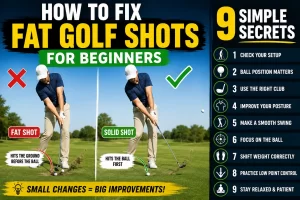
Why Fat Golf Shots Frustrate Beginners
If you’re searching for how to fix fat golf shots for beginners, you’re definitely not alone. One of the most frustrating problems new golfers face is hitting the ground before the golf ball. This creates weak, ugly shots that barely travel any distance and completely destroy confidence on the course.
A fat golf shot happens when the club strikes the turf before making contact with the ball. Instead of creating crisp, clean impact, the club digs into the ground early, causing what golfers often call chunked golf shots or heavy iron shots. These shots usually feel terrible and often send dirt flying farther than the golf ball itself.
Many beginners struggle with this issue because they haven’t yet developed proper golf swing mechanics or learned how to control the bottom of their swing arc. Poor balance, incorrect ball position, bad posture, and improper weight transfer are some of the biggest reasons why beginners hit fat golf shots every time. The good news is that this problem is extremely common — and completely fixable.
One major difference between poor contact and solid ball striking is learning how to create ball first contact. Skilled golfers hit the golf ball before taking a divot, while beginners often hit the turf first. That small difference changes everything. When you achieve clean contact, your shots fly farther, feel more powerful, and become far more consistent.
Another huge factor is golf swing balance. Beginners who swing too hard or lose their balance during the downswing often struggle to control where the club hits the ground. Even a small loss of balance can cause the club to bottom out too early.
The good news is that learning how to fix fat golf shots for beginners fast doesn’t require expensive golf lessons or years of practice. Once you understand a few simple fundamentals — like proper setup, ball position, balance, and swing sequencing — you can dramatically improve your contact and stop chunking golf shots with irons.
In this guide, you’ll discover 9 simple secrets that will help you fix fat golf shots, improve consistency, and develop more confidence every time you step onto the golf course.
“If you keep hitting fat golf shots and nothing seems to fix it, there’s a dangerous swing flaw hiding in your mechanics that most golfers never even realize they’re making fix it fast here https://ultimategolfmasterypro.com/the-hidden-swing-flaws-causing-fat-shots/
Secret #1 – Fix Your Ball Position First
Why Poor Ball Position Causes Fat Golf Shots
One of the biggest reasons beginners struggle with chunked golf shots is poor ball position. In fact, many golfers searching for a beginner fat golf shot fix are surprised to learn that their swing may not be the main problem at all. Sometimes a simple setup mistake can completely ruin contact.
When the golf ball is positioned too far forward in your stance, the club often reaches the bottom of the swing too early. This causes the clubhead to strike the turf before making contact with the golf ball. As a result, you hit heavy iron shots that lose distance, accuracy, and consistency.
Many beginners unknowingly move the ball too far toward their front foot because they’re trying to “help” the ball into the air. Unfortunately, this usually has the opposite effect. Instead of creating solid contact golf players want, the club digs into the ground early and produces weak shots.
Another common problem is improper low point control. In good golf swing mechanics, the club should bottom out slightly after the ball when hitting irons. This creates clean turf interaction and proper compression. However, poor ball positioning shifts the swing bottom behind the ball, making fat shots much more likely.
Loss of ball first contact is one of the clearest signs your setup needs adjustment. If you constantly leave deep divots behind the golf ball, there’s a strong chance your ball position is contributing to the issue.
The encouraging part is that this is one of the easiest swing problems to fix. Small setup changes can create immediate improvements.
Correct Ball Position For Beginners
If you want to learn how to fix fat golf shots for beginners, you need to start with a consistent ball position. Different clubs require slightly different positioning, but the fundamentals remain simple.
For irons, the golf ball should usually sit near the center of your stance or slightly forward of center. Short irons tend to work best closer to the middle, while longer irons move slightly toward the lead foot.
Drivers are different because you want to hit the ball on an upward angle. With the driver, the ball should typically line up near your front heel.
A great beginner checkpoint is to set up with your feet shoulder-width apart and position the ball so your sternum stays slightly behind it. This helps promote proper contact without forcing awkward swing adjustments.
Visual alignment tools can also help tremendously. Many golfers place an alignment stick on the ground during practice to monitor consistent setup positions. Even small improvements in setup consistency can dramatically reduce chunked golf shots.
Beginner Drill For Better Contact
One of the fastest ways to improve contact is by practicing simple drills that teach proper strike location.
The towel drill is excellent for beginners. Place a small towel a few inches behind the golf ball and practice swinging without touching the towel. This trains you to avoid hitting the ground early and encourages cleaner ball striking.
Another effective exercise is the alignment stick drill. Place a stick parallel to your target line to monitor ball position and stance consistency during practice sessions.
Finally, slow-motion swings are incredibly valuable for improving awareness. Many beginners rush their swings and never feel where the club is actually bottoming out. Slowing everything down helps improve rhythm, balance, and contact quality.
If you consistently practice these fundamentals, you’ll quickly notice cleaner strikes, fewer heavy iron shots, and much more confidence over the golf ball.
Secret #2 – Maintain Better Golf Swing Balance
Why Golf Swing Balance Matters
One of the most overlooked parts of learning how to fix fat golf shots for beginners is improving your balance throughout the golf swing. Many new golfers focus entirely on their hands or backswing while ignoring how their body moves during the swing. Unfortunately, poor balance is one of the biggest causes of chunked golf shots and heavy iron shots.
Good golf swing balance allows you to control the bottom of the swing arc and consistently create clean contact. When your balance breaks down, the club tends to strike the ground too early, causing fat shots that lose both distance and accuracy.
A major issue for beginners is poor weight shift. Many golfers either stay stuck on their back foot or slide too far forward during the downswing. Both mistakes make it difficult to achieve proper ball first contact.
Falling backward during impact is especially common among players trying too hard to lift the golf ball into the air. Instead of rotating smoothly through the shot, the body leans away from the target, causing the clubhead to bottom out behind the ball. This is one of the main reasons why beginners hit fat golf shots every time.
Losing stability during the downswing also destroys consistency. If your lower body moves excessively or your feet lose pressure against the ground, it becomes almost impossible to control solid contact golf players need for crisp iron shots.
The best ball strikers maintain balance from start to finish. Their lower body stays stable while their weight transfers naturally toward the target. This creates smoother golf swing mechanics and far more reliable contact.
The good news is that balance can improve quickly with focused practice. Even small improvements in stability can dramatically help fix fat golf shots for beginners fast.
Common Beginner Balance Mistakes
One of the most common beginner mistakes is swinging too hard. Many golfers believe more effort automatically creates more distance, but swinging aggressively often destroys timing and balance.
When beginners overswing, their body tends to move out of sync. The upper body lunges forward, the feet become unstable, and the club bottoms out early. This almost always leads to chunked golf shots.
Over-rotating is another major issue. Some golfers spin their hips too aggressively during the downswing, causing their upper body to fall backward. Others sway too far laterally instead of rotating properly. Both movements make consistent contact difficult.
Poor foot pressure also creates major problems. Many beginners lift their toes, rock onto their heels, or allow their feet to move excessively during the swing. Stable foot pressure is critical for controlling the golf club through impact.
Improving balance starts with slowing down and staying centered throughout the swing.
Easy Balance Drills For Solid Contact Golf
One of the best drills for beginners is the feet-together drill. Simply hit soft practice shots with your feet positioned close together. This teaches you to stay balanced and controlled instead of swinging wildly.
The one-leg balance drill is another excellent exercise. Practice holding your finish position on your lead leg for several seconds after each swing. This improves stability, coordination, and body control.
The pause-and-finish drill is also highly effective. During practice swings, pause briefly at the top of your backswing before slowly rotating through impact into a balanced finish. This drill improves tempo, sequencing, and golf swing balance.
As your balance improves, you’ll begin striking the ball more cleanly, compressing irons more consistently, and eliminating many of the heavy shots that frustrate beginners.
“If you keep ignoring these hidden swing flaws, fat golf shots may never fully disappear — no matter how many range sessions, swing tips, or golf lessons you try eliminate these hidden swing flaws here https://ultimategolfmasterypro.com/the-hidden-swing-flaws-causing-fat-shots/
Secret #3 – Stop Hitting Behind The Ball
Why Beginners Hit Fat Golf Shots Every Time
If you want to master how to fix fat golf shots for beginners, you must learn how to stop hitting behind the golf ball. This is the true source of most fat shots.
One of the biggest causes is an early release, sometimes called “casting.” This happens when the wrists unhinge too soon during the downswing. Instead of maintaining lag and compressing the ball properly, the clubhead reaches the ground too early.
Scooping the golf ball is another huge problem for beginners. Many players instinctively try to lift the ball into the air rather than striking downward with irons. Unfortunately, this motion shifts the swing bottom backward and creates chunked golf shots.
Fear also plays a major role. Many beginners are afraid of hitting the ground, so they make awkward last-second adjustments during the downswing. Ironically, these adjustments usually cause the club to strike the turf even earlier.
Understanding this concept is critical because iron shots are designed to contact the ground after the golf ball. Professional golfers actually expect to take divots with their irons. The key difference is that their divot happens after impact, not before.
Once beginners understand this principle, learning how to stop chunking golf shots with irons becomes much easier.
Learn Ball First Contact
One of the most important fundamentals in golf is learning proper ball first contact. This means the clubface strikes the golf ball before interacting with the turf.
To achieve this, you must learn how to compress the golf ball correctly. Good compression occurs when the hands lead the clubhead slightly through impact, creating downward strike and clean contact.
Another important concept is divot placement. A proper divot should begin just after the golf ball, not several inches behind it. If your divot consistently starts behind the ball, your low point control needs improvement.
Proper shaft lean is also essential. At impact, the shaft should lean slightly toward the target with irons. This helps create crisp contact and prevents scooping.
When these fundamentals work together, the ball launches cleaner, flies farther, and feels dramatically better off the clubface.
Best Drill To Stop Chunked Golf Shots
The line drill is one of the fastest ways to improve contact. Draw a straight line on the practice ground and place the golf ball slightly ahead of it. Your goal is to strike the ball first and take a divot in front of the line.
The tee gate drill is another excellent beginner exercise. Place two tees slightly wider than your clubhead and practice swinging through the gate cleanly. This improves strike precision and club control.
Divot control practice is also incredibly effective. During range sessions, focus entirely on where your divot begins rather than where the ball travels. This trains your body to prioritize contact quality first.
As you improve these skills, you’ll begin creating more solid contact golf players strive for and dramatically reduce fat golf shots on the course.
Secret #4 – Improve Your Downswing Sequence
How Poor Timing Creates Heavy Iron Shots
One of the biggest reasons golfers struggle with how to fix fat golf shots for beginners is poor downswing sequencing. Even if your setup looks good, bad timing during the transition can completely ruin contact.
Many beginners start the downswing with their upper body instead of their lower body. This creates an aggressive over-the-top motion that forces the club steeply into the ground. As a result, the clubhead strikes the turf too early, producing heavy iron shots and chunked golf shots.
When the shoulders dominate the downswing, the body often outraces the lower half. This throws off balance, changes the swing bottom, and destroys consistency. It’s one of the main reasons why beginners hit fat golf shots every time.
Casting the club early is another huge problem. Casting happens when the wrists release too soon during the downswing. Instead of maintaining lag and storing power, the clubhead gets thrown outward early. This causes the club to bottom out behind the golf ball and creates weak contact.
Loss of lag also reduces compression and distance. Skilled golfers maintain wrist angles deep into the downswing, allowing the club to accelerate naturally through impact. Beginners often release these angles too early because they’re trying to “hit” at the ball rather than swinging through it.
Poor sequencing doesn’t just hurt consistency — it also creates tension, balance problems, and timing issues throughout the swing. Fortunately, improving your downswing sequence can dramatically help fix fat golf shots for beginners fast.
Proper Beginner Downswing Mechanics
Good downswing mechanics start from the ground up. Instead of pulling the club down with the arms and shoulders, the lower body should begin the transition.
A simple way to think about this is that your hips start the downswing while your upper body follows naturally. This creates smoother sequencing and helps shallow the club into the correct impact position.
Proper hip rotation is extremely important. Beginners often either spin their hips too aggressively or fail to rotate at all. Good rotation allows the club to approach the ball from a more natural angle while maintaining balance.
Shallowing the club is another important concept for improving contact. A shallow downswing helps the club travel more around the body instead of steeply downward into the turf. This promotes cleaner ball striking and better low point control.
You don’t need a complicated swing to improve your golf swing mechanics. Simple sequencing improvements can immediately lead to more solid contact golf players want with their irons.
Tempo Drills For Better Timing
One of the best ways to improve timing is through structured tempo drills.
The count drill is extremely effective for beginners. During practice swings, count “1” during the backswing and “2” during the downswing. This creates smoother rhythm and prevents rushing from the top.
The pump drill is another excellent exercise. Swing to the top, slowly rehearse the downswing halfway several times, then swing through to a full finish. This helps train proper sequencing and prevents casting.
Half-speed practice swings are also incredibly valuable. Many beginners swing too hard and lose all body control. Practicing at reduced speed improves awareness, balance, and timing.
As your sequence improves, you’ll notice cleaner strikes, fewer fat shots, and much more consistent iron play.
Secret #5 – Fix Your Weight Transfer
Why Incorrect Weight Shift Causes Fat Shots
If you want to truly master how to fix fat golf shots for beginners, you must improve your weight transfer. Poor weight shift is one of the biggest causes of chunked golf shots and inconsistent iron contact.
One of the most common beginner mistakes is hanging back during impact. Many golfers keep too much weight on their trail foot because they’re trying to help the golf ball into the air. Unfortunately, this causes the club to strike the ground before the ball.
When your weight stays behind the ball, the swing bottom moves backward as well. This creates heavy iron shots and poor compression.
Reverse pivot problems are another major issue. A reverse pivot happens when the body shifts incorrectly during the backswing and downswing. Instead of loading into the trail side during the backswing and moving toward the target during the downswing, the golfer does the opposite.
This creates terrible balance, weak impact positions, and inconsistent strikes.
Weak impact position is usually the final result of poor weight transfer. If your body weight isn’t moving properly toward the target, it becomes extremely difficult to create ball first contact or maintain proper shaft lean.
Good golfers shift pressure naturally while staying balanced throughout the swing. Learning this movement is essential for anyone trying to fix fat golf shots.
Proper Weight Transfer Basics
Good weight transfer begins during the backswing with proper trail side loading. As you rotate away from the target, pressure should move naturally into the inside of your trail foot.
This doesn’t mean swaying sideways. Instead, the body should remain centered while coiling into the trail side.
During the downswing, pressure gradually shifts into the lead foot. This helps move the swing bottom forward and promotes clean contact.
One of the easiest checkpoints is your finish position. At the end of the swing, most of your weight should be balanced over your lead leg with your chest facing the target.
This stable finish position is a strong sign your weight transfer worked correctly.
Proper weight shift also improves golf swing balance, timing, and consistency. Once beginners learn this movement, they often see immediate improvements in ball striking.
Drills To Improve Weight Shift Fast
The step-through drill is one of the best exercises for beginners. During practice swings, step toward the target with your trail foot after impact. This teaches your body to move pressure forward naturally.
The pressure transfer drill is also extremely effective. During slow-motion swings, focus on feeling pressure move from the inside of your trail foot into your lead foot during the downswing.
Finish pose practice is another simple but powerful drill. After every swing, hold your finish for several seconds without losing balance. This reinforces proper sequencing and stable weight transfer.
If you consistently practice these drills, you’ll dramatically improve your contact, eliminate many chunked golf shots, and develop much more confidence with your irons.
Secret #6 – Improve Your Posture And Setup
Why Setup Mistakes Lead To Chunked Golf Shots
If you’re serious about learning how to fix fat golf shots for beginners, you need to pay close attention to your setup position. Many golfers spend countless hours working on their swing while completely ignoring posture and alignment. The truth is, poor setup fundamentals can make clean contact almost impossible.
One of the biggest mistakes beginners make is standing too close to the golf ball. When the body crowds the ball, the arms lose space to swing naturally. This forces awkward compensations during the downswing and often causes chunked golf shots.
Standing too close also encourages steep swings and poor balance through impact. As the club approaches the ball, beginners frequently pull the club inward or lift upward to avoid hitting the ground. This creates inconsistent contact and heavy iron shots.
Excess knee bend is another common setup issue. Many beginners squat too much at address because they think it creates power or athleticism. In reality, too much knee flex restricts movement and makes it harder to rotate properly during the swing.
Rounded shoulders also contribute to poor golf swing mechanics. Slouching over the golf ball limits rotation and encourages an overly steep downswing path. This makes it much more difficult to achieve proper ball first contact.
Poor posture affects every part of the golf swing, including balance, sequencing, and low point control. The encouraging part is that setup adjustments can create immediate improvements. Sometimes a golfer struggling to fix fat golf shots simply needs a better address position.
Proper Golf Posture Fundamentals
Strong golf posture starts with creating an athletic spine angle. Instead of bending excessively at the waist, tilt forward naturally from the hips while keeping the back relatively straight.
Your knees should remain slightly flexed, but not squatted deeply. The goal is to feel athletic and balanced rather than stiff or hunched over.
Arm hang position is another important detail. Your arms should hang naturally beneath your shoulders without excessive reaching or crowding. If your hands feel trapped against your body, you’re probably standing too close to the ball.
Balanced posture is critical for maintaining consistency throughout the swing. Your weight should feel evenly distributed across the balls of your feet rather than sitting heavily on your heels or toes.
Good posture also improves golf swing balance and allows the club to move more naturally through impact. This helps beginners stop chunking golf shots with irons and create cleaner strikes.
The best golfers make setup look simple and repeatable. That’s exactly what beginners should strive for.
Setup Checkpoints Beginners Should Follow
One of the easiest ways to improve setup is through mirror practice. Stand in front of a mirror and rehearse your posture without a golf ball. This helps you identify rounded shoulders, poor spine angle, or excessive knee bend.
Using an alignment stick setup drill can also improve consistency. Place a stick along your toes to check alignment and another pointing toward the golf ball to monitor spacing.
Consistency routines are equally important. Before every practice swing or shot, build your setup the same way each time. This creates repeatable fundamentals and reduces swing compensations.
As your setup improves, you’ll notice cleaner contact, better balance, and fewer heavy shots almost immediately.
Secret #7 – Slow Down Your Swing Tempo
Why Swinging Too Hard Creates Fat Shots
One of the biggest mistakes beginners make when trying to fix fat golf shots is swinging too aggressively. Many golfers believe harder swings automatically create more distance, but this usually leads to poor timing, balance problems, and chunked golf shots.
If you’re searching for how to fix fat golf shots for beginners fast, slowing down your swing tempo may be one of the quickest solutions available.
When beginners swing too hard, they often lose rhythm during the transition from backswing to downswing. The body becomes rushed, the arms dominate the swing, and sequencing falls apart.
This rushed motion frequently creates an over-the-top downswing path. Instead of approaching the ball from a shallow angle, the club becomes steep and strikes the turf too early.
Poor sequencing also causes many golfers to cast the club early. The wrists release prematurely, causing the swing bottom to move behind the golf ball. This creates heavy iron shots and weak contact.
Swinging harder rarely improves consistency. In fact, most beginners hit better shots when they reduce effort and focus on rhythm instead of raw power.
Good tempo allows the body to stay balanced, the club to shallow naturally, and the swing to remain connected throughout impact.
How Smooth Tempo Improves Solid Contact Golf
Smooth tempo improves nearly every aspect of the golf swing.
First, it creates better timing between the upper and lower body. Instead of the shoulders racing ahead, the body moves together more efficiently.
Second, slower tempo improves low point control. When the swing stays under control, it becomes much easier to consistently create ball first contact and avoid chunked golf shots.
Another major benefit is improved balance. Golfers who swing smoothly tend to maintain posture and stability far better throughout the downswing.
This leads to more solid contact golf players want with their irons. The ball comes off the clubface cleaner, more compressed, and more consistent.
Many professional golfers actually swing with less effort than amateurs realize. Their power comes from sequencing and timing rather than brute force.
For beginners, smoother tempo often creates immediate improvements in contact quality and consistency.
Beginner Tempo Drills
The metronome drill is one of the best ways to improve rhythm. Set a metronome or timing app to a comfortable pace and match your backswing and downswing to the beat. This helps eliminate rushing.
The pause-at-the-top drill is another powerful exercise. Pause briefly at the top of your backswing before starting down. This trains smoother transition and better sequencing.
Three-quarter swing practice is also extremely effective for beginners. Instead of trying to swing full speed, focus on controlled swings with balanced finishes. This improves contact while reducing tension and overswinging.
As your tempo improves, you’ll begin striking irons more cleanly, controlling the bottom of the swing more consistently, and dramatically reducing fat golf shots.
Hitting Fat Golf Shots? You Got To See This https://www.golfmonthly.com/tips/hitting-fat-golf-shots-heres-how-to-fix-it-220197
Secret #8 – Strengthen Your Golf Swing Mechanics
Common Golf Swing Mechanics Errors
If you’re still struggling with how to fix fat golf shots for beginners, there’s a strong chance your swing mechanics are contributing to the problem. Even small technical flaws can dramatically affect contact quality and consistency.
One of the most common issues is the chicken wing follow-through. This happens when the lead arm bends excessively after impact instead of extending naturally toward the target. A chicken wing often signals tension, poor rotation, or an attempt to “save” the shot at the last second.
When beginners develop this motion, the clubface and swing path become inconsistent, leading to chunked golf shots and weak iron strikes.
Early extension is another major problem. This occurs when the hips move closer to the golf ball during the downswing instead of maintaining posture. As the body stands up through impact, the club loses its natural path and often strikes the ground too early.
Poor wrist angles also create major contact issues. Many beginners cup or flip their wrists through impact, causing loss of compression and inconsistent low point control. This makes it difficult to achieve clean ball first contact.
These mechanical flaws are extremely common among golfers trying to fix fat golf shots. The good news is that they can be improved with focused practice and awareness.
Simple Mechanics Fixes For Beginners
One of the easiest ways to improve your golf swing mechanics is by keeping your chest rotating through impact. Many beginners stop rotating after contact and rely entirely on their hands to control the club.
Continuous chest rotation helps shallow the club, maintain balance, and improve extension through the ball.
Maintaining posture through impact is equally important. Instead of standing up during the downswing, focus on keeping your spine angle stable as your body rotates through the shot.
This creates better consistency and helps prevent heavy iron shots.
Improving extension after contact can also dramatically improve ball striking. After impact, your arms should extend naturally toward the target rather than collapsing inward. This promotes cleaner contact and better compression.
Remember, golf isn’t about forcing the club into the ball. Good swings flow naturally through impact with proper sequencing and body rotation.
As your mechanics improve, you’ll notice fewer chunked golf shots, more solid strikes, and improved consistency throughout the round.
Practice Drills For Cleaner Ball Striking
The impact bag drill is one of the best exercises for improving compression and shaft lean. Strike an impact bag while focusing on keeping your hands slightly ahead of the clubhead at impact.
This trains proper contact mechanics and helps eliminate scooping.
Slow-motion mechanics training is also incredibly valuable. Practice your swing at reduced speed while paying attention to posture, wrist angles, and body rotation. Slowing things down improves awareness and consistency.
The wall rotation drill is another excellent beginner exercise. Stand with your trail side near a wall and practice rotating through impact without your hips crashing into the wall. This teaches better posture maintenance and prevents early extension.
These simple drills can dramatically improve your contact quality and help you build a more repeatable golf swing.
Secret #9 – Practice Smarter To Build Consistency
Why Most Beginners Never Fix Fat Golf Shots
Many golfers searching for how to fix fat golf shots for beginners spend months — or even years — practicing without seeing real improvement. The problem usually isn’t effort. It’s the way they practice.
One major issue is random practice habits. Many beginners simply hit ball after ball without focusing on a specific goal. They constantly switch swing thoughts, clubs, and drills without building consistency.
Another huge problem is the lack of a feedback system. If you don’t understand why you’re hitting fat shots, it becomes almost impossible to make lasting improvements.
Many golfers also practice too fast. They rush through range sessions without evaluating contact quality, divot position, or swing mechanics. This reinforces bad habits instead of correcting them.
Improvement in golf comes from focused repetition and awareness. Simply hitting more golf balls doesn’t guarantee better results.
If you truly want to fix fat golf shots, your practice sessions must become more intentional.
Smart Practice Strategies For Faster Improvement
One of the best approaches for beginners is block practice. This means focusing on one specific skill repeatedly before moving to another area.
For example, you might spend 15 minutes working entirely on ball first contact using short irons before switching clubs.
Random practice also has value, especially later in development, because it simulates on-course situations. However, beginners usually benefit more from focused repetition early on.
Video analysis is another powerful tool. Many golfers don’t realize what their swing actually looks like until they record it. Even simple phone videos can reveal balance problems, posture issues, or early release patterns.
Short focused practice sessions are often more effective than marathon range sessions. A concentrated 30-minute practice with clear goals usually produces better results than mindlessly hitting balls for two hours.
Consistent feedback and structured practice help beginners improve much faster.
Weekly Beginner Practice Plan
A simple weekly practice routine can dramatically accelerate improvement.
Start with two or three driving range sessions per week focused on fundamentals like setup, balance, and contact quality. During each session, prioritize clean strikes over distance.
Integrating short game practice is also important because better feel and rhythm around the greens often improve overall swing control.
Tracking progress over time is another valuable habit. Monitor your contact quality, divot position, and consistency instead of focusing only on ball flight.
As your fundamentals improve, you’ll notice cleaner iron strikes, more confidence, and fewer fat golf shots on the course.
how to fix fat golf shots for beginners
Conclusion
How To Fix Fat Golf Shots For Beginners Starts With Fundamentals
Learning how to fix fat golf shots for beginners doesn’t require a perfect golf swing. Most fat shots come from a handful of common problems that can be corrected with proper fundamentals and consistent practice.
Throughout this guide, you learned 9 simple secrets that can dramatically improve your ball striking:
- Fixing ball position
- Improving golf swing balance
- Learning ball first contact
- Sequencing the downswing properly
- Correcting weight transfer
- Building better posture and setup
- Slowing down swing tempo
- Strengthening golf swing mechanics
- Practicing smarter for consistency
Every one of these fundamentals works together to help eliminate chunked golf shots and heavy iron strikes.
It’s important to remember that improvement takes patience. Golf is a skill built through repetition, awareness, and gradual progress. Even professional golfers constantly work on their fundamentals.
The key is staying focused on clean contact instead of perfection. As your golf swing balance, posture, and sequencing improve, your consistency will improve naturally as well.
Most importantly, focus on creating ball first contact. That single concept alone can completely change your iron play.
If you continue practicing these drills and fundamentals consistently, you’ll build more confidence, strike the ball cleaner, and finally stop struggling with fat golf shots.
Every great golfer started exactly where you are now — the difference is they kept practicing the fundamentals until solid contact became automatic.