
7 Proven Golf Swing Consistency Drills For Beginners That Actually Work
If Your Golf Swing Feels Different Every Round, These Beginner Drills Could Save Your Game
Introduction
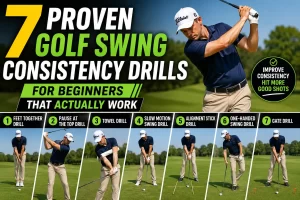
Do you feel like your golf swing changes every time you step onto the course? One shot flies perfectly straight, while the very next shot slices into the trees or barely gets off the ground. If that sounds familiar, you’re not alone. Many new golfers struggle with inconsistency, which is exactly why learning the right golf swing consistency drills for beginners can make such a huge difference.
One of the biggest frustrations beginner golfers face is hitting a few great shots during practice, only to completely lose confidence after several bad ones. This inconsistency can feel confusing and discouraging, especially when you’re putting in effort but not seeing reliable results. Worse yet, inconsistent golf shots often lead to higher scores, missed opportunities, and growing frustration every time you tee it up. Instead of enjoying the game, many beginners start doubting their swing and overthinking every shot.
So, what actually causes inconsistent golf shots?
In most cases, the problem comes down to a few key fundamentals. Poor golf swing rhythm, rushed golf swing timing, lack of swing path control, weak golf swing balance, and inconsistent setup positions are some of the biggest reasons beginners struggle to hit the ball cleanly. Even small mistakes in posture, tempo, or alignment can throw off your entire swing. The good news? These problems are fixable.
That’s where the right beginner golf swing drills come in. The best golf swing consistency drills for beginners are designed to help you build repeatable movement patterns, improve contact, and create more confidence over time. Instead of guessing what’s wrong with your swing, you’ll start developing solid golf swing mechanics and stronger beginner golf fundamentals that lead to more reliable shots.
In this guide, you’ll discover 7 proven golf swing consistency drills for beginners that actually work. These simple golf swing consistency drills for beginners will help improve balance, timing, rhythm, and ball striking so you can stop guessing and start swinging with more confidence fast.
Why Golf Swing Consistency Matters For Beginners
When most beginner golfers start learning the game, they often focus on one thing: hitting the ball farther. While distance can be exciting, consistency matters far more than power—especially if you want to lower your scores and build confidence on the course. A golfer who consistently hits straight, controlled shots will almost always outperform someone who occasionally crushes the ball but struggles with accuracy and contact.
Think about it this way: hitting one amazing shot followed by three poor ones won’t help your scorecard. Inconsistent golf shots often lead to missed fairways, poor iron contact, penalty strokes, and unnecessary frustration. That’s why learning golf swing consistency drills for beginners should be one of the first priorities for new golfers.
The relationship between consistency and lower scores is simple. More consistent swings usually lead to cleaner ball striking, better direction, and more predictable distances. Even if you’re not hitting the ball incredibly far yet, making repeatable contact can dramatically improve your overall performance. Golf is a game of minimizing mistakes, and consistency helps reduce the big misses that ruin rounds.
Another mistake many beginners make is trying to fix everything at once or constantly changing their swing. Instead, beginner golfers should focus on building repeatable movement patterns first. Developing reliable golf swing mechanics takes time, but practicing the same movements repeatedly helps your body learn what a good swing feels like. This is where beginner golf swing drills become incredibly valuable.
Strong beginner golf fundamentals like posture, grip, balance, tempo, and alignment create the foundation for a repeatable golf swing. Without these basics, it becomes much harder to improve long term. One of the best golf swing consistency tips for beginners is to focus on control before speed. A smoother, balanced swing often produces far better results than trying to overpower every shot.
The good news is you don’t need complicated training methods to improve. By practicing proven drills and focusing on consistency first, you can start seeing better contact, straighter shots, and more confidence faster than you think.
Drill #1 – The Feet Together Drill For Better Balance
One of the best simple golf swing consistency drills for beginners is the Feet Together Drill. It may feel awkward at first, but this exercise is incredibly effective for improving golf swing balance, stability, and cleaner ball striking. If you struggle with swaying, falling off balance, or inconsistent contact, this drill can quickly expose problems and help fix them.
So, what exactly is the Feet Together Drill?
The concept is simple: instead of taking your normal stance, you hit short golf shots with your feet positioned closely together. By narrowing your base, your body is forced to stay more centered throughout the swing. This prevents excessive movement and teaches you how to swing in balance.
Why does this drill work so well?
Many beginner golfers move too much during the swing. They sway side to side, shift weight incorrectly, or swing too aggressively. These movements make it difficult to hit the ball consistently. The Feet Together Drill helps eliminate these issues by improving golf swing balance, reducing unnecessary body movement, and encouraging better center-face contact.
How To Do The Feet Together Drill
Step 1: Use a Short Iron
Start with a pitching wedge, 9-iron, or short iron. Avoid long clubs at first since they are harder to control.
Step 2: Take a Narrow Stance
Position your feet directly next to each other or only a few inches apart. Keep your posture athletic and relaxed.
Step 3: Start With Half Swings
Don’t swing at full speed. Begin with slow, controlled half swings to focus on rhythm and balance.
Step 4: Focus On Smooth Tempo
One of the biggest goals of this drill is improving tempo. Keep your swing smooth and controlled instead of trying to hit the ball hard.
Common Mistakes To Avoid
One of the biggest mistakes beginners make is swinging too hard. When you try to overpower the shot, you’ll likely lose your balance immediately. Another common problem is leaning backward or swaying during the swing, which defeats the purpose of the drill.
The biggest benefit of this exercise is better stability and improved consistency. Over time, this drill helps create cleaner contact, more controlled shots, and better overall swing awareness. Among all beginner golf swing drills, this is one of the fastest ways to improve balance and build a more repeatable golf swing.
Here’s how thousands of golferes are fixing their inconsistent golf swing without golf lessons how to improve golf swing consistency for beginners
Drill #2 – The Pause At The Top Drill For Better Timing
If your golf swing often feels rushed or out of sync, the Pause At The Top Drill can be a game changer. One of the biggest reasons beginner golfers struggle with consistency is poor golf swing timing. Many golfers rush from the backswing into the downswing too quickly, causing poor contact, slices, fat shots, or topped balls. This simple drill helps slow everything down and teaches your body proper sequencing.
So, what is the Pause At The Top Drill?
The concept is straightforward: during your backswing, you briefly pause at the very top for about one second before starting the downswing. That short pause may sound simple, but it forces your body to stay under control and prevents one of the biggest swing killers for beginners—rushing.
Why does this drill work so well?
Many beginner golfers swing too fast because they think speed equals distance. Unfortunately, rushing often destroys consistency. When your body moves too quickly, your hands, arms, and lower body fall out of sequence. This hurts golf swing rhythm, timing, and overall control. The Pause At The Top Drill helps slow down the transition so your swing feels smoother and more repeatable.
How To Do The Pause At The Top Drill
Step 1: Start With A Slow Backswing
Take the club back at a controlled pace. Don’t rush the takeaway. Focus on staying balanced and relaxed.
Step 2: Pause For One Second At The Top
At the top of your backswing, briefly stop for about one second. This pause should feel natural—not stiff or forced.
Step 3: Begin A Smooth Downswing
After the pause, transition smoothly into the downswing without jerking the club. Focus on rhythm instead of power.
The goal is not to hit the ball hard. Instead, you’re training your body to develop better golf swing timing and a more consistent sequence.
Common Mistakes Beginners Make
One common mistake is creating a jerky transition after the pause. Some golfers stop suddenly and then aggressively yank the club down, which defeats the purpose of the drill. Another major issue is swinging too fast, even after adding the pause.
One of the best ways how to improve golf swing consistency for beginners is by developing smoother movement patterns. This drill helps build a more repeatable swing, cleaner contact, and better control over time. As your golf swing rhythm improves, you’ll likely notice straighter shots and more confidence every time you step onto the course.
Drill #3 – The Towel Drill For Better Swing Path Control
If you struggle with slices, inconsistent contact, or feeling disconnected during your swing, the Towel Drill is one of the best golf swing consistency drills for beginners. This drill is excellent for improving connection, building better swing path control, and helping beginner golfers stop making overly aggressive arm movements.
So, what exactly is the Towel Drill?
The setup is simple. Place a small towel underneath both armpits before taking your swing. The goal is to keep the towel in place throughout the motion. If the towel falls too early, it usually means your arms are disconnecting from your body—one of the most common swing flaws among beginners.
Why does this drill work?
Many beginner golfers rely too heavily on their arms during the downswing. This often creates an “over-the-top” motion that leads to slices, pulls, and inconsistent strikes. The Towel Drill teaches your upper body and arms to work together more efficiently, creating smoother motion and improved swing path control.
This drill also reinforces strong beginner golf fundamentals by helping golfers stay connected throughout the swing instead of making wild, disconnected movements.
How To Practice The Towel Drill
Step 1: Place A Towel Under Both Armpits
Use a small towel and gently tuck it under both arms.
Step 2: Make Slow Practice Swings
Start slowly. Don’t worry about hitting the ball at first. Focus on maintaining connection throughout the swing.
Step 3: Keep The Towel In Place
Try to keep the towel secure during both the backswing and downswing. If it drops immediately, slow down and reset.
Common Mistakes To Avoid
One major mistake beginners make is swinging too hard. Speed often causes the arms to separate from the body, making the towel fall out. Another issue is letting the arms disconnect during transition.
The benefits of this drill are huge. Over time, it helps improve golf swing mechanics, encourages straighter shots, and creates a more repeatable motion. Among all beginner golf swing drills, this one is especially effective for building consistency and helping golfers strike the ball more solidly.
Struggling with a inconsistent golf swing as a beginner fix it here no expensive golf lessons needed
Drill #4 – The Slow Motion Swing Drill For Better Mechanics
If your golf swing feels inconsistent from one shot to the next, the Slow Motion Swing Drill can be one of the most powerful ways to improve your game. Many beginner golfers try to fix swing problems by hitting ball after ball at full speed, but swinging faster often makes bad habits even worse. Sometimes the fastest way to improve is actually slowing down.
The Slow Motion Swing Drill is exactly what it sounds like—practicing exaggerated slow swings to help your body learn proper movement patterns. Instead of focusing on power or distance, this drill teaches you how to move correctly throughout the golf swing. For golfers struggling with inconsistency, it’s one of the most effective beginner golf swing drills for building a more repeatable motion.
So why does this drill work so well?
One of the biggest reasons beginners struggle is poor movement awareness. At full speed, it’s hard to notice mistakes in posture, alignment, tempo, or sequencing. When you slow everything down, you can actually feel what your body is doing during the swing. Over time, this builds muscle memory and improves overall golf swing mechanics.
The goal isn’t just to swing slower—it’s to train your body to repeat the correct motion consistently.
How To Do The Slow Motion Swing Drill
Step 1: Swing At 25–50% Speed
Start by making golf swings at a much slower pace than normal. Think smooth and controlled instead of powerful.
Step 2: Focus On Key Swing Positions
Pay close attention to important positions throughout the swing:
- Setup posture
- Backswing position
- Top of the swing
- Downswing path
- Balanced finish
Try to feel proper movement rather than rushing through it.
Step 3: Repeat 10–20 Repetitions
Consistency comes from repetition. Perform at least 10–20 slow practice swings before hitting golf balls.
Focus Points During The Drill
Balance: Stay centered throughout the swing without swaying.
Tempo: Keep a smooth rhythm from takeaway to finish.
Alignment: Make sure your shoulders, feet, and hips stay aligned with the target.
One of the best golf swing consistency tips for beginners is to stop obsessing over distance and focus on movement quality first. The better your mechanics become, the easier consistency gets.
The biggest benefit of the Slow Motion Swing Drill is a more repeatable golf swing. Over time, golfers often notice cleaner contact, better accuracy, and improved confidence because they finally understand what a good swing actually feels like. If you’re serious about improving golf swing mechanics, this drill deserves a regular place in your practice routine.
Drill #5 – The Alignment Stick Drill For Straighter Shots
If you constantly feel like your golf shots go left one swing and right the next, poor alignment may be the hidden problem. Many beginner golfers assume inconsistent shots are always caused by bad swing mechanics, but sometimes the issue starts before the swing even begins. That’s why the Alignment Stick Drill is one of the most valuable exercises for building consistency and hitting straighter golf shots.
So, what exactly is the Alignment Stick Drill?
This drill uses alignment sticks—or even spare golf clubs—to help create a consistent setup position. The goal is to train your body to aim correctly every time you address the ball. Many beginners unknowingly set up with poor alignment, which makes it much harder to swing consistently or control ball direction.
Why does this drill work so well?
One of the biggest reasons beginner golfers struggle with consistency is improper body positioning at setup. If your feet, hips, or shoulders are aimed incorrectly, even a good swing can produce poor results. The Alignment Stick Drill improves body positioning, helps create better swing direction, and reinforces important beginner golf fundamentals that lead to more reliable golf shots.
It also helps improve golf swing mechanics because a proper setup naturally encourages a better swing path. When your body is aligned correctly, it becomes easier to swing on plane and strike the ball more cleanly.
How To Do The Alignment Stick Drill
Step 1: Place A Stick On The Target Line
Lay one alignment stick (or golf club) on the ground pointing directly at your intended target. This becomes your visual guide.
Step 2: Position Your Feet Parallel
Stand with your feet, hips, and shoulders parallel to the target line—not aimed directly at it. Many beginners mistakenly point their body at the target instead of slightly parallel left (for right-handed golfers).
Step 3: Practice Your Setup Repeatedly
Before hitting balls, spend several minutes simply stepping into your setup position and checking your alignment. Repetition helps build consistency.
Common Beginner Errors To Avoid
One of the biggest mistakes beginners make is using an open stance without realizing it. Open shoulders and feet can lead to slices or pulls. Another common issue is misalignment, where the body unknowingly points far left or right of the target.
The benefits of this drill are huge. Better alignment often leads to straighter shots, more centered contact, and improved golf swing balance because your body starts in a stronger position. Over time, this drill helps create more accurate ball striking and a more repeatable golf swing. If you want cleaner shots and better consistency, mastering setup fundamentals is one of the smartest places to start.
Drill #6 – The One-Handed Swing Drill For Better Feel
If your golf swing feels awkward, inconsistent, or out of sync, the One-Handed Swing Drill can help you develop something many beginner golfers struggle with—feel. One of the biggest reasons golfers hit inconsistent shots is because they rely too much on speed or power instead of learning how the club should naturally move through the swing. This drill helps build control, awareness, and smoother movement patterns.
So, what exactly is the One-Handed Swing Drill?
The idea is simple: instead of swinging with both hands at once, you practice hitting short shots or making practice swings using your lead hand and trail hand separately. For right-handed golfers, the lead hand is the left hand, while the trail hand is the right hand. By isolating each side of the body, you can better understand what each hand should be doing during the swing.
Why does this drill work so well?
Many beginners develop bad habits without realizing it. Some grip the club too tightly, while others become overly handsy or rush the downswing. The One-Handed Swing Drill improves feel and control because it forces you to slow down and focus on movement quality. It also helps improve golf swing rhythm and golf swing timing, which are critical for consistent ball striking.
When golfers swing too quickly or aggressively, their timing often breaks down. This drill teaches you how to move the club more naturally and smoothly, creating better sequencing throughout the swing.
How To Practice The One-Handed Swing Drill
Step 1: Start With Half Swings
Don’t try full-speed shots right away. Begin with small, controlled half swings using a wedge or short iron.
Step 2: Focus On Contact
Your goal isn’t distance—it’s solid contact. Pay attention to how the club feels moving through impact.
Step 3: Alternate Hands
Practice several swings with your lead hand, then switch to your trail hand. Each side helps train different parts of the golf swing.
The lead hand often improves structure and swing path, while the trail hand helps golfers feel tempo and release.
Benefits Of The One-Handed Swing Drill
One of the biggest benefits of this drill is increased swing awareness. You start noticing flaws that are hard to feel during a full-speed swing. Over time, golfers often develop better rhythm, smoother sequencing, and more confidence in their swing.
Among all beginner golf swing drills, this is one of the best for developing touch, control, and consistency. As your golf swing timing improves, you’ll likely begin seeing more solid contact and more repeatable golf shots on the course.
Drill #7 – The Gate Drill For Cleaner Ball Striking
If you struggle with thin shots, fat shots, or hitting the golf ball all over the clubface, the Gate Drill can be one of the fastest ways to improve your consistency. One of the biggest challenges beginner golfers face is making solid contact consistently. Even a good swing can produce poor results if you aren’t striking the ball cleanly. That’s why the Gate Drill is considered one of the most effective golf swing consistency drills for beginners.
So, what exactly is the Gate Drill?
This drill involves placing two golf tees in the ground slightly wider than your clubhead, creating a small “gate” around the golf ball. Your goal is to swing through the gate cleanly without touching the tees. It sounds simple, but it quickly reveals whether your swing path and club control are consistent.
Why does this drill work so well?
Many beginner golfers make inconsistent contact because their swing path changes from shot to shot. Some swings come too steep, while others move too far inside or outside. The Gate Drill helps improve centered contact by forcing you to become more precise with your club movement.
This exercise also encourages better focus and discipline during practice. Instead of simply hitting golf balls mindlessly, you begin training your body to deliver the club more consistently through impact. Over time, this can lead to cleaner strikes and better ball flight.
How To Do The Gate Drill
Step 1: Set The Tees Narrowly Around The Ball
Place two tees just slightly wider than your clubhead. The space should feel challenging but not impossible.
Step 2: Swing Without Touching The Tees
Take smooth practice swings and focus on striking the golf ball cleanly without clipping either tee.
Step 3: Practice Repeatedly
Repeat the drill for multiple reps. Start slowly, then gradually increase speed while maintaining control.
If you keep hitting the tees, don’t get frustrated. That feedback is actually helping identify swing inconsistencies that need attention.
Benefits Of The Gate Drill
The biggest benefit of the Gate Drill is improved contact. Cleaner strikes usually lead to straighter shots, better distance control, and more confidence over the ball. Many golfers also notice that their practice sessions become more productive because they are training precision instead of simply swinging harder.
Among all simple golf swing consistency drills for beginners, the Gate Drill stands out because it teaches accuracy and discipline at the same time. As your contact improves, confidence naturally grows—and confident golfers almost always swing better. If you’re serious about improving consistency, this is one of those golf swing consistency drills for beginners worth practicing regularly.
How To Stop Inconsistent Golf Shots With These 11 Powerful Tips
Common Beginner Mistakes That Hurt Golf Swing Consistency
If you’ve been practicing regularly but still struggle with inconsistent golf shots, there’s a good chance a few common beginner mistakes are holding you back. The good news is that many swing problems are easier to fix than most golfers think. Often, making small adjustments can lead to major improvements in consistency and confidence.
One of the biggest mistakes beginner golfers make is swinging too hard. Many golfers believe more power automatically means more distance, but swinging aggressively often causes poor balance, rushed tempo, and inconsistent contact. In reality, smoother swings usually create better ball striking and more reliable results. One of the best golf swing consistency tips is to focus on control before speed.
Another major issue is practicing too fast. Many beginners rush through bucket after bucket of golf balls without slowing down to evaluate what’s happening. Mindless repetition often reinforces bad habits instead of fixing them. Taking your time between swings and practicing with purpose can dramatically improve your progress.
Poor posture is another hidden consistency killer. If your stance, spine angle, or setup position changes from swing to swing, consistency becomes much harder to achieve. Strong posture creates a stable foundation and helps improve balance, contact, and overall control.
A lack of rhythm also causes problems for many beginners. Golf is all about timing and sequencing. If your swing feels rushed or jerky, it becomes difficult to repeat consistently. Developing better golf swing rhythm helps create smoother motion and more reliable contact. Many golfers notice huge improvements simply by slowing down and focusing on tempo.
Finally, many golfers make the mistake of ignoring fundamentals altogether. Grip, posture, alignment, and setup may not feel exciting to practice, but they are critical for long-term success. Poor golf swing timing often comes from weak fundamentals that never get corrected.
The good news is that fixing these mistakes can speed up progress significantly. Instead of constantly guessing what’s wrong, focusing on solid habits helps create a more repeatable golf swing and better results over time.
How To Improve Golf Swing Consistency For Beginners Faster
If you want faster results, the key isn’t practicing harder—it’s practicing smarter. Many beginner golfers spend hours hitting golf balls without a clear plan, only to stay frustrated when their swing never becomes consistent. The truth is, learning how to improve golf swing consistency for beginners comes down to building better habits and practicing with purpose.
One of the best ways to improve faster is to practice 15–20 minutes daily instead of cramming everything into one long session each week. Short, focused practice sessions help build muscle memory more effectively and make it easier to retain good swing habits. Even a few focused drills per day can lead to noticeable improvement.
Another highly effective strategy is to record your swing. Many golfers think they know what they’re doing during the swing, but video often reveals completely different movement patterns. Recording yourself allows you to identify posture problems, poor balance, rushed tempo, or alignment mistakes you might otherwise miss.
It’s also important to focus on one drill at a time. Trying to fix multiple swing flaws at once often creates confusion and frustration. Instead, choose one issue—such as balance, tempo, or swing path—and work on it consistently before moving to the next. This is one reason the best golf swing consistency drills for beginners work so well—they isolate specific weaknesses and make improvement easier.
Another key is to prioritize repetition over perfection. Golf improvement takes time, and even professional golfers constantly work on fundamentals. Don’t expect overnight results. Some days will feel better than others, and that’s completely normal.
Set realistic expectations. Most beginners start seeing noticeable improvements after a few weeks of focused practice. Cleaner contact, straighter shots, and improved confidence usually come gradually rather than instantly. Stay patient, trust the process, and focus on building consistency one swing at a time.
golf swing consistency drills for beginners
Conclusion
Improving your golf swing consistency doesn’t have to feel complicated or overwhelming. The truth is, most beginner golfers struggle with the same frustrating problems—good shots mixed with terrible ones, inconsistent contact, poor timing, and lack of confidence. But with the right approach, those problems can absolutely improve.
Throughout this guide, we covered 7 proven golf swing consistency drills for beginners that are designed to help build a more repeatable and reliable swing. From the Feet Together Drill for better balance to the Pause At The Top Drill for timing, the Towel Drill for connection, and the Gate Drill for cleaner contact, each exercise targets an important part of the golf swing.
The key is not trying to master everything at once.
Instead, pick one or two drills first and focus on practicing them consistently. Trying to fix every swing issue overnight often leads to frustration. Small improvements practiced regularly almost always lead to bigger long-term gains.
Remember, consistency matters far more than power when you’re learning the game. A smoother swing with strong golf swing rhythm and better timing will usually outperform an aggressive swing that feels different every shot. Focus on building solid habits, improving fundamentals, and creating repeatable movement patterns.
Most importantly, stay patient with yourself. Every golfer improves at a different pace, and consistency comes through repetition and smart practice.
If you want to improve even faster, check out our related articles packed with more beginner golf swing drills, swing tips, and proven strategies to help you hit cleaner, straighter, and more consistent golf shots with confidence.