
9 Powerful Strategies: How Do Golf Instructors Promote Their Coaching Services?
How Golf Instructors Attract More Coaching Clients
Introduction
In today’s competitive golf industry, being a great coach is no longer enough to guarantee a steady stream of students. Golf instructors must also understand how to market their services effectively if they want to grow their business and attract more golfers. Whether you teach beginners, intermediate players, or competitive golfers, visibility plays a major role in generating consistent lesson bookings and building a successful coaching career.
Many coaches often ask, how do golf instructors promote their coaching services in a way that consistently attracts new students? The answer involves a combination of online and offline marketing strategies designed to increase exposure, establish credibility, and generate trust among potential clients. As more instructors enter the market and online coaching continues to expand, competition has become stronger than ever. Golfers now have access to countless local coaches, golf academies, and virtual lesson providers, making it essential for instructors to stand out from the crowd.
One of the biggest challenges golf professionals face is finding a reliable way to attract new students month after month. Relying solely on word-of-mouth referrals can limit growth and create inconsistent revenue. Without a solid marketing plan, many instructors struggle to generate enough golf lesson leads, increase golf lesson bookings, and build a steady pipeline of golf coaching clients.
This is where effective golf instructor marketing becomes critical. A well-planned marketing strategy can help instructors showcase their expertise, build authority in their local market, and create multiple channels for attracting potential students. From creating a professional website to leveraging social media, local SEO, video marketing, and referral partnerships, there are numerous ways to grow a thriving golf instruction business.
Successful golf coaching promotion is not about using a single tactic. Instead, it involves implementing multiple strategies that work together to increase visibility and convert prospects into paying students. Understanding the best ways for golf instructors to promote coaching services can make the difference between struggling to fill lesson slots and maintaining a fully booked coaching schedule.
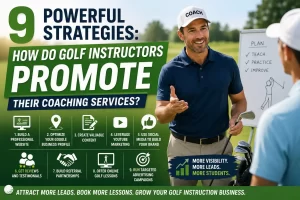
In this guide, we’ll explore nine powerful strategies that answer the question, how do golf instructors promote their coaching services online and offline. These proven methods can help instructors generate more leads, attract higher-quality students, and learn how to market a golf coaching business successfully in today’s increasingly competitive marketplace.
how do golf instructors promote their coaching services
Why Marketing Is Essential for Every Golf Instructor
Many golf instructors focus heavily on improving their coaching skills, certifications, and teaching methods, but often overlook one critical component of long-term success: marketing. No matter how knowledgeable or experienced a coach may be, attracting a steady stream of students can be difficult without an effective marketing strategy. This is why understanding how do golf instructors promote their coaching services is so important in today’s competitive golf industry.
One of the primary benefits of marketing is building authority within the local golf community. When golfers consistently see an instructor’s website, social media content, Google Business Profile, or educational videos, they begin to view that coach as an expert. Visibility creates familiarity, and familiarity often leads to trust. Golfers are naturally more comfortable investing in lessons from an instructor they recognize rather than someone they have never heard of before.
Creating trust is another major reason marketing matters. Before booking a lesson, many potential students research instructors online. They read reviews, browse websites, watch videos, and look for proof that a coach can help them improve. Effective golf coach marketing allows instructors to showcase testimonials, student success stories, certifications, and coaching experience. These trust signals help reduce uncertainty and encourage prospective students to take the next step.
Marketing also plays a crucial role in generating predictable golf lesson bookings. Many instructors rely heavily on referrals, which can produce inconsistent results. Some months may be busy while others are slow. By implementing ongoing marketing strategies, instructors can create a more reliable flow of leads and inquiries throughout the year. Consistent visibility often leads to consistent lesson bookings, helping coaches avoid the ups and downs that many businesses experience.
In addition, marketing supports the growth of a sustainable golf instruction business. Rather than constantly searching for new students, instructors can establish systems that continually attract prospects. A strong website, search engine optimization, content marketing, social media engagement, and local search visibility can all work together to bring in new opportunities over time. These assets continue generating exposure long after they are created.
Perhaps most importantly, marketing helps instructors stand out from competitors. Golfers today have more choices than ever before. Local coaches, golf academies, country clubs, and online instructors are all competing for attention. Effective marketing highlights what makes a coach unique, whether it’s specialized training programs, beginner-friendly lessons, junior coaching, or advanced swing analysis.
Ultimately, instructors who invest in marketing are often better positioned to attract more golf coaching clients, increase lesson bookings, and build a thriving business. In a crowded marketplace, strong marketing is no longer optional—it’s an essential part of long-term success.
Strategy #1 – How Do Golf Instructors Promote Their Coaching Services:
Build a Professional Golf Instructor Website
One of the most effective answers to the question, how do golf instructors promote their coaching services online, is by creating a professional website. A website serves as the foundation of an instructor’s online presence and acts as a 24/7 marketing tool that can attract potential students, showcase expertise, and generate new business opportunities. In today’s digital world, many golfers search online before choosing an instructor, making a professional website an essential asset for any coaching business.
A high-quality golf instructor website allows coaches to control their brand and present themselves in a professional manner. While social media platforms and third-party coaching sites can help increase visibility, a website gives instructors complete ownership over their content, services, and customer experience. It also creates credibility and helps establish trust with potential students who are researching lesson options.
Every golf instructor website should include several essential pages. The homepage should clearly explain who the instructor is, who they help, and what makes their coaching unique. An “About” page should highlight coaching experience, certifications, achievements, and teaching philosophy. A services page should outline lesson options, pricing, coaching packages, and any specialized programs offered. Instructors should also consider adding a blog page where they can share golf tips, training advice, and educational content that helps attract search engine traffic.
Another important feature is an online lesson booking system. Modern golfers expect convenience, and many prefer scheduling lessons online rather than making phone calls or sending emails. Easy-to-use booking forms can significantly increase golf lesson bookings by allowing prospective students to reserve lesson times whenever it’s convenient for them. The simpler the booking process, the more likely visitors are to become paying clients.
Student testimonials are another powerful component of a successful website. Positive reviews and success stories provide social proof and help reassure potential students that the instructor can deliver results. Testimonials can include written reviews, before-and-after stories, or even video testimonials from satisfied golfers who have improved their game through coaching.
Finally, mobile optimization is critical. A large percentage of website visitors will access a golf instructor’s site from a smartphone or tablet. If pages load slowly, text is difficult to read, or booking forms are hard to complete, potential clients may leave and look elsewhere. A mobile-friendly website ensures a smooth experience across all devices and helps maximize conversions.
For instructors looking to grow their business, a professional website remains one of the best investments they can make. It serves as a central hub for marketing efforts, increases credibility, and provides a scalable system for attracting new students and generating consistent lesson bookings.
Strategy #2 – How Do Golf Instructors Promote Their Coaching Services:
Optimize Google Business Profile for Local Visibility
For golf instructors who teach in-person lessons, optimizing a Google Business Profile is one of the most powerful local marketing strategies available. When golfers search for terms such as “golf lessons near me,” “golf instructor near me,” or “golf swing coach,” Google often displays local map results before traditional website listings. This makes Google Maps a valuable source of visibility and an essential component of effective golf instructor marketing.
A well-optimized Google Business Profile can help instructors appear in local search results when potential students are actively looking for lessons. Unlike many other marketing methods that target broad audiences, Google Maps reaches people who are already searching for coaching services. These searchers often have strong intent to book lessons, making them highly valuable prospects.
Local search rankings are heavily influenced by the completeness and accuracy of a Google Business Profile. Instructors should ensure their business name, phone number, website, address, and operating hours are accurate and up to date. Consistency across all online platforms helps Google trust the business and can contribute to stronger local visibility.
Selecting the correct categories is another important ranking factor. Primary and secondary categories help Google understand what services an instructor provides. Categories related to golf instruction, golf coaching, sports coaching, or golf training can improve relevance for local searches. Instructors should also fully complete the services section by describing lesson offerings, coaching programs, junior instruction, swing analysis services, and other specialized training options.
Reviews and ratings are among the most influential elements of a successful Google Business Profile. Positive reviews build credibility and encourage potential students to choose one instructor over another. Golfers often compare ratings before making a decision, and a profile with numerous positive reviews can significantly increase trust. Encouraging satisfied students to leave honest feedback can help generate more inquiries and improve local rankings over time.
Photos also play a major role in attracting attention. Instructors should upload high-quality images of lesson sessions, practice facilities, golf courses, training equipment, and student activities. Professional photos help create a positive first impression and show potential clients what they can expect from the coaching experience.
Regular updates can further strengthen local visibility. Posting lesson tips, student success stories, special offers, event announcements, and golf-related content signals activity to both Google and prospective students. Active profiles often appear more trustworthy and engaging than neglected ones.
For instructors looking to generate more golf lesson leads, attract qualified prospects, and increase their visibility in local searches, a fully optimized Google Business Profile can be a game-changing asset. When combined with other marketing strategies, it can become a consistent source of new golf coaching clients and long-term business growth.
How To Get Golf Students Worldwide: 7 Powerful Ways To Grow Your Coaching Business
Strategy #3 – How Do Golf Instructors Promote Their Coaching Services:
Create Helpful Golf Content
Content marketing has become one of the most effective ways for golf instructors to attract new students, establish authority, and grow their coaching business. If you’re wondering how to market a golf coaching business successfully, creating valuable and informative content should be a core part of your strategy. Quality content allows instructors to demonstrate their expertise while helping golfers solve common problems and improve their performance.
One of the best places to start is blogging. A regularly updated blog can help drive targeted traffic from search engines while positioning an instructor as a trusted source of golf instruction. Golfers frequently search online for answers to questions about their swing, ball striking, consistency, short game, and other aspects of performance. By publishing articles that address these topics, instructors can attract potential students who are actively looking for help.
Swing tip articles are especially effective because they target common challenges golfers face. Topics such as fixing a slice, improving swing tempo, increasing driving distance, or eliminating fat shots often receive consistent search interest. These types of articles not only provide value to readers but also create opportunities to introduce coaching services as a solution for golfers seeking personalized instruction.
Golf training guides can take content marketing a step further. Comprehensive guides that cover topics such as beginner golf fundamentals, practice routines, course management, or golf fitness can establish significant authority within the industry. Longer, more detailed resources often perform well in search engines because they provide thorough answers to users’ questions. They also encourage visitors to spend more time on a website, which can improve engagement metrics.
FAQ content is another powerful tool for attracting organic traffic. Many golfers search for specific questions before booking lessons, such as “Are golf lessons worth it?” or “How often should I take golf lessons?” Creating content that answers these questions can help instructors appear in search results while addressing concerns that may prevent someone from becoming a student.
The SEO benefits of content creation are substantial. Every blog post, training guide, or FAQ page creates another opportunity to rank in search engines and attract qualified visitors. Over time, a growing library of content can generate consistent traffic and become a reliable source of leads for a golf instruction business. Unlike paid advertising, content continues working long after it is published, making it a valuable long-term asset.
For instructors looking to improve their golf coach marketing, content creation offers an excellent opportunity to build trust, demonstrate expertise, and attract potential students. Consistently publishing helpful content can strengthen online visibility, generate more inquiries, and support sustainable business growth for years to come.
Here’s How Golf Instructors Are Enrolling New Golf Students Worldwide 24/7 365 Days A Year https://ultimategolfmasterypro.com/ugm-pro-partnership/
Strategy #4 – How Do Golf Instructors Promote Their Coaching Services:
Use YouTube to Showcase Coaching Expertise
YouTube has become one of the most powerful platforms for golf instructors looking to expand their reach and attract new students. As the world’s second-largest search engine, YouTube gives coaches the opportunity to showcase their knowledge, build trust with potential students, and establish themselves as experts in the golf industry. For instructors wondering how do golf instructors promote their coaching services online, creating valuable video content is one of the most effective strategies available.
One of the most popular types of golf content is swing analysis videos. These videos allow instructors to break down common swing faults, explain why they occur, and demonstrate how to fix them. Golfers frequently search for solutions to problems such as slicing, hooking, poor ball striking, inconsistent contact, and loss of distance. By providing helpful instruction through video, coaches can demonstrate their teaching ability while attracting viewers who may eventually become students.
Student success stories are another excellent form of content. Showcasing real golfers who have improved through coaching provides powerful social proof. Whether it’s helping a beginner make consistent contact, lowering a player’s handicap, or fixing a long-standing swing issue, success stories help potential students visualize their own results. These videos can significantly improve trust and support overall golf coaching promotion efforts.
Equipment tips and golf gear reviews can also attract a large audience. Many golfers research clubs, training aids, launch monitors, and practice equipment before making purchasing decisions. By creating honest and educational equipment videos, instructors can position themselves as trusted resources while introducing viewers to their coaching services. These videos often perform well because golfers are constantly looking for ways to improve their game.
Lesson preview videos can be particularly effective for converting viewers into paying clients. Short clips showing portions of actual coaching sessions help potential students understand what it’s like to work with a specific instructor. Seeing a coach explain concepts, provide feedback, and interact with students can remove uncertainty and increase confidence in booking lessons.
Perhaps the greatest benefit of YouTube is its ability to build authority through video. Unlike written content, video allows viewers to see an instructor’s personality, communication style, and coaching expertise firsthand. Over time, consistent content creation can help establish a strong reputation and create a loyal audience of golfers who trust the instructor’s advice.
For many coaches, YouTube becomes a long-term source of golf lesson leads because videos can continue generating views for months or even years after they are published. As viewers consume more content, subscribe to the channel, and visit the instructor’s website, they become increasingly likely to book lessons. This makes YouTube one of the most effective tools for attracting qualified golf coaching clients and growing a successful coaching business.
Strategy #5 – How Do Golf Instructors Promote Their Coaching Services:
Leverage Social Media Platforms
Social media has become an essential marketing channel for golf instructors who want to increase visibility, connect with potential students, and grow their coaching business. When people ask how do golf instructors promote their coaching services online, social media is often one of the first answers. With billions of users across multiple platforms, social media provides instructors with a cost-effective way to showcase their expertise and attract new students.
Facebook remains one of the most valuable platforms for golf coaches, particularly when targeting adult golfers. Instructors can share golf tips, post lesson updates, create local events, participate in golf-related groups, and engage directly with potential students. Facebook also offers advertising options that allow coaches to target golfers based on location, interests, and demographics.
Instagram is highly visual and works exceptionally well for showcasing golf instruction. Coaches can post swing tips, lesson highlights, practice drills, and behind-the-scenes content. Instagram Reels have become particularly effective because short-form videos often receive higher engagement and can reach new audiences beyond existing followers. Consistent posting helps keep instructors visible and reinforces their expertise.
TikTok continues to grow as a platform for educational and entertaining golf content. Short videos demonstrating quick swing fixes, practice drills, and common golf mistakes can generate significant exposure. Many instructors have built large audiences by creating simple, easy-to-understand golf tips that viewers can immediately apply to their game.
Pinterest is often overlooked but can be a valuable source of traffic for golf instructors who create educational content. Coaches can design pins that link to blog posts, lesson pages, golf training guides, and instructional resources. Because Pinterest functions more like a search engine than a traditional social network, content can continue generating traffic long after it is published.
LinkedIn can be useful for instructors targeting corporate clients, executives, country club members, and business professionals. Sharing golf insights, coaching achievements, and industry expertise can help establish credibility and open networking opportunities.
Regardless of the platform, consistency is critical. Instructors should aim to post regularly to remain visible to their audience. A consistent posting schedule helps build trust and increases the likelihood that potential students will remember the coach when they decide to seek lessons.
Video content tends to generate the highest engagement across nearly all social media platforms. Swing demonstrations, lesson previews, equipment tips, and golf drills often outperform static images because they provide immediate value. Student transformation stories can be especially powerful because they showcase real-world results and help potential students imagine their own improvement.
Successful golf instructor marketing also involves active engagement. Responding to comments, answering questions, participating in discussions, and interacting with followers can strengthen relationships and increase trust. Social media is not simply about posting content—it’s about building a community around your coaching brand.
When used strategically, social media can become a powerful tool for attracting new students, strengthening relationships, and expanding the reach of a golf coaching business.
Strategy #6 – How Do Golf Instructors Promote Their Coaching Services:
Collect and Showcase Student Testimonials
One of the most effective ways to attract new students is by showcasing proof that your coaching produces results. While instructors can talk about their experience, certifications, and teaching methods, potential students are often more influenced by the experiences of other golfers. This is why testimonials play such a critical role in successful golf coaching promotion.
Testimonials provide social proof, which is the psychological principle that people are more likely to trust a service when they see others benefiting from it. Before investing in lessons, many golfers want reassurance that an instructor can help them improve. Positive feedback from current and former students helps remove uncertainty and builds confidence in the coaching process.
Written reviews are one of the easiest forms of social proof to collect. Instructors can request reviews after a student experiences measurable improvement or completes a lesson package. These reviews can be displayed on a website, Google Business Profile, Facebook page, or coaching platform profile. Reviews that include specific results are often the most persuasive. For example, a testimonial explaining how a golfer reduced their handicap, improved ball striking, or gained confidence on the course tends to have a stronger impact than a generic review.
Video testimonials can be even more powerful because they allow prospective students to hear directly from satisfied golfers. Seeing a real student discuss their experience creates authenticity and credibility that written reviews sometimes cannot match. Short videos featuring students sharing their improvement journey, favorite coaching experiences, and measurable results can significantly increase trust among potential clients.
Before-and-after stories are another excellent marketing tool. These stories highlight a golfer’s challenges before coaching and the progress they achieved after working with an instructor. Examples may include correcting a slice, increasing driving distance, improving consistency, lowering scores, or gaining confidence on the course. These transformation stories help prospective students visualize what may be possible for their own game.
The trust-building benefits of testimonials extend beyond simply attracting attention. Reviews help establish credibility, demonstrate expertise, and validate coaching methods. In a competitive market where golfers have many coaching options, testimonials can become a key differentiator that influences decision-making.
Instructors should actively showcase testimonials throughout their marketing efforts. Displaying reviews on a website homepage, lesson pages, social media profiles, email campaigns, and Google Business Profile can increase visibility and strengthen credibility across multiple channels.
Ultimately, testimonials help convert interested golfers into paying students. When potential clients see evidence that others have achieved positive results, they are often more comfortable taking the next step. This can lead to more golf coaching clients, increased trust in the instructor’s expertise, and a higher number of golf lesson bookings over time.
Strategy #7 – How Do Golf Instructors Promote Their Coaching Services:
Build Referral Partnerships
Building referral partnerships is one of the most overlooked yet highly effective ways to grow a coaching business. While many instructors focus exclusively on online marketing, strategic relationships with complementary businesses can generate a steady stream of new students. For instructors looking to increase golf lesson leads and expand their reach, referral partnerships can become a valuable long-term source of growth.
Golf courses are often one of the best places to establish partnerships. Many golfers who play regularly are actively looking to improve their game but may not know where to find quality instruction. By developing relationships with course managers, golf professionals, and staff members, instructors can increase the likelihood of being recommended to golfers seeking lessons. In return, instructors can help support course events, provide educational clinics, or contribute content that benefits course members.
Country clubs offer similar opportunities. Members often invest heavily in their golf experience and are typically interested in improving their skills. Building relationships with club management and golf professionals can create referral opportunities that benefit both parties. Instructors who provide excellent service often become trusted resources within the club community, leading to additional referrals over time.
Driving ranges are another valuable source of potential students. Golfers who regularly practice are often highly motivated to improve and may be more likely to invest in lessons. Partnering with range owners or operators can create opportunities for lesson promotions, beginner clinics, and instructional events that introduce coaching services to a targeted audience.
Golf shops can also become powerful referral partners. Customers purchasing clubs, training aids, or golf accessories are often interested in improving their performance. Establishing relationships with shop owners and staff can result in referrals whenever customers ask about lessons or coaching recommendations. Instructors can also provide educational workshops or collaborate on special promotions to strengthen these partnerships.
Fitness trainers and sports performance specialists represent another excellent referral source. Many golfers are interested in improving flexibility, mobility, strength, and overall athletic performance. Trainers who work with golfers may encounter clients who would benefit from professional instruction, creating mutually beneficial referral opportunities.
Referral programs can further encourage partnership growth. Offering incentives, discounts, or special benefits for referrals can motivate partners to recommend coaching services more consistently. These programs should be simple, transparent, and designed to create value for everyone involved.
Cross-promotions can also help expand visibility. Instructors and partners can promote each other’s services through websites, social media, email newsletters, and local events. This approach allows both businesses to reach new audiences without significant advertising costs.
Perhaps most importantly, referral partnerships create valuable networking opportunities. The more connected an instructor becomes within the local golf community, the more likely they are to be recommended when someone is looking for coaching. Over time, these relationships can help strengthen a golf instruction business, increase brand awareness, and generate a consistent flow of qualified leads and new students.
Strategy #8 –How Do Golf Instructors Promote Their Coaching Services:
Offer Online Golf Lessons
One of the biggest changes in the golf industry over the past several years has been the rapid growth of online coaching. Thanks to advances in technology, golf instructors are no longer limited to teaching students in their local area. Virtual coaching has created new opportunities for instructors to expand their reach, increase revenue, and build a larger client base. In fact, when discussing how do golf instructors promote their coaching services online, offering online golf lessons is often one of the most effective strategies available.
The primary benefit of virtual coaching is convenience. Students can receive professional instruction without traveling to a golf course, driving range, or training facility. Many golfers have busy schedules and appreciate the flexibility that online coaching provides. They can submit swing videos, receive detailed feedback, and work on improvement plans from virtually anywhere.
Another major advantage is global student reach. Traditional instructors are typically limited to attracting students within driving distance of their teaching location. Online coaching removes those geographical barriers. A coach based in one city can work with golfers across the country or even around the world. This significantly expands the potential market and creates opportunities to attract students who may never have discovered the instructor otherwise.
Video analysis is one of the most popular forms of online instruction. Students record their swings using a smartphone and submit the footage for review. The instructor then analyzes the swing, identifies key issues, and provides personalized recommendations. Many coaches use drawing tools, voiceovers, slow-motion playback, and side-by-side comparisons to make feedback easier to understand. This approach allows instructors to deliver highly personalized coaching without needing to meet students in person.
Subscription programs have also become increasingly popular. Rather than selling individual lessons, instructors can offer monthly coaching memberships that provide ongoing feedback, practice plans, video reviews, and direct communication. Subscription models create recurring revenue while giving students continuous support as they work toward their goals. This can improve retention and provide greater financial stability for coaching businesses.
Hybrid coaching models combine the best aspects of both online and in-person instruction. For example, an instructor might conduct occasional face-to-face lessons while providing ongoing online support between sessions. This approach helps students stay accountable and allows instructors to maintain regular communication throughout the improvement process.
From a business perspective, online coaching can be a powerful component of golf coaching promotion. It creates additional revenue streams, increases visibility, and allows instructors to serve more students without being constrained by location. It also strengthens overall golf coach marketing efforts by making coaching services accessible to a much larger audience.
As technology continues to evolve, online instruction will likely become an even more important part of the golf industry. Instructors who embrace virtual coaching can position themselves for long-term growth while providing flexible learning options that today’s golfers increasingly expect.
Strategy #9 –How Do Golf Instructors Promote Their Coaching Services:
Run Targeted Advertising Campaigns
While organic marketing strategies such as SEO, content creation, and social media can produce excellent long-term results, paid advertising offers golf instructors the opportunity to generate leads more quickly. When implemented correctly, targeted advertising campaigns can place coaching services directly in front of golfers who are actively looking for instruction. For many coaches, paid advertising represents one of the best ways for golf instructors to promote coaching services and accelerate business growth.
Google Ads is often one of the most effective advertising platforms because it targets users based on search intent. When golfers search for phrases such as “golf lessons near me,” “golf swing coach,” or “online golf lessons,” they are often already interested in purchasing coaching services. By appearing at the top of search results, instructors can connect with highly qualified prospects and generate valuable golf lesson leads. Search advertising works particularly well for instructors who want to attract local students or promote specialized coaching programs.
Facebook Ads provide another powerful option for reaching potential students. Unlike Google Ads, which targets search behavior, Facebook allows instructors to target users based on interests, demographics, location, and other characteristics. Golf coaches can create campaigns that reach golfers within specific geographic areas, making it easier to promote local lessons, clinics, and special offers. Facebook’s advanced targeting options make it possible to reach highly relevant audiences while maintaining control over advertising costs.
YouTube Ads can be particularly effective because they allow instructors to showcase their expertise through video. Short instructional clips, student success stories, lesson previews, and coaching demonstrations can help build trust before a prospect ever visits a website. Since golf is a highly visual sport, video advertising often performs well because potential students can immediately see the instructor’s teaching style and communication skills.
Retargeting campaigns are another valuable advertising strategy. Many website visitors do not book lessons during their first visit. Retargeting allows instructors to display ads to people who previously visited their website, watched videos, or interacted with social media content. This keeps the coaching business visible and encourages prospects to return when they are ready to take action.
Budget considerations are important when running paid advertising campaigns. Instructors do not need a massive budget to see results. Many successful campaigns begin with modest daily spending while focusing on highly targeted audiences. Testing different ads, headlines, offers, and landing pages can help identify what generates the strongest results.
Effective advertising should always focus on lead generation, conversion tracking, and return on investment. Tracking phone calls, form submissions, lesson bookings, and website actions allows instructors to measure performance accurately. Understanding which campaigns produce the most golf coaching clients helps ensure marketing dollars are invested wisely.
When combined with strong websites, testimonials, content marketing, and social media efforts, targeted advertising can become a highly effective system for attracting qualified leads, increasing bookings, and growing a successful golf coaching business.
Many new coaches wonder how do golf instructors promote their coaching services to attract a steady stream of students throughout the year.
9 steps to market and grow your golf instruction business https://golfwrx.com/309792/9-steps-to-market-and-grow-your-golf-instruction-business/
Common Marketing Mistakes Golf Instructors Should Avoid

Even the most talented golf instructors can struggle to attract students if they make common marketing mistakes. While many coaches focus on improving their teaching skills, they often overlook key marketing fundamentals that can significantly impact business growth. Understanding these mistakes can help instructors improve their visibility, attract more students, and maximize the effectiveness of their golf instructor marketing efforts.
One of the biggest mistakes is not having a professional website. In today’s digital world, many golfers search online before choosing an instructor. Without a website, potential students may question a coach’s credibility or simply move on to a competitor who has a stronger online presence. A website serves as a central hub where golfers can learn about lesson options, read testimonials, view credentials, and book lessons. In many cases, a missing or outdated website can result in lost opportunities and fewer bookings.
Inconsistent branding is another common issue. Some instructors use different logos, colors, messaging, or contact information across their website, social media profiles, and business listings. This inconsistency can create confusion and make the business appear less professional. Strong branding helps golfers recognize and remember a coach, creating a more trustworthy and polished image. Consistency across all marketing channels is an important part of successful golf coach marketing.
Ignoring online reviews can also limit growth. Many golfers rely heavily on reviews when deciding which instructor to hire. A profile with few reviews or unanswered feedback may not inspire confidence. Instructors should actively encourage satisfied students to leave reviews and take time to respond professionally to both positive and negative feedback. Reviews not only build trust but can also improve local search visibility.
Understanding how do golf instructors promote their coaching services can help coaches build a stronger presence in their local market.
Another mistake is neglecting content marketing. Some instructors create a website and expect students to find them automatically. However, regularly publishing golf tips, training guides, videos, and educational content can significantly improve search engine visibility and establish authority. Content marketing helps instructors answer common golfer questions while creating additional opportunities to attract organic traffic and generate leads.
Failing to track results is perhaps one of the most costly mistakes. Without tracking website traffic, lesson inquiries, conversion rates, and marketing performance, instructors have no way of knowing which strategies are working. Monitoring key metrics allows coaches to make informed decisions, improve campaigns, and allocate marketing resources more effectively.
Avoiding these common mistakes can dramatically improve an instructor’s ability to attract new students and grow their business. By maintaining a professional online presence, building a strong brand, collecting reviews, creating valuable content, and tracking results, golf instructors can develop a more effective marketing strategy and achieve long-term success.
The question of how do golf instructors promote their coaching services has become increasingly important as competition continues to grow.
How to Measure Marketing Success
Creating marketing campaigns is only half the battle. To grow a successful golf coaching business, instructors must also measure the effectiveness of their marketing efforts. Without tracking results, it becomes difficult to determine which strategies are generating new students and which ones may be wasting time or money. Understanding key performance indicators can help instructors make smarter decisions, improve their marketing campaigns, and increase their return on investment.
One of the most important metrics to track is website traffic. A website often serves as the central hub for an instructor’s marketing efforts, making it a valuable source of performance data. Monitoring website traffic can reveal how many people are discovering the business, where visitors are coming from, and which pages are attracting the most attention. Traffic from search engines, social media platforms, YouTube, and referral websites can all provide insight into which marketing channels are producing the best results.
Lead generation is another critical measurement. While website traffic is important, visitors alone do not grow a business. Instructors should track how many people contact them through website forms, phone calls, email inquiries, social media messages, or online booking systems. These inquiries represent potential students and are often referred to as golf lesson leads. Monitoring lead generation helps instructors understand whether their marketing efforts are attracting qualified prospects.
One of the most common questions in the industry is how do golf instructors promote their coaching services without spending a fortune on advertising.
Of course, generating leads is only valuable if those leads become paying customers. This is why tracking golf lesson bookings is essential. Instructors should regularly measure how many inquiries convert into scheduled lessons. A high number of bookings indicates that marketing efforts are reaching the right audience and that the coaching offer is appealing to prospective students.
Cost per lead is another useful metric, particularly for instructors running paid advertising campaigns. This figure measures how much money is spent to generate a single lead. For example, if an instructor spends $100 on advertising and generates 10 leads, the cost per lead is $10. Understanding this number helps determine whether marketing campaigns are financially sustainable and allows instructors to compare the effectiveness of different advertising channels.
Student retention is often overlooked but can have a significant impact on long-term success. Acquiring new students is important, but retaining existing students is often more profitable. Instructors should track how many students continue taking lessons, purchase additional coaching packages, or participate in long-term programs. High retention rates typically indicate strong coaching results and customer satisfaction.
Knowing how do golf instructors promote their coaching services can help instructors generate more golf lesson leads and attract qualified students.
Ultimately, successful marketing is about more than attracting attention. It is about generating qualified golf coaching clients, increasing lesson bookings, and building lasting relationships with students. By consistently tracking website traffic, lead generation, bookings, cost per lead, and retention rates, instructors can identify what is working, improve weak areas, and create a more predictable path to business growth.
Golf professionals often ask, how do golf instructors promote their coaching services in a way that produces consistent results. The answer lies in combining local SEO, content marketing, social media, referral partnerships, online coaching, and paid advertising. By understanding how do golf instructors promote their coaching services across multiple channels, instructors can build a stronger brand, generate more leads, and create a sustainable coaching business.
Learning how do golf instructors promote their coaching services effectively can lead to more lesson bookings and long-term business growth.
Conclusion
Successfully growing a coaching business requires more than just teaching great golf lessons. In today’s competitive market, instructors must actively market their services if they want to attract new students, increase bookings, and build a sustainable business. Throughout this guide, we’ve explored nine proven strategies that answer the question, how do golf instructors promote their coaching services and consistently generate new opportunities.
The first step is building a professional website that showcases expertise, lesson offerings, testimonials, and convenient booking options. From there, optimizing a Google Business Profile helps instructors improve local visibility and attract golfers searching for lessons nearby. Creating helpful content through blogs, training guides, and educational resources can establish authority while driving organic traffic from search engines.
Video marketing through YouTube allows instructors to demonstrate their teaching skills, share swing analysis, and connect with golfers on a more personal level. Social media platforms such as Facebook, Instagram, TikTok, Pinterest, and LinkedIn provide additional opportunities to engage with potential students and expand brand awareness. Collecting and showcasing student testimonials helps build trust and credibility, while referral partnerships create valuable networking opportunities that can generate a steady stream of new leads.
Offering online golf lessons enables instructors to reach students beyond their local area, creating additional revenue streams and increasing flexibility. Finally, targeted advertising campaigns using Google Ads, Facebook Ads, and YouTube Ads can accelerate lead generation and help instructors attract highly qualified prospects.
Successful coaches understand how do golf instructors promote their coaching services using both online and offline marketing strategies.
While each strategy can be effective on its own, the greatest results often come from implementing several of them together. Consistency is the key to long-term success. Many instructors make the mistake of trying a marketing tactic for a few weeks and then giving up before results have time to develop. Marketing is a long-term investment that requires patience, persistence, and continuous improvement.
If you’re searching for the best ways for golf instructors to promote coaching services, the answer is not a single marketing tactic. Instead, it is the combination of building visibility, creating trust, delivering value, and staying consistently active across multiple channels. The instructors who commit to these practices are often the ones who generate more lesson bookings, attract higher-quality students, and establish stronger reputations within the golf community.
Ultimately, understanding how to market a golf coaching business successfully comes down to creating systems that consistently attract and convert new students. By implementing the strategies discussed in this guide and focusing on steady, long-term growth, instructors can build a thriving golf instruction business that continues to grow year after year.
If you’re curious about how do golf instructors promote their coaching services, the answer often involves websites, social media, and referral partnerships.
How do golf instructors promote their coaching services effectively?
Golf instructors promote their coaching services by combining multiple marketing strategies, including local SEO, content marketing, social media, online advertising, and referral partnerships. Effective golf instructor marketing focuses on increasing visibility, building trust, and generating consistent golf lesson leads. Many successful coaches also invest in a professional golf instructor website, Google Business Profile optimization, and educational content to attract potential students and increase golf lesson bookings over time.
How do golf instructors promote their coaching services online?
When considering how do golf instructors promote their coaching services online, most coaches use a combination of websites, YouTube videos, social media platforms, email marketing, and search engine optimization. Online marketing allows instructors to reach golfers beyond their local area while building authority within their niche. Effective golf coaching promotion often includes publishing golf tips, creating instructional videos, collecting testimonials, and optimizing content to attract qualified golf coaching clients.
What are the best ways for golf instructors to promote coaching services?
The best ways for golf instructors to promote coaching services include building a strong online presence, creating educational content, optimizing Google Maps listings, running targeted advertising campaigns, and developing referral partnerships. Successful instructors typically use several marketing channels simultaneously rather than relying on a single strategy. This diversified approach helps generate more golf lesson leads, improve visibility, and create a sustainable pipeline of new students.
Why is a website important for a golf instruction business?
A professional website serves as the foundation of a successful golf instruction business. It allows instructors to showcase their credentials, lesson offerings, testimonials, and booking options while providing valuable information to prospective students. A well-designed golf instructor website can help increase trust, improve search engine visibility, and generate more golf lesson bookings. It also gives instructors complete control over their brand and marketing message.
How can golf instructors generate more golf coaching clients?
Golf instructors can generate more golf coaching clients by focusing on visibility, credibility, and lead generation. Publishing helpful content, collecting reviews, creating social media videos, and optimizing local search listings can attract highly targeted prospects. Strong golf coach marketing strategies also include nurturing leads through email marketing, offering online lessons, and using testimonials to build trust with potential students before they book a lesson.
How do you market a golf coaching business successfully?
Understanding how to market a golf coaching business successfully requires a long-term approach that combines organic and paid marketing methods. Instructors should focus on creating valuable content, optimizing their website, building local authority, collecting student reviews, and engaging with golfers on social media. Consistent golf instructor marketing efforts help attract new students, generate recurring golf lesson leads, and support long-term business growth while increasing overall coaching revenue.