
golf swing

How To Fix Fat Golf Shots Instantly With These 7 Secret Tips

If You Can’t Fix Fat golf Shots Instantly Try These 7 Secret Tips
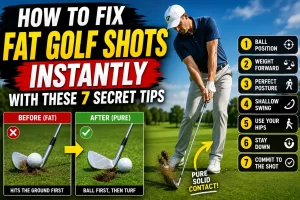
Golfer demonstrating how to fix fat golf shots instantly with proper ball first contact
Learn how to fix fat golf shots instantly using simple golf swing adjustments, better low point control, and clean ball-first contact techniques.

Introduction

Few things in golf are more frustrating than hitting fat golf shots over and over again. One second you feel confident standing over the ball, and the next your club digs into the turf behind the ball, sending dirt flying while the golf ball barely moves forward. These heavy iron shots can quickly destroy confidence, especially when they start happening multiple times during a round.

Many golfers struggle with chunked iron shots because they don’t fully understand what causes them. Some players try swinging harder, while others constantly change their setup hoping to discover a simple fix for fat golf shots. Unfortunately, random adjustments often make the problem even worse. The truth is, fat shots usually come from a few common swing flaws involving balance, weight transfer, low point control, and poor golf impact position.

If you have been searching for how to fix fat golf shots instantly, the good news is that the problem can often improve much faster than most golfers realize. In many cases, just a few small swing adjustments can dramatically improve ball striking, turf interaction golf mechanics, and overall golf swing consistency. You do not necessarily need expensive golf lessons or years of practice to start making cleaner contact with your irons.

One of the biggest reasons golfers struggle with hitting fat golf shots is because the club reaches the ground too early during the downswing. Instead of creating a proper descending blow golf motion that strikes the ball first and turf second, the club bottoms out behind the golf ball. This leads to poor contact, reduced distance, and inconsistent shots.

Another common issue is poor body movement during the swing. Many beginners hang back on their trail foot, flip their wrists at impact, or lose balance during the downswing. This is one reason why beginners hit fat golf shots every time without understanding the real cause.

The good news is that improving these fundamentals can create immediate results. In this guide, you will discover 7 secret tips designed to help you fix fat golf shots instantly while improving your consistency and confidence. These tips focus on low point control, proper weight transfer, balance, tempo, ball position, and cleaner impact mechanics so you can finally start striking your irons solidly and consistently.

“Most golfers trying to fix fat golf shots instantly are actually making one hidden swing mistake that keeps forcing the club into the ground over and over again here’s how to fix it https://ultimategolfmasterypro.com/the-hidden-swing-flaws-causing-fat-shots/


 Secret Tip #1 – Improve Your Low Point Control

What Causes Poor Low Point Control

If you truly want to learn how to fix fat golf shots instantly, improving your low point control is one of the most important skills you can develop. The “low point” refers to the bottom of your golf swing arc — the point where the club reaches its lowest position before moving back upward. When this low point occurs behind the golf ball, you end up hitting fat golf shots and chunked iron shots.

One major cause of poor low point control is an early release during the downswing. Many golfers throw the clubhead at the ball too soon by flipping their wrists before impact. This causes the club to bottom out early and strike the turf before the ball.

Another common issue is hanging back on the trail foot. Golfers who fail to shift pressure toward their lead side during the downswing often struggle with heavy iron shots because their body stays behind the ball at impact. This makes it extremely difficult to create solid ball-first contact.

Poor weight transfer is another huge factor. When your lower body fails to move correctly during transition, the swing arc becomes inconsistent. Some swings may strike the ball cleanly, while others result in chunked golf shots that ruin your rhythm and confidence.

Scooping at impact also creates major problems. Many golfers mistakenly try to help the ball into the air by lifting it with their hands instead of compressing it properly. Ironically, this motion usually causes the club to strike the ground too early.

 Why Low Point Control Is Critical For Clean Contact

Low point control is essential because it directly affects your ability to create clean, consistent contact. Professional golfers excel at striking the ball first and then taking a shallow divot after impact. This is the foundation of proper turf interaction golf mechanics.

When your low point occurs in front of the golf ball, you create a proper descending blow golf motion. This allows the clubface to compress the golf ball efficiently while producing better distance, accuracy, and spin control.

Better low point control also improves golf swing consistency because the club enters the turf at the correct spot repeatedly. Instead of randomly hitting fat shots, thin shots, and solid shots, your ball striking becomes much more predictable.

Golfers who master this skill usually experience immediate improvements in confidence because they no longer fear chunked iron shots during important moments on the course.

 Simple Drills To Improve Low Point Control

One of the best ways to improve low point control is the line drill. Simply draw a line on the grass or practice mat and place the golf ball slightly ahead of the line. Your goal is to strike the ball first and then contact the turf in front of the line. This trains proper impact sequencing and helps fix fat golf shots instantly.

The towel drill is another excellent exercise. Place a small towel a few inches behind the golf ball during practice swings. If your club hits the towel before impact, your low point is too far back. This drill quickly teaches cleaner ball-first contact.

Forward shaft lean practice is also extremely effective. At impact, your hands should be slightly ahead of the golf ball with your weight moving toward the lead side. Practicing this position improves golf impact position and helps eliminate scooping.

By improving low point control, you can dramatically reduce heavy iron shots while developing cleaner, more consistent contact with every club in your bag.

“If you don’t identify the hidden swing flaws causing your fat golf shots now, you could keep repeating the same frustrating mistake round after round — without ever understanding why your swing consistency never improves here’s a quick fix

Secret Tip #2 – Fix Your Weight Transfer Instantly

Why Poor Weight Shift Causes Fat Golf Shots

One of the biggest reasons golfers struggle with hitting fat golf shots is poor weight transfer during the swing. Many players do not realize how important body movement is for solid ball striking. If your weight stays stuck on your back foot during the downswing, the club often bottoms out too early, leading to chunked iron shots and inconsistent contact.

A very common mistake is staying on the trail foot through impact. Instead of shifting pressure toward the target, many golfers lean backward while trying to help the ball into the air. This causes the clubhead to strike the turf before reaching the golf ball. It also destroys low point control and makes clean contact extremely difficult.

Another issue is the reverse pivot. This happens when golfers shift their weight incorrectly during the backswing and downswing. Instead of loading into the trail side and moving forward through impact, the body moves in the opposite direction. Reverse pivots can create severe balance problems and often lead to heavy iron shots that feel weak and inconsistent.

Loss of balance is another major contributor to poor contact. Golfers who sway too much during the swing often struggle with golf swing consistency because the swing arc constantly changes. One swing may produce solid contact, while the next creates a massive chunk behind the ball.

If you want to learn how to fix fat golf shots instantly, improving your weight transfer can create immediate results. Proper body movement helps position the club correctly at impact while improving turf interaction golf mechanics and overall ball striking.

Proper Weight Transfer During The Downswing

Great iron players understand how to shift pressure correctly during the downswing. As the club transitions from the top of the backswing, pressure should begin moving toward the lead side before the arms fully release. This movement helps create a more powerful and controlled golf impact position.

When pressure moves correctly to the lead side, the club naturally approaches the ball with a better descending blow golf motion. This allows the clubface to strike the ball first before contacting the turf. Proper sequencing also improves compression and helps eliminate fat shots.

A stable lower body is equally important. Many golfers slide excessively during the downswing instead of rotating around a stable lead leg. Too much lateral movement can throw off timing and make the swing bottom inconsistent.

Maintaining stability while shifting pressure forward improves balance and allows the upper body to stay centered during impact. This creates more consistent contact and helps golfers stop hitting fat golf shots with irons.

Drills To Build Better Weight Shift

The step-through drill is one of the best exercises for improving weight transfer. Start with your feet together and take a normal backswing. As you begin the downswing, step toward the target with your lead foot. This teaches your body how to move pressure forward naturally through impact.

The feet-together drill is another excellent way to improve balance and sequencing. Swinging with your feet close together forces your body to stay centered and rotate properly instead of swaying excessively.

Slow-motion transition practice is also extremely effective for golfers struggling with heavy iron shots. Slowly rehearse the transition from the top of the backswing while focusing on shifting pressure toward the lead side before releasing the club.

These simple exercises can dramatically improve low point control, ball striking, and golf swing consistency while helping fix fat golf shots instantly.


Secret Tip #3 – Stop Scooping The Golf Ball

Why Scooping Creates Chunked Iron Shots

Scooping is one of the most common swing flaws among amateur golfers. Many players mistakenly believe they need to help the golf ball into the air by lifting it with their hands. Unfortunately, this movement usually creates the exact opposite result and leads to chunked iron shots, poor contact, and weak ball striking.

When golfers scoop the ball, they often flip their wrists through impact instead of maintaining forward shaft lean. This early release causes the clubhead to pass the hands too soon, moving the low point behind the golf ball. The result is hitting fat golf shots that feel heavy and inconsistent.

Trying to lift the ball also changes the club’s natural angle of attack. Irons are specifically designed to strike downward on the golf ball with a proper descending blow golf motion. When golfers attempt to scoop the ball upward, they lose compression and create poor turf interaction golf mechanics.

Another problem caused by scooping is losing shaft lean at impact. Professional golfers typically have their hands positioned slightly ahead of the ball during iron shots. This forward shaft lean helps compress the ball properly while producing cleaner contact and more consistent distance.

If you constantly struggle with heavy iron shots, scooping may be one of the hidden reasons why beginners hit fat golf shots every time.

How To Create A Proper Descending Blow

Learning how to create a proper descending blow is one of the fastest ways to fix fat golf shots instantly. Instead of trying to lift the golf ball, focus on compressing it against the turf with solid forward motion through impact.

Compressing the golf ball correctly allows the clubface to strike the ball first before contacting the ground. This creates better spin, distance, and control while improving golf swing consistency.

Forward hands at impact are critical for proper compression. Your hands should remain slightly ahead of the clubhead during impact, which helps maintain shaft lean and improves low point control.

Maintaining posture is equally important. Many golfers stand up during the downswing, which changes the swing arc and leads to chunked golf shots. Staying in posture while rotating through the shot helps keep the club on the correct path through impact.

Best Drills To Stop Scooping Instantly

The impact bag drill is one of the best exercises for learning proper shaft lean. Place an impact bag where the golf ball would normally sit and practice striking it with your hands ahead of the clubhead. This builds the feeling of compression and proper impact positioning.

The punch shot drill is another excellent method for eliminating scooping. Hit short, controlled punch shots while focusing on keeping your hands ahead through impact. This teaches you how to compress the golf ball without flipping your wrists.

The towel under arms drill can also improve connection and sequencing. Place a towel under both arms and make slow practice swings while keeping the towel in place. This helps synchronize the body and arms while reducing excessive hand action through impact.

These drills can quickly improve ball striking, low point control, and overall contact while helping golfers develop cleaner, more consistent iron shots.

Secret Tip #4 – Improve Your Golf Swing Balance

Why Balance Is Essential For Golf Swing Consistency

If you want to learn how to fix fat golf shots instantly, improving your balance during the golf swing is absolutely critical. Poor balance can ruin timing, destroy consistency, and make clean ball striking nearly impossible. Many golfers focus entirely on their hands or backswing while ignoring one of the true foundations of solid contact — staying balanced throughout the swing.

A stable swing arc is one of the biggest benefits of proper balance. When your body stays centered during the backswing and downswing, the club travels on a much more consistent path into impact. This helps improve low point control and reduces the chances of hitting fat golf shots or chunked iron shots.

Better timing is another major advantage of good balance. Golf swings happen extremely fast, and even small movements out of position can throw off sequencing. Golfers who lose their balance often rush the downswing, flip their wrists, or fall backward during impact. These movements lead to heavy iron shots and inconsistent turf interaction golf mechanics.

Improved contact is usually the result of staying stable through impact. When your body rotates properly without excessive swaying or sliding, the clubface can return to the golf ball more consistently. This creates cleaner contact and a more powerful descending blow golf motion.

Many golfers searching for a simple fix for fat golf shots are surprised to discover that balance issues are one of the hidden reasons why beginners hit fat golf shots every time.

Common Balance Mistakes Beginners Make

One of the most common mistakes beginners make is swaying off the golf ball during the backswing. Instead of rotating around a stable center, the body drifts laterally away from the target. This movement changes the swing bottom and often causes the club to strike the ground too early.

Over-swinging is another huge problem. Many golfers believe a longer backswing automatically creates more power, but overswinging usually destroys control and balance. When the body loses structure at the top of the swing, it becomes much harder to recover during the downswing.

Falling backward through impact is another major issue that contributes to hitting fat golf shots. Golfers who fail to move pressure toward the lead side often hang back while trying to lift the golf ball into the air. This causes poor golf impact position and inconsistent contact.

These balance mistakes not only affect ball striking but also reduce overall golf swing consistency and confidence.

Balance Drills For Better Ball Striking

The one-leg drill is one of the best exercises for improving balance and body control. Practice making slow swings while balancing on your lead leg. This teaches stability and helps eliminate excessive swaying during the swing.

The feet-close drill is another excellent way to improve sequencing and rhythm. By narrowing your stance, your body is forced to stay more centered throughout the swing. This drill helps improve timing and creates better overall control through impact.

Finish position holds are extremely effective for building balance awareness. After each practice swing, hold your finish position for several seconds. If you struggle to maintain balance at the finish, there is a good chance your swing mechanics need improvement.

These simple drills can dramatically improve ball striking, low point control, and consistency while helping golfers fix fat golf shots instantly.


Struggling With Your Golf Swing Heres How To Fix It https://www.golfmonthly.com/tips/hitting-fat-golf-shots-heres-how-to-fix-it-220197

Secret Tip #5 – Master Proper Ball Position

How Incorrect Ball Position Causes Heavy Iron Shots

Ball position is one of the most overlooked fundamentals in golf, yet it plays a huge role in solid contact. Many golfers struggling with hitting fat golf shots never realize that poor setup positioning may be the root cause of their problem.

When the golf ball sits too far forward in your stance, the club often reaches the bottom of the swing arc before impact. This causes the clubhead to strike the turf too early, leading to chunked iron shots and weak contact. Golfers who position the ball too far forward also tend to hang back during the downswing, which makes the problem even worse.

On the other hand, placing the ball too far back in the stance can also create issues. While some golfers believe this helps produce cleaner contact, it often leads to an excessively steep angle of attack and poor turf interaction golf mechanics. This can cause heavy iron shots, low ball flight, and inconsistent distance control.

Poor angle of attack is another major consequence of incorrect ball position. Great iron players create a controlled descending blow golf motion that strikes the ball first and turf second. Incorrect setup positions make this much harder to achieve consistently.

If you want to know how to stop hitting fat golf shots with irons, mastering proper ball position is one of the fastest ways to improve your ball striking.

How To Fix Fat Golf Shots For Beginners 9 Simple Secrets

Ideal Ball Position For Irons

For most iron shots, the ideal ball position is somewhere between the middle and slightly forward of center in your stance. This setup helps promote cleaner contact while allowing the club to strike the ball with proper compression.

Consistent setup alignment is equally important. Many golfers unknowingly change their ball position from swing to swing, which creates inconsistent low point control and unpredictable contact patterns. Building a repeatable setup routine helps improve golf swing consistency dramatically.

Proper ball position also improves turf interaction golf mechanics because the club enters the ground at the correct point after impact. This allows golfers to create better divots and cleaner iron contact.

Golfers who consistently strike the ball first typically maintain stable posture, balanced rotation, and a predictable swing bottom throughout the swing.

Easy Setup Adjustments That Improve Contact

The alignment stick drill is one of the simplest ways to improve ball position awareness. Place an alignment stick on the ground parallel to your target line and another stick perpendicular to show proper ball placement. This creates visual feedback during practice sessions.

A setup checkpoint routine can also help improve consistency. Before each shot, check your ball position, posture, alignment, and weight distribution. This simple habit can dramatically reduce hitting fat golf shots over time.

Mirror practice is another effective training method. Practice your setup indoors using a mirror to verify proper posture, ball position, and alignment. Many golfers are surprised to discover how different their setup actually looks compared to how it feels.

These small setup adjustments can create immediate improvements in contact, consistency, and overall ball striking while helping fix fat golf shots instantly.

how to fix fat golf shots instantly

Secret Tip #6 – Improve Your Tempo And Rhythm

Why Swing Tempo Affects Ball Striking

Many golfers searching for how to fix fat golf shots instantly focus entirely on swing positions while ignoring one of the biggest factors in solid contact — tempo and rhythm. Even golfers with decent mechanics can struggle with chunked iron shots if their swing tempo becomes rushed or out of control.

One of the most common problems is a rushed transition at the top of the backswing. Many players become overly aggressive starting the downswing, especially when trying to hit the ball harder. This sudden change of direction often throws the club off plane and causes the swing bottom to move behind the golf ball.

Overpowering the downswing is another major reason golfers struggle with heavy iron shots. Instead of allowing the swing to flow naturally, many players try to force speed with their arms and upper body. This creates poor sequencing, loss of balance, and inconsistent golf impact position.

Timing issues are also extremely common among amateur golfers. Golf requires multiple moving parts to work together in sequence. If the body, arms, and club become out of sync, clean contact becomes very difficult to repeat consistently.

Golfers who constantly struggle with hitting fat golf shots often notice that the problem becomes worse under pressure because tension speeds up their tempo and destroys rhythm.

How Better Tempo Helps Fix Fat Golf Shots Instantly

Improving tempo can create surprisingly fast improvements in ball striking. A smoother swing allows the club to return to impact in a much more controlled position while improving overall golf swing consistency.

Smoother sequencing is one of the biggest benefits of proper tempo. When the downswing starts gradually from the ground up, the body and arms stay synchronized more effectively. This helps improve low point control and reduces chunked golf shots.

Better tempo also improves balance throughout the swing. Golfers with smooth rhythm typically stay more centered during transition and maintain better posture through impact. This creates cleaner turf interaction golf mechanics and more reliable contact.

Low point control becomes easier when the swing is not rushed. Aggressive transitions often cause golfers to release the club too early or fall backward through impact. A controlled tempo allows the club to approach the ball with a more stable descending blow golf motion.

If you want a simple fix for fat golf shots, slowing down your transition and improving rhythm can often produce immediate results.

Tempo Drills For Consistency

The count drill is one of the easiest ways to improve rhythm. During your swing, count “1” during the backswing and “2” during the downswing. This helps create a smoother pace and prevents rushing from the top.

The pause-at-the-top drill is another excellent exercise. Make a full backswing, pause briefly at the top, and then start the downswing slowly. This teaches patience and improves sequencing during transition.

Metronome practice is also highly effective for building repeatable rhythm. Many professional golfers use tempo training devices or metronomes to maintain consistent swing pacing. Practicing with a steady rhythm can dramatically improve timing and contact.

These drills can help golfers stop hitting fat golf shots with irons while improving balance, sequencing, and ball striking consistency.


Secret Tip #7 – Build Better Golf Swing Mechanics

Common Swing Mechanics That Cause Fat Golf Shots

If you continue hitting fat golf shots despite working on setup and tempo, poor swing mechanics may be the hidden problem. Many golfers develop compensations over time that make consistent ball striking extremely difficult.

One major issue is early extension. This happens when golfers stand up during the downswing instead of maintaining posture through impact. Early extension changes the swing arc and often causes the club to strike the turf too early, leading to heavy iron shots and inconsistent contact.

Poor spine angle is another common problem. Golfers who lose posture during the swing often struggle with low point control because the body changes position dramatically before impact. Maintaining a stable spine angle helps the club return to the ball more consistently.

Casting the club is also a huge contributor to chunked iron shots. Casting occurs when the wrists unhinge too early during the downswing, causing the clubhead to release prematurely. This movement destroys shaft lean and moves the low point behind the golf ball.

These swing flaws are some of the main reasons why beginners hit fat golf shots every time without understanding the true cause of the problem.

Proper Mechanics For Cleaner Iron Contact

Rotating through impact is one of the keys to cleaner iron shots. Instead of stopping the body and flipping the hands, great ball strikers continue rotating through the golf ball while maintaining balance and posture.

Maintaining posture throughout the swing is equally important. Stable posture helps preserve the swing arc and allows the club to approach the ball with better consistency. Golfers who stay in posture typically create much better turf interaction golf mechanics.

A stable club path also improves contact dramatically. Excessive manipulation with the hands often causes inconsistent strikes. Allowing the body rotation to control the swing creates a more repeatable golf impact position and better compression.

When these mechanics work together properly, golfers can create a powerful descending blow golf motion that produces clean ball-first contact.

Practice Routines For Long-Term Improvement

Slow-motion swings are one of the best ways to improve mechanics. Practicing in slow motion allows golfers to feel proper sequencing, posture, and rotation without rushing through the movement.

Video analysis is another extremely effective training tool. Many golfers are unaware of their swing flaws until they watch themselves on camera. Recording your swing can quickly reveal issues involving posture, balance, and weight transfer.

Structured range sessions are also critical for long-term improvement. Instead of mindlessly hitting balls, focus each session on one specific skill such as low point control, balance, or tempo. Purposeful practice creates much faster improvement.

By improving your swing mechanics gradually over time, you can dramatically increase golf swing consistency while learning how to fix fat golf shots instantly and permanently.

Improving your golf swing is rarely about finding one magical move that fixes everything overnight. In reality, the best players develop consistency by paying attention to small details and building better habits over time. Many golfers become frustrated because they expect immediate perfection, but the game simply does not work that way. Progress in golf often comes from making gradual improvements that eventually add up to major changes on the course.

One of the most overlooked parts of improvement is learning how to stay relaxed during the swing. Tension can negatively affect almost every part of ball striking. When golfers become overly tense, their tempo speeds up, their balance suffers, and their ability to rotate smoothly through impact becomes limited. This often leads to inconsistent contact and poor timing.

Developing a repeatable pre-shot routine can also make a huge difference. Professional golfers rely heavily on routines because they help create consistency under pressure. A simple routine involving alignment, posture, breathing, and visualization can help calm the mind before every shot. Golfers who approach each swing with a clear process usually perform far more consistently than players who simply step up and swing without preparation.

Another important factor is understanding that practice quality matters more than practice quantity. Hitting hundreds of golf balls without a clear purpose often leads to frustration and reinforces bad habits. Focused practice sessions that target one specific area at a time usually produce much faster improvement. Even short practice sessions can be highly effective when golfers stay disciplined and intentional.

Course management is another skill that many amateur golfers ignore. Sometimes the smartest decision is choosing a safer target or selecting a club that keeps the ball in play. Trying to hit perfect shots on every swing often creates unnecessary pressure and leads to mistakes. Learning to play smarter golf can dramatically improve scores, even before major swing improvements happen.

Physical conditioning also plays a bigger role in golf performance than many players realize. Flexibility, mobility, and core strength all contribute to better movement during the swing. Golfers who struggle with posture, rotation, or balance may benefit from adding simple stretching and mobility exercises to their routine. Better body movement often leads to more consistent swings and improved endurance during long rounds.

Confidence is equally important. Golf can become mentally challenging after several poor shots in a row, but dwelling on mistakes usually makes things worse. Successful golfers learn how to reset mentally and focus on the next opportunity instead of replaying previous errors in their mind.

At the end of the day, improvement comes from patience, discipline, and repetition. Every golfer experiences ups and downs during the learning process. Staying committed to practicing the fundamentals while maintaining a positive mindset is often what separates golfers who improve steadily from those who remain stuck in frustration

How To Fix Fat Golf Shots In Golf: 5 Easy Swing Adjustments

How To Fix Fat Golf Shots Instantly Starts With Fundamentals

Learning how to fix fat golf shots instantly does not require a complete swing rebuild. In many cases, the biggest improvements come from mastering a few simple fundamentals that directly affect contact, balance, and consistency. Golfers often overcomplicate the problem when the real solution usually comes down to improving movement patterns, sequencing, and impact control.

Throughout this guide, we covered 7 secret tips that can dramatically improve your ball striking and help eliminate chunked iron shots. You learned how improving low point control helps create cleaner ball-first contact and more reliable turf interaction golf mechanics. We also discussed how proper weight transfer keeps the body moving correctly through impact instead of hanging back on the trail foot.

You discovered why scooping the golf ball creates heavy iron shots and how maintaining forward shaft lean produces a better descending blow golf motion. Improving golf swing balance was another major focus because stable posture and centered movement are critical for golf swing consistency.

We also covered the importance of proper ball position and how even small setup mistakes can affect your angle of attack and contact quality. Better tempo and rhythm help synchronize the swing while preventing rushed transitions and poor sequencing. Finally, we discussed how improving overall swing mechanics can create long-term consistency and cleaner iron contact.

One of the biggest lessons golfers should remember is that consistency matters far more than perfection. Many players become frustrated because they expect every shot to feel perfect immediately. The truth is, even professional golfers constantly work on fundamentals like balance, timing, and low point control. Improvement happens gradually through repetition and smart practice.

The good news is that small changes can create very fast results. Sometimes a simple adjustment involving posture, setup, or tempo can instantly improve contact and reduce hitting fat golf shots. This is especially true for golfers who struggle with poor balance or improper weight transfer.

If you truly want to stop hitting fat golf shots with irons, focus on building solid fundamentals first. Practice the drills in this guide consistently and pay attention to your setup, balance, and sequencing during every swing.

The more you improve your low point control, golf impact position, and overall mechanics, the easier clean ball striking becomes. Over time, your confidence will grow, your contact will improve, and your golf swing consistency will become much more reliable.

Stick with the process, stay patient, and keep practicing. Every great golfer started exactly where you are now — learning how to control the club, improve contact, and build confidence one swing at a time.

Leave a Reply

Your email address will not be published. Required fields are marked *

LAST CHANCE: Discover The Secret Golf Swing Breakthrough That's Helping 1,000s Of Golfers Master Their Golf Swing And Dominating The Competition

Thousands of golfers are quietly using a secret golf swing system to fix their swing and hit straighter shots without buying expensive golf lessons — are you missing out?

You’re still slicing the ball.
You’re still guessing every time you swing.
You’re still hoping this round will be different — and it never is.

Let’s be honest — if what you’re doing actually worked, you wouldn’t be stuck in the same frustrating loop.
You practice, you watch videos, you buy gadgets… and still can’t find real, consistent results.

It’s not your fault — you’ve just been fed the same tired swing tips that never actually fix the problem.

But here’s the truth:
You can fix your swing — and it doesn’t take a complete rebuild, expensive lessons, or endless range time.

There’s a simple, proven method that’s helping thousands of frustrated golfers hit straighter, more consistent shots in just 7 days — without overhauling their mechanics or grinding through technical drills.

And once you see it…
You’ll wonder why no one ever showed you this before.

Right now you can get lifetime access for only $27.00

Here’s What Will Happen If You Don’t Get Access To This Secret Breakthrough…

  • You’ll constantly struggle with a swing that feels inconsistent and out of control.

  • You’ll waste valuable hours (and hard-earned money) chasing “quick tips” that never stick.

  • You’ll watch other golfers improve while you stay stuck in the same frustrating loop.

  • The real cost? You will have to pay $77.00 to get access to this secret breakthrough

Days
Hours
Minutes
Seconds