
11 Golf Instructor Social Media Marketing Tips That Work
Best Social Media Marketing Tips for Golf Instructors Who Want More Students
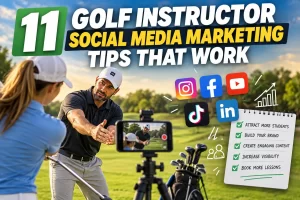
Introduction: Why Golf Instructor Social Media Marketing Matters
Attracting new golf students requires more than excellent coaching skills. In today’s competitive golf instruction industry, golf instructor social media marketing has become an essential strategy for reaching potential students, building credibility, and growing a successful golf coaching business. With millions of golfers using social platforms to discover instructional content, golf professionals have valuable opportunities to connect with players looking to improve their game.
Traditional marketing methods, including word-of-mouth referrals, flyers, and golf course advertising, can still generate students. However, relying exclusively on these approaches may limit your visibility and slow your golf student recruitment efforts. Effective social media marketing for golf instructors allows you to reach larger audiences, demonstrate your expertise, and establish relationships with prospective students before they book their first lesson.
Platforms such as Facebook, Instagram, YouTube, TikTok, and LinkedIn provide opportunities to share golf swing tutorials, student success stories, instructional videos, and coaching insights. By implementing proven golf instructor marketing strategies, you can strengthen your professional reputation, increase social media engagement, and encourage more golfers to schedule lessons.
In this guide, you’ll discover 11 actionable golf instructor social media marketing tips designed to attract more students, improve your online presence, increase golf lesson bookings, and support long-term golf coaching business growth.
Google Maps SEO for Golf Instructors 9 Tips That Work
11 Golf Instructor Social Media Marketing Tips That Work
Successful golf instructor social media marketing begins with understanding your audience and creating content that addresses their specific golfing needs. Whether you’re an independent golf coach, PGA professional, or golf academy owner, implementing the right strategies can help you attract qualified students, build stronger relationships, and increase golf lesson bookings.
The following 11 strategies will help you strengthen your online presence, improve social media engagement, and turn interested golfers into paying students.
1. Identify Your Ideal Golf Students Before Creating Content
One of the most important steps in golf instructor social media marketing is identifying exactly who you want to attract. Without a clearly defined target audience, even high-quality instructional content may struggle to generate meaningful engagement or consistent golf lesson bookings.
Start by evaluating your ideal students based on their age, skill level, geographic location, and golfing goals. Different golfers have different challenges, and understanding those differences allows you to develop more effective golf instructor marketing strategies that connect with the right people.
For example, your target audience might include:
-
Beginner golfers: Players learning basic swing fundamentals, grip techniques, posture, and ball striking.
-
Recreational golfers: Weekend players looking to improve consistency, eliminate slices, and lower their scores.
-
Junior golfers: Young players developing fundamental skills or preparing for competitive golf.
-
Competitive golfers: Experienced players seeking advanced swing mechanics, distance improvements, and tournament preparation.
Once you’ve identified your audience, research the questions and frustrations they commonly experience. Are beginners struggling to make consistent contact? Are recreational golfers frustrated with slicing their drives? Are competitive players searching for ways to increase swing speed?
These insights can help you create instructional videos, educational posts, and practical golf drills that directly address their needs.
For instance, an Instagram Reel demonstrating three simple fixes for a golf slice may attract recreational golfers, while a YouTube tutorial explaining proper swing sequencing could appeal to more advanced players.
Effective social media marketing for golf instructors also requires geographic targeting. If you offer in-person lessons, focus on reaching golfers within a reasonable distance of your teaching facility.
By tailoring your content to specific audiences, you can improve social media engagement, strengthen your golf instructor personal branding, and make your golf student recruitment efforts more effective.
The key is simple: Create content for the golfers most likely to benefit from your instruction, rather than trying to appeal to every golfer on social media.
2. Choose the Best Social Media Platforms for Your Golf Coaching Business
Choosing the right platforms is essential for successful golf instructor social media marketing. Not every social media network attracts the same audience, and understanding where your ideal golf students spend their time can help you maximize engagement, increase visibility, and generate more lesson bookings.
Each major platform offers unique advantages for promoting golf instruction:
– Facebook: Excellent for local golf student recruitment, community engagement, and promoting golf lessons. Facebook Groups, business pages, and local advertising can help instructors connect with nearby golfers, particularly adults and established recreational players.
– Instagram: Ideal for visual storytelling, short instructional videos, student success stories, and golf instructor personal branding. Instagram Reels and Stories provide opportunities to demonstrate coaching expertise and connect with golfers.
– YouTube: Particularly valuable for detailed golf swing tutorials, instructional demonstrations, and educational content. YouTube videos can attract golfers searching for solutions to specific swing problems while building long-term coaching credibility.
– TikTok: Useful for reaching younger audiences through entertaining, short-form golf instruction videos, quick swing fixes, and engaging golf challenges.
– LinkedIn: A valuable professional networking platform for connecting with golf course managers, PGA professionals, golf academy directors, and potential corporate partners.
When developing your golf instructor marketing strategies, consider your target audience, available time, and preferred content formats.
For example, instructors targeting local recreational golfers might prioritize Facebook and Instagram, while coaches specializing in detailed swing analysis may benefit from YouTube.
One of the best golf instructor social media marketing tips is to begin with just one or two platforms. Concentrating your efforts allows you to publish consistently, build stronger relationships, and evaluate which channels generate actual lesson inquiries.
As your audience grows, you can gradually expand your presence without sacrificing content quality or overwhelming your schedule.
How To Get Golf Students Worldwide: 7 Powerful Ways To Grow Your Coaching Business
3. Build a Professional Golf Instructor Social Media Brand
Developing a recognizable professional brand is another essential component of effective golf instructor social media marketing. Your social media profiles often provide potential students with their first impression of your coaching business, making professionalism, consistency, and credibility especially important.
Strong golf instructor personal branding helps distinguish your coaching services from competitors while communicating what makes your instruction valuable.
Start by optimizing your social media profiles with a professional headshot, recognizable business logo, and consistent branding elements. Use similar colors, profile images, and messaging across Facebook, Instagram, YouTube, TikTok, and LinkedIn.
Your profile biography should clearly explain who you help, what services you provide, and why golfers should consider your instruction.
Include important details such as:
-
Professional credentials: Highlight PGA membership, teaching certifications, specialized training, and relevant coaching qualifications.
-
Instruction specialties: Showcase expertise in swing mechanics, short-game improvement, junior golf development, or competitive player coaching.
-
Coaching experience: Mention your teaching background, accomplishments, and relevant student success stories.
-
Location and contact information: Make it easy for nearby golfers to find your teaching facility and contact you.
-
Golf lesson booking system: Include a direct booking link so interested golfers can schedule lessons conveniently.
Another effective strategy involves establishing a consistent coaching voice. Whether your teaching style is technical, encouraging, or beginner-friendly, your social media content should reflect your personality and instructional approach.
For example, regularly publishing educational golf swing videos, answering common questions, and sharing helpful practice drills can strengthen your reputation as a knowledgeable instructor.
Successful social media marketing for golf instructors isn’t simply about attracting followers. It’s about building trust with potential students and giving them confidence in your coaching abilities.
When your branding consistently communicates professionalism, expertise, and accessibility, your social media presence becomes a valuable tool for golf student recruitment and long-term golf coaching business growth.
4. Publish Engaging Golf Instruction Videos That Attract Students
Creating engaging instructional videos is one of the most effective golf instructor social media marketing strategies for attracting potential students and demonstrating your coaching expertise. Golfers frequently search social media for solutions to common swing problems, giving instructors valuable opportunities to showcase their teaching abilities while building an engaged audience.
Short-form videos are particularly useful because they allow instructors to deliver practical golf tips without requiring viewers to watch lengthy lessons. Platforms such as Instagram Reels, YouTube Shorts, and TikTok make it possible to reach golfers interested in improving their performance.
Focus your instructional videos on common golfing challenges, including:
-
Driving accuracy: Demonstrate simple adjustments that help golfers reduce slices, improve alignment, and hit straighter drives.
-
Putting consistency: Share drills for improving distance control, putting alignment, and green-reading skills.
-
Chipping techniques: Explain how proper setup, ball positioning, and club selection can improve short-game performance.
-
Golf swing consistency: Demonstrate drills that encourage better balance, tempo, weight transfer, and ball striking.
-
Increasing driving distance: Introduce exercises and swing fundamentals that support improved clubhead speed and power.
An effective video should capture attention immediately. Start with a relatable problem, such as “Struggling to stop slicing your driver?” Then demonstrate a practical correction viewers can practice themselves.
Successful social media marketing for golf instructors also involves making videos visually appealing. Use clear camera angles, good lighting, readable captions, and slow-motion demonstrations when explaining important swing movements.
These instructional demonstrations help establish coaching credibility by allowing potential students to experience your teaching style before scheduling a lesson.
Finally, include a clear call to action encouraging viewers to explore your coaching services.
For example:
“Want personalized help improving your golf swing? Visit my profile to explore available golf lessons.”
By consistently publishing useful instructional content, you can increase social media engagement, strengthen your professional reputation, and transform interested viewers into potential golf students.
5. Use Student Success Stories and Testimonials to Build Trust
Building trust is essential for converting social media followers into paying golf students. One of the most persuasive golf instructor social media marketing strategies involves showcasing authentic student success stories, testimonials, and measurable improvements achieved through your coaching.
Potential students often want reassurance that your instruction can help them overcome their golfing challenges. Sharing real examples of student progress allows prospective golfers to better understand your teaching approach and the potential benefits of professional lessons.
Consider incorporating several types of student success content into your marketing strategy:
-
Before-and-after swing videos: Demonstrate improvements in swing mechanics, posture, balance, or club positioning.
-
Student testimonials: Share genuine feedback describing a student’s coaching experience and progress.
-
Performance improvements: Highlight documented achievements such as improved driving accuracy, more consistent ball striking, or lower golf scores.
-
Student milestones: Celebrate accomplishments such as breaking 100, achieving a personal-best round, or completing a successful junior golf program.
For example, a short Instagram Reel showing a student’s swing improvements after several lessons can demonstrate your instructional methods more effectively than a promotional message alone.
Effective social media marketing for golf instructors uses these success stories to create credibility and strengthen relationships with prospective students.
However, always obtain permission before publishing student photographs, videos, names, or personal achievements. For junior golfers, secure appropriate parental or guardian consent.
Avoid exaggerated promises or suggesting that every student will achieve identical results. Authenticity is essential for maintaining professional credibility.
When combined with educational content and consistent golf instructor personal branding, genuine testimonials can reduce hesitation among prospective students and encourage more lesson inquiries.
Ultimately, highlighting real student achievements helps demonstrate the value of your coaching while supporting long-term golf student recruitment and golf coaching business growth.
6. Create a Consistent Golf Instructor Social Media Content Calendar
Consistency plays an important role in successful golf instructor social media marketing. Publishing valuable content regularly helps maintain audience interest, strengthen your professional reputation, and create more opportunities to attract potential golf students. However, posting without a structured plan can lead to inconsistent messaging, missed opportunities, and unnecessary frustration.
Developing a weekly content calendar allows you to organize your golf instructor marketing strategies while maintaining a healthy balance between educational, entertaining, and promotional posts.
Consider following a simple weekly posting schedule:
-
Monday: Share an instructional golf swing tip addressing a common problem, such as slicing or inconsistent ball striking.
-
Tuesday: Publish a short video demonstrating a putting, chipping, or driving drill.
-
Wednesday: Feature a student success story, testimonial, or coaching achievement.
-
Thursday: Share an engaging golf question, poll, or interactive challenge.
-
Friday: Promote available golf lessons, upcoming clinics, or special coaching opportunities.
One of the best golf instructor social media marketing tips is to create content in batches. Instead of recording individual videos every day, dedicate a few hours each week to producing multiple instructional demonstrations, graphics, and educational posts.
You can also repurpose existing golf blog articles into Instagram carousels, Facebook posts, YouTube Shorts, and TikTok videos. For example, an article explaining golf swing sequencing could generate several short instructional clips.
Social media scheduling tools, including Meta Business Suite and Buffer, can help organize and publish content in advance.
Effective social media marketing for golf instructors doesn’t require posting constantly. It requires delivering useful information consistently while maintaining quality and relevance.
A well-organized content calendar helps improve social media engagement, strengthen golf instructor personal branding, and support long-term golf coaching business growth.
7. Increase Social Media Engagement With Your Golf Audience
Building an engaged audience is essential for turning social media followers into potential golf students. While publishing instructional content helps attract attention, successful golf instructor social media marketing also requires meaningful interaction with golfers who follow your coaching business.
Social media engagement involves more than collecting likes, shares, and comments. It creates opportunities to understand your audience’s golfing challenges, demonstrate your expertise, and establish relationships that may eventually lead to lesson bookings.
Start by asking questions that encourage golfers to discuss their experiences.
For example:
-
“What’s the biggest problem with your golf swing right now?”
-
“Do you struggle more with driving accuracy or putting consistency?”
-
“What’s one part of your golf game you’d love to improve this season?”
-
“How many strokes are you hoping to lower your handicap this year?”
These questions encourage conversations while providing valuable insights into the instructional topics your audience finds most useful.
Another effective social media marketing for golf instructors strategy involves responding promptly to comments and direct messages. When golfers ask questions about swing mechanics, practice routines, or coaching services, provide helpful responses that demonstrate your knowledge.
Interactive features such as Instagram Stories, Facebook polls, quizzes, and short golf challenges can also increase participation.
For example, publish a short swing demonstration and ask followers to identify the most common mistake. Reveal the answer in a follow-up video while explaining the correct technique.
Avoid turning every interaction into a sales pitch. Instead, focus on providing value, answering questions, and developing genuine connections.
As relationships strengthen, interested golfers may become more comfortable exploring your instructional services.
By prioritizing meaningful conversations and consistent engagement, you can improve golf student recruitment, strengthen your coaching reputation, and support sustainable golf coaching business growth.
8. Use Local Social Media Marketing to Attract Nearby Golf Students
Targeting golfers within your geographic area is one of the most effective golf instructor social media marketing strategies for generating local lesson bookings. While reaching thousands of followers worldwide may increase brand awareness, attracting golfers who live near your teaching facility is often more valuable for growing an in-person coaching business.
Successful local social media marketing for golf instructors begins with identifying the communities, neighborhoods, and golf courses surrounding your teaching location. Focus your promotional efforts on golfers within a reasonable driving distance who are actively interested in improving their game.
Consider implementing these local marketing techniques:
-
Use location tags: Include your city, golf course, or teaching facility location in relevant Facebook and Instagram posts to help local golfers discover your content.
-
Promote local golf events: Advertise upcoming golf clinics, beginner workshops, junior golf programs, and instructional opportunities.
-
Collaborate with nearby businesses: Develop relationships with golf courses, driving ranges, indoor golf simulators, and golf equipment retailers.
-
Join local Facebook Groups: Participate in relevant community discussions and share helpful golf instruction when group rules permit.
-
Publish location-specific content: Create posts addressing golfing opportunities, seasonal challenges, and instructional services available in your area.
Another valuable strategy involves connecting your social media presence with your Google Business Profile.
Maintain accurate business information, share relevant updates where available, and direct interested golfers toward your website or booking page. Consistent business details across platforms can help customers recognize and contact your coaching business.
Combining local visibility with effective golf instructor marketing strategies creates more opportunities to reach qualified prospects.
By focusing on nearby golfers rather than simply increasing follower counts, you can strengthen golf student recruitment and generate more meaningful inquiries from people who can realistically attend your lessons.
How Golf Instructors Are Making $250.50 Per Student 24/7 https://ultimategolfmasterypro.com/ugm-pro-partnership/
9. Turn Social Media Followers Into Golf Lesson Bookings
Attracting followers is only the beginning of successful golf instructor social media marketing. While likes, comments, and video views can indicate audience interest, these activities don’t automatically translate into paying golf students. The real objective is converting interested followers into qualified prospects who schedule lessons and become long-term clients.
To accomplish this, instructors need a clear strategy that guides potential students from discovering their content to booking professional instruction.
Start by including compelling calls to action throughout your social media posts. Instead of simply sharing golf tips, encourage interested viewers to take the next step.
Examples include:
-
“Struggling with your golf swing? Book a personalized swing assessment today!”
-
“Ready to improve your driving accuracy? Explore my available golf lesson packages.”
-
“Want more consistent ball striking? Schedule your first golf lesson through the link in my profile.”
Another effective social media marketing for golf instructors technique involves offering an introductory lesson, complimentary instructional resource, or personalized swing evaluation. These offers provide prospective students with a reason to explore your coaching services.
Next, develop a simple golf coaching sales funnel that moves potential students through three important stages:
-
Awareness: Attract golfers through instructional videos, educational posts, and engaging social media content.
-
Interest: Build trust by sharing helpful advice, student testimonials, and valuable coaching resources.
-
Conversion: Encourage interested golfers to schedule lessons through a convenient golf lesson booking system.
Your booking process should be straightforward, mobile-friendly, and accessible directly from your social media profiles.
Finally, follow up with golfers who request information about your coaching services. A friendly message answering their questions or explaining available lesson options can help encourage bookings without creating unnecessary sales pressure.
By combining engaging content, clear calls to action, and an organized booking process, golf instructor social media marketing can become a reliable source of qualified student inquiries and support sustainable golf coaching business growth.
10. Use Paid Social Media Advertising to Reach More Golf Students
Paid advertising can be a powerful addition to your golf instructor social media marketing strategy, especially when you want to reach potential students beyond your existing followers. Platforms such as Facebook and Instagram allow golf instructors to promote their coaching services to relevant local audiences while maintaining control over advertising expenses.
One of the biggest advantages of paid social media marketing for golf instructors is geographic targeting. Rather than advertising to golfers nationwide, you can focus on people living within a reasonable distance of your teaching facility.
Consider implementing these advertising strategies:
-
Geographic targeting: Focus advertisements on cities and communities surrounding your golf course, driving range, or teaching facility.
-
Audience interests: Where available, use golf-related interests and other relevant targeting options to reach potential students.
-
Introductory lesson offers: Promote beginner golf lessons, swing assessments, and introductory coaching packages.
-
Golf clinics and events: Advertise upcoming junior golf programs, group lessons, and specialized instructional workshops.
-
Video advertisements: Demonstrate your teaching expertise through short instructional clips featuring common swing problems and practical solutions.
When starting, consider testing a controlled advertising budget of approximately $5–$10 per day, provided it fits your business finances. Monitor performance before increasing spending.
Effective golf instructor marketing strategies also require tracking advertising results. Two important measurements include cost per lead and cost per booked lesson.
For example, spending $100 on advertisements that generate five qualified inquiries produces a $20 cost per lead. However, tracking how many inquiries become paying students provides a more meaningful picture of profitability.
By testing different advertisements, refining your audience targeting, and monitoring conversions, you can improve golf student recruitment while avoiding unnecessary advertising expenses.
11. Track Social Media Marketing Performance and Improve Your Results
Measuring results is essential for determining whether your golf instructor social media marketing efforts are actually helping your coaching business grow. Without tracking performance, it’s difficult to identify which strategies attract qualified students, generate lesson inquiries, or produce meaningful returns on your marketing investment.
Fortunately, platforms such as Facebook, Instagram, YouTube, TikTok, and LinkedIn provide analytics tools that help instructors evaluate audience behavior and content performance.
Focus on tracking these important marketing metrics:
-
Profile visits: Monitor how many people explore your social media profiles after viewing your content.
-
Social media engagement: Track comments, shares, saves, and meaningful interactions with instructional posts.
-
Website clicks: Measure how frequently followers visit your coaching website or golf lesson booking system.
-
Student inquiries: Record messages, phone calls, and contact form submissions from prospective students.
-
Lesson bookings: Identify how many interested golfers actually schedule and complete paid lessons.
-
Conversion rates: Calculate the percentage of qualified inquiries that become paying students.
One of the best golf instructor social media marketing tips is to focus on business results rather than follower counts alone.
For example, an Instagram account with 500 engaged local followers could generate more lesson bookings than an account with 10,000 followers scattered across different countries.
Review your performance monthly to identify which instructional videos, testimonials, promotional offers, and educational posts produce the strongest results.
You can also use website analytics, tracked booking links, and simple spreadsheets to connect social media activity with actual student enrollment.
By consistently evaluating performance and refining your golf instructor marketing strategies, you can invest more time in successful content, eliminate ineffective approaches, and create a more efficient system for long-term golf coaching business growth.
Common Golf Instructor Social Media Marketing Mistakes to Avoid
Even experienced golf professionals can struggle to attract students when their golf instructor social media marketing strategies lack consistency, engagement, or clear objectives. While social media offers tremendous opportunities for business growth, avoiding common marketing mistakes is essential for turning online visibility into actual golf lesson bookings.
Understanding these mistakes can help you improve your marketing efforts and maximize your results.
– Posting too much promotional content: Constantly advertising golf lessons without providing valuable instructional advice can discourage followers. Balance promotional messages with helpful swing tips, practice drills, and educational videos that demonstrate your coaching expertise.
– Ignoring comments and direct messages: Failing to respond to questions or inquiries can result in missed opportunities. Effective social media marketing for golf instructors requires meaningful interaction and relationship building with potential students.
– Using inconsistent branding: Different profile pictures, messaging, and business information across platforms can confuse prospective students. Maintain recognizable golf instructor personal branding to establish professionalism and credibility.
– Failing to provide clear booking instructions: Interested golfers should never struggle to schedule a lesson. Include visible calls to action and direct links to your golf lesson booking system.
– Focusing on followers instead of student recruitment: Thousands of followers mean little if they never become paying students. Prioritize attracting qualified local golfers who are genuinely interested in professional instruction.
– Posting without tracking results: Without monitoring engagement, website visits, student inquiries, and lesson bookings, it’s difficult to determine which marketing strategies actually work.
Successful golf instructor social media marketing requires more than publishing content regularly. It involves delivering genuine value, building relationships, and creating a clear path from social media engagement to paid instruction.
By avoiding these common mistakes, you can strengthen your online presence, improve golf student recruitment, and support sustainable golf coaching business growth.
Frequently Asked Questions About Golf Instructor Social Media Marketing
Understanding how to develop effective golf instructor social media marketing strategies can help golf professionals attract more students, increase lesson bookings, and build successful coaching businesses. Below are answers to five frequently asked questions about using social media to promote golf instruction.
What Is the Best Social Media Platform for Golf Instructors?
The best platform depends on your target audience and coaching goals. Facebook and Instagram are excellent choices for local golf student recruitment, while YouTube provides opportunities to share detailed instructional videos. TikTok can help reach younger golfers, and LinkedIn is valuable for professional networking and golf industry partnerships.
For most local instructors, starting with Facebook and Instagram provides a practical foundation for building visibility and attracting potential students.
How Often Should Golf Instructors Post on Social Media?
Golf instructors should aim to publish approximately three to five quality posts per week, depending on their available time and resources. A consistent schedule featuring instructional videos, student success stories, practice drills, and engaging questions can help maintain audience interest.
Quality and consistency are more important than posting multiple times every day.
How Can Golf Instructors Attract More Students Through Social Media?
Effective social media marketing for golf instructors involves sharing helpful instructional content, targeting local golfers, responding to questions, and demonstrating coaching expertise.
Use clear calls to action that direct interested followers toward your golf lesson booking system. Student testimonials and introductory lesson offers can also encourage potential students to schedule instruction.
Can Golf Instructors Market Their Lessons Without Paid Advertising?
Yes. Golf instructors can attract students organically through educational videos, Facebook Groups, Instagram Reels, YouTube Shorts, and consistent audience engagement.
Sharing valuable golf instruction, collaborating with local golf businesses, and optimizing social media profiles can improve visibility without requiring an advertising budget.
How Long Does Social Media Marketing Take to Generate Golf Lesson Bookings?
Results vary depending on audience size, content quality, local competition, and posting consistency.
Some instructors may generate inquiries within weeks, while others may need several months to establish an engaged audience.
The key to successful golf instructor social media marketing is consistently providing valuable content, building trust, tracking inquiries, and refining your strategies to improve golf student recruitment and long-term coaching business growth.